

Staggering towards crisis
Advertisement
Read this article for free:
or
Already have an account? Log in here »
To continue reading, please subscribe:

Digital Subscription
One year of digital access for only $205*
- Enjoy unlimited reading on winnipegfreepress.com
- Read the E-Edition, our digital replica newspaper
- Access News Break, our award-winning app
- Play interactive puzzles
*First annual payment billed as $205.00 + GST for one year. This annual subscription will automatically renew at $233.00 + GST every 52 weeks (10% off the regular annual price of $259.35). Offer available to new and qualified returning subscribers only. Cancel any time.
To continue reading, please subscribe:
Add Free Press access to your Brandon Sun subscription for only an additional
$1 for the first 4 weeks*
- Enjoy unlimited reading on winnipegfreepress.com
- Read the E-Edition, our digital replica newspaper
- Access News Break, our award-winning app
- Play interactive puzzles
*Your next Brandon Sun subscription payment will increase by $1.00 and you will be charged $17.95 plus GST for four weeks. After four weeks, your payment will increase to $24.95 plus GST every four weeks.
Read unlimited articles for free today:
or
Already have an account? Log in here »
Hey there, time traveller!
This article was published 06/03/2024 (907 days ago), so information in it may no longer be current.
Manitoba families should trust that officials at Children’s Hospital in Winnipeg have “got this” when it comes to managing the months-long overcapacity of its intensive care unit, the hospital says.
But for how long?
Amanda Pineda, the executive director of health services at Children’s Hospital, says management is doing everything it can to respond to the latest influx of respiratory illness at the facility, including reassigning staff from other parts of the hospital.
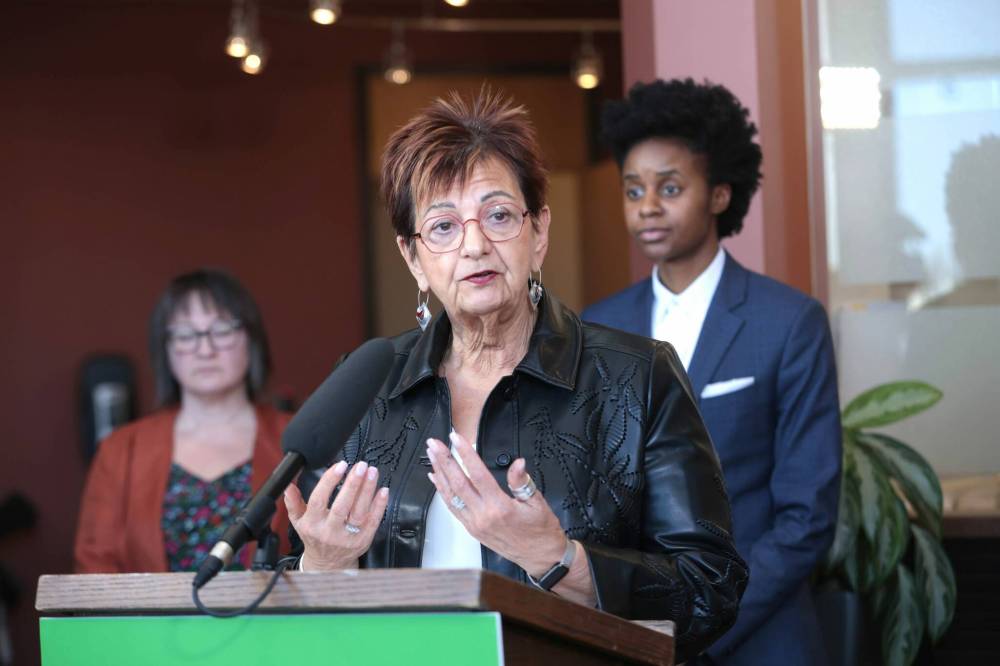
RUTH BONNEVILLE / FREE PRESS
Darlene Jackson, president, Manitoba Nurses Union
“I would like the public and I want our families to be confident that we are able to care for their loved ones, their children and the pediatric population throughout,” Pineda said last week in an interview with the Free Press, adding they’ve “got this.”
Last Friday, there were 21 children in the pediatric ICU, most of whom are being treated for a respiratory illness. The majority have symptoms consistent with COVID-19, influenza and RSV. The baseline capacity at the pediatric ICU is 12.
The unit has been under strain for months. In December, 15 nurses from the ambulatory care and recovery areas were reassigned to the ICU. Some nurses are being asked to work 16-hour shifts, many others are regularly mandated to extend their 12-hour workdays.
“You cannot sustain work hours like that for a long period of time, you just can’t,” said Darlene Jackson, president of the Manitoba Nurses Union. “Something has to be done. We can’t maintain this.”
It may be that the hospital has “got this” for now. But the situation at Children’s Hospital, indeed at most hospitals across the province, is not sustainable. Staff cannot work double shifts and have their 12-hour workdays extended in perpetuity. Front-line workers cannot provide proper care over the long term under those grueling circumstances. Many will leave — a great number already have — in pursuit of less stressful workplaces. Others will opt for early retirement.
Who can blame them, especially when there seems to be no concrete, realistic plan in place to address the long-term problem of under-resourced hospitals? Simply put, the demand for medical services at Manitoba hospitals exceeds available human resources. There aren’t enough doctors, nurses and allied health-care workers to handle the number of patients seeking care.

This is not just a seasonal problem. It’s not a short-term spike that will go away in a few days, a few weeks or a few months. It has become a permanent feature of the province’s health-care system, not only at Children’s Hospital but at most hospitals across the province.
The wait times at emergency departments are twice as long as they were a decade ago and are showing no signs of easing. At some hospitals, such as St. Boniface Hospital, ER wait times are at a crisis level. The longest wait time for nine out of 10 ER patients at that hospital in January was 16 hours — the highest recorded at the facility since the Winnipeg Regional Health Authority began publishing wait times online 10 years ago.
It is a recipe for substandard care, medical errors and poor patient outcomes. Not only is it not sustainable for staff, it is dangerous for patients.
No doubt supervisors and front-line staff at Children’s Hospital are doing everything in their power to provide children with proper medical care. And it’s also obvious that new nurses don’t simply magically appear, even if there’s a willingness to hire them.
But the central question cannot be ignored: how much longer can this go on?
Related Articles
Respiratory illness pushes Children’s Hospital to limit
Advertisement Advertise With Us
Advertisement Advertise With Us
History
Updated on Thursday, March 7, 2024 10:01 AM CST: Removes reference to Pineda asking front-line workers to pull double-duty shifts