

Individual rights aren’t the only rights
Advertisement
Read this article for free:
or
Already have an account? Log in here »
To continue reading, please subscribe:

Digital Subscription
One year of digital access for only $205*
- Enjoy unlimited reading on winnipegfreepress.com
- Read the E-Edition, our digital replica newspaper
- Access News Break, our award-winning app
- Play interactive puzzles
*First annual payment billed as $205.00 + GST for one year. This annual subscription will automatically renew at $233.00 + GST every 52 weeks (10% off the regular annual price of $259.35). Offer available to new and qualified returning subscribers only. Cancel any time.
To continue reading, please subscribe:
Add Free Press access to your Brandon Sun subscription for only an additional
$1 for the first 4 weeks*
- Enjoy unlimited reading on winnipegfreepress.com
- Read the E-Edition, our digital replica newspaper
- Access News Break, our award-winning app
- Play interactive puzzles
*Your next Brandon Sun subscription payment will increase by $1.00 and you will be charged $17.95 plus GST for four weeks. After four weeks, your payment will increase to $24.95 plus GST every four weeks.
Read unlimited articles for free today:
or
Already have an account? Log in here »
Hey there, time traveller!
This article was published 22/03/2024 (884 days ago), so information in it may no longer be current.
Legally, it’s the end of the line.
A group of Manitoba churches that argued their rights were violated during the days of strict COVID-19 health orders has run out of options.
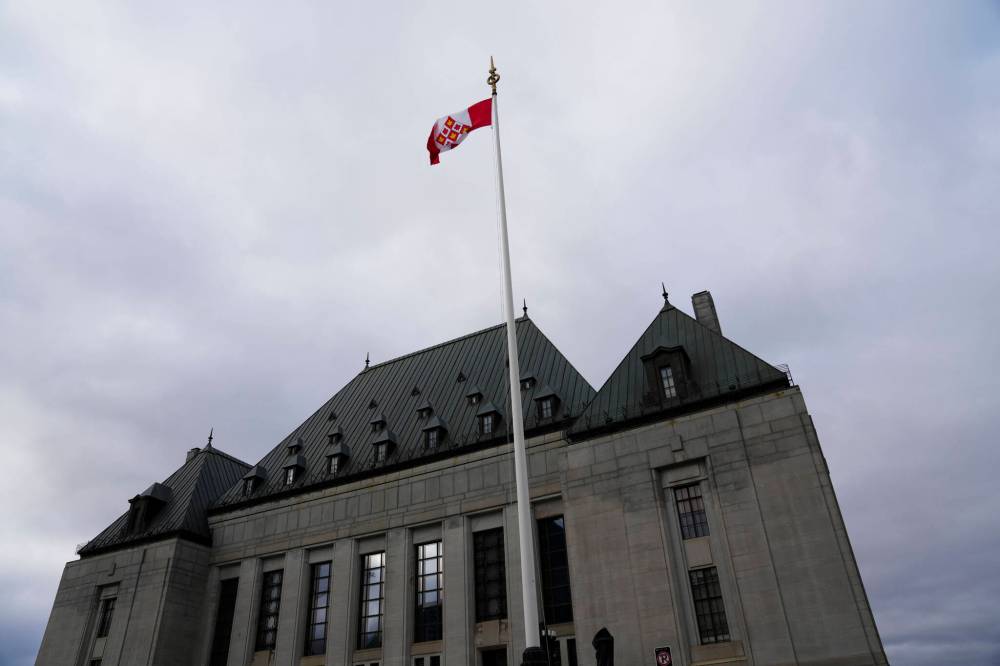
The Supreme Court of Canada refused to hear the case last week, after two lower courts had ruled against them.
Sean Kilpatrick /The Canadian Press files
The Supreme Court refused to hear the appeal by Manitoba churches.
The churches had argued that public health orders between 2020-21 that prohibited large indoor gatherings effectively violated their rights to freedom in their religious practice.
They were correct that the Charter rights of individual churchgoers were violated.
In fact, the government of Manitoba agreed in court that a series of individual rights were violated by its public health orders that banned worship.
One can understand why people who find comfort and support in their faith would want to be free to practise their religion, especially during a crisis. But there’s more to it than the rights of individuals.
The judgments that led up to the application to appeal to the Supreme Court all came to the same conclusion: that individual Charter rights are not absolute when weighed against the public good and societal rights, which, by the way, are also protected by the Charter of Rights.
As the appeal court ruled when reviewing the first judgment in the case: “However, (the judge) concluded that (the public health orders) achieved the important societal benefit of protecting the health and safety of others, especially the vulnerable. He considered that they were only in effect for as long as necessary to ‘regain control over community transmission and alleviate the intense strain on the hospitals’ and intensive care units. He underscored that Manitoba’s modelling projections were proven to be correct. He noted the (public health orders) were constantly re-evaluated as the pandemic progressed … In the result, the application judge found that Manitoba had demonstrated that any restriction on the identified Charter rights flowing from the impugned public health orders was justified as a reasonable limit and constitutionally defensible under section 1 of the Charter.”
The last judge to hear the case, in the Manitoba Court of Appeal, laid the final argument out succinctly. “Considering all of the above, I would not interfere with the application judge’s finding that, ‘When examining the benefits of Manitoba’s response in the face of the threat of such a deadly pandemic, it is reasonable and rational to conclude that despite the undeniable hardships caused by the limitations on fundamental freedoms, the salutary benefits far outweigh the deleterious effect.’”
By refusing to hear the appeal, the Supreme Court is in essence saying it accepts that ruling.
Legally, that’s the last word on the case.
It certainly won’t be the end of the complaints.

The COVID-19 pandemic revealed much about our society, including the extent to which people’s trust in experts, authority figures and public institutions had degraded. You can argue that people’s willingness to be part of an overarching community was degraded as well — much of the need for “freedom” in the public discourse now is personal freedom, regardless of the impacts on a broader society.
Most would like to believe Canada is a land bound by the rule of law.
The thing is, just because you didn’t get your way doesn’t mean the rule of law hasn’t prevailed. Sometimes, you fight the law and the law wins — because you’re wrong.
Perhaps the best thing we could find from the Supreme Court’s last chapter in this story is a kind of reconciliation: an agreement and recognition that yes, individual religious freedoms were restricted. And that, also, yes: sometimes individual freedoms have to be restricted for the general public good.
That is, after all, the difficult balance the Charter of Rights is supposed to seek out.