

Troubling questions of influence
Advertisement
Read this article for free:
or
Already have an account? Log in here »
To continue reading, please subscribe:

Digital Subscription
One year of digital access for only $205*
- Enjoy unlimited reading on winnipegfreepress.com
- Read the E-Edition, our digital replica newspaper
- Access News Break, our award-winning app
- Play interactive puzzles
*First annual payment billed as $205.00 + GST for one year. This annual subscription will automatically renew at $233.00 + GST every 52 weeks (10% off the regular annual price of $259.35). Offer available to new and qualified returning subscribers only. Cancel any time.
To continue reading, please subscribe:
Add Free Press access to your Brandon Sun subscription for only an additional
$1 for the first 4 weeks*
- Enjoy unlimited reading on winnipegfreepress.com
- Read the E-Edition, our digital replica newspaper
- Access News Break, our award-winning app
- Play interactive puzzles
*Your next Brandon Sun subscription payment will increase by $1.00 and you will be charged $17.95 plus GST for four weeks. After four weeks, your payment will increase to $24.95 plus GST every four weeks.
Read unlimited articles for free today:
or
Already have an account? Log in here »
Hey there, time traveller!
This article was published 25/04/2024 (875 days ago), so information in it may no longer be current.
There were some unusual guests in this year’s federal budget lockup.
When Prime Minister Justin Trudeau’s government unveiled its budget, among the usual assembly of journalists and stakeholders were a small group of social media influencers. The influencers didn’t get to just see the budget — they met with members of cabinet as well.
The CP’s story notes that content creators of the new mould received “more political access than the mainstream media received that day,” when they were given a look at the budget before it was tabled. All well and good for the influencers. But the question — or the first one, anyway — is why did the Government of Canada see fit to include them?
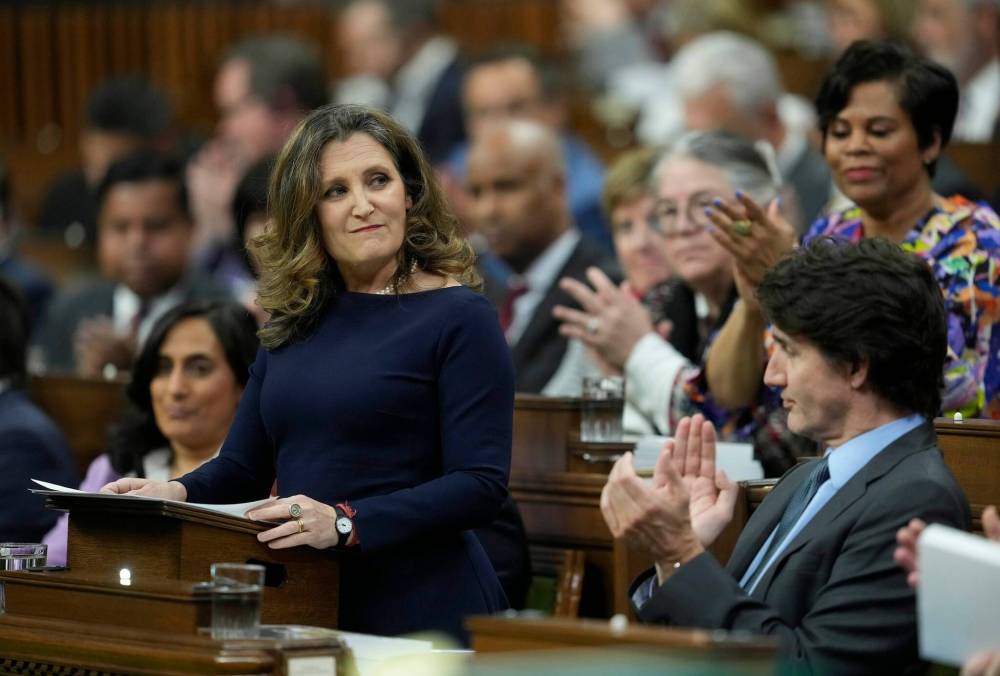
Adrian Wyld / The Canadian Press Files
Deputy Prime Minister and Minister of Finance Chrystia Freeland presents the federal budget in the House of Commons.
Including younger perspectives in the budget process is sensible. But there are plenty of young people who occupy positions affording them experience and expertise on specific issues important to the young. So why influencers? It’s a case of trying to meet the voters where they are — online, in this case.
It seems Trudeau’s government is looking to influencers reach out to the young, which is to embrace influencers in a bid to court millennial and gen-Z voters. In the U.S., the White House has been taking a similar approach for years.
Frankly, it’s not the best idea.
Influencers are a new phenomenon, and unlike say, traditional news, there is not the same expectation of objectivity. Or experience. Or knowledge.
Paid sponsorship abounds among influencers, which raises questions of credibility (and the government affording such access to the influencers compared to other media is a bit eyebrow-raising). What’s more, the current attention economy means influencers are often motivated to chase trends rather than facts, and embrace the most absurd content they can produce. The result is an online ecosystem full of quack medicine, deliberately horrific food preparation — and, yes, bad-faith politics posting and life advice offered up by people in someone else’s pocket.
This is not to cast aspersions on the influencers who were invited to the budget lockup — influencers are not a monolith and not all are guilty of the above. But the world of influencers is both nascent and polluted, and a government ought to be cognizant of that (as should online users).

But there’s another flaw in this plan. Maybe it’s not that millennial and gen-Z voters are disillusioned because they’re not being communicated to along the right lines. Maybe the problem is the message itself.
These two groups have spent their adulthoods struggling against economies which make the traditional milestones of adulthood, particularly home ownership, difficult or impossible to achieve. Wages have stagnated and the price of everything has gone up. “Side hustle” culture has made daily life a whole lot of work and not much play.
They grapple with tremendous anxieties about the future which awaits them as climate change takes hold. And in the meantime, it’s become a tired trope for their elders, from world leaders on down, to disregard the concerns of the young, blaming them as lazy, ungrateful or financially reckless — traits first pinned on millennials ad nauseam and now transferred to gen Z as the millennials begin to grey.
It’s likely, then, that the problem isn’t that the young aren’t getting the message. It’s far more likely they’re paying attention to what their leaders are offering them and don’t see a whole lot to like.
It may be wise, then, for Trudeau’s government to consider that its struggle to connect is that the message is simply unwelcome, and changing what bottle it comes in won’t fix that.