

Foreign interests and unethical federal politicians
Advertisement
Read this article for free:
or
Already have an account? Log in here »
To continue reading, please subscribe:

Digital Subscription
One year of digital access for only $205*
- Enjoy unlimited reading on winnipegfreepress.com
- Read the E-Edition, our digital replica newspaper
- Access News Break, our award-winning app
- Play interactive puzzles
*First annual payment billed as $205.00 + GST for one year. This annual subscription will automatically renew at $233.00 + GST every 52 weeks (10% off the regular annual price of $259.35). Offer available to new and qualified returning subscribers only. Cancel any time.
To continue reading, please subscribe:
Add Free Press access to your Brandon Sun subscription for only an additional
$1 for the first 4 weeks*
- Enjoy unlimited reading on winnipegfreepress.com
- Read the E-Edition, our digital replica newspaper
- Access News Break, our award-winning app
- Play interactive puzzles
*Your next Brandon Sun subscription payment will increase by $1.00 and you will be charged $17.95 plus GST for four weeks. After four weeks, your payment will increase to $24.95 plus GST every four weeks.
Read unlimited articles for free today:
or
Already have an account? Log in here »
Hey there, time traveller!
This article was published 06/06/2024 (852 days ago), so information in it may no longer be current.
A little information can a dangerous thing. It can certainly be an annoying thing.
And it’s all the more disquieting when it’s abundantly clear that you’re unlikely to get any more information that could clear the air.
Monday, the National Security and Intelligence Committee of Parliamentarians released a report with some jarring details about foreign interference in the Canadian political system.
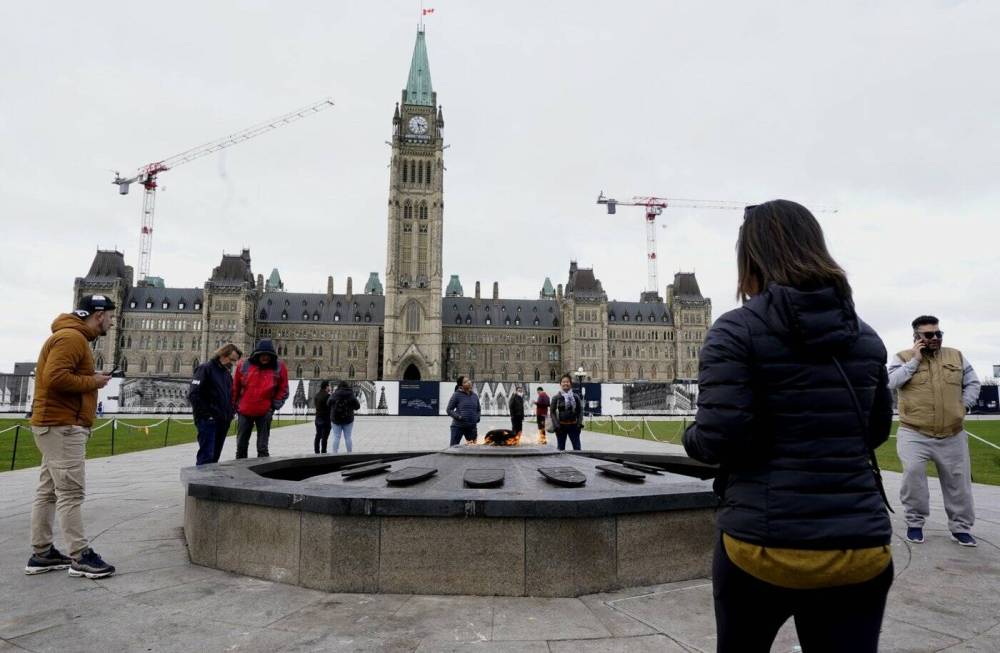
THE CANADIAN PRESS/Adrian Wyld Adrian Wyld
A new reports says some federal politicians are working for foreign countries.
Among the information the report revealed?
That some federal lawmakers are actively and “wittingly” helping foreign nations obtain confidential information.
That some federal politicians — quoting here from the report — “accepted knowingly, or through wilful blindness, funds or benefits from foreign missions or their proxies which have been layered or otherwise disguised to conceal their source.”
That some federal politicians are “providing foreign diplomatic officials with privileged information on the works or opinions of fellow Parliamentarians, knowing that such information will be used by those officials to pressure Parliamentarians to change their positions.”
What a polite way to describe what’s often called kompromat — information obtained to unethically manipulate or blackmail others.
There’s even a reference to two instances where officials from the People’s Republic of China allegedly interfered in two leadership races for the Conservative Party of Canada. And not only China. Although the details were redacted, an explanatory paragraph referenced that the details that had been removed referred to a paragraph that, “described India’s alleged interference in a Conservative Party of Canada leadership race.” (Those three attempts are something the Conservative Party says was not disclosed to it by intelligence officials, and that it knows nothing about.)
All in all, it’s a pretty sobering analysis that casts a pall over Canadian politics.
So, who are these particular politicians, and how did the foreign intelligence schemes work?
Well, that is something we’re not being told.
While all that information the report details is deeply unsettling, what’s even more troubling is the information that’s missing from the equation. The report is riddled with redactions, where the committee spells out that, “Readers should note that the committee has fully or partly redacted references to much of this source material to avoid injury to Canada’s national security, national defence or international relations.”
It’s pretty obvious that revealing the details of confidential or secret information, especially because the release of that information might compromise the sources Canadian intelligence services used to get that information.
But it’s also deeply unsatisfying:
Not only are we unlikely to find out any further details about the behaviour and who was involved, we’re also not likely to see prosecutions. That’s because Canadian intelligence services don’t want to explain in open court what evidence they have, how they obtained it and perhaps who they obtained it from. Revealing their sources would, as the logic goes, do more damage to Canada’s global interests and ability to gather future information than the prosecutions would be worth.
It’s the result, the committee writes much more dryly, of the “long-standing issue of protecting classified information and methods in judicial processes.”

That pragmatism about top-secret information and potential prosecutions may be completely justified.
But it doesn’t make the whole sordid mess feel any better.
It is, overall, a wholly unsatisfying result: you may be voting — you may have voted — for politicians who have exhibited what the committee describes as “deeply unethical” behaviour and have violated Canadians’ trust, and you can’t even know it.
The bottom line is that it’s important for us to know that unnamed federal politicians are betraying their country.
But it’s not enough for us to know that unnamed federal politicians are betraying their country.
Related Articles
Report on foreign meddling sparks concern about MPs, Tories call for release of names

Advertisement Advertise With Us
Advertisement Advertise With Us
History
Updated on Thursday, June 6, 2024 7:28 AM CDT: Adds headline