

Making the punishment fit the crime — in all ways
Advertisement
Read this article for free:
or
Already have an account? Log in here »
To continue reading, please subscribe:

Digital Subscription
One year of digital access for only $205*
- Enjoy unlimited reading on winnipegfreepress.com
- Read the E-Edition, our digital replica newspaper
- Access News Break, our award-winning app
- Play interactive puzzles
*First annual payment billed as $205.00 + GST for one year. This annual subscription will automatically renew at $233.00 + GST every 52 weeks (10% off the regular annual price of $259.35). Offer available to new and qualified returning subscribers only. Cancel any time.
To continue reading, please subscribe:
Add Free Press access to your Brandon Sun subscription for only an additional
$1 for the first 4 weeks*
- Enjoy unlimited reading on winnipegfreepress.com
- Read the E-Edition, our digital replica newspaper
- Access News Break, our award-winning app
- Play interactive puzzles
*Your next Brandon Sun subscription payment will increase by $1.00 and you will be charged $17.95 plus GST for four weeks. After four weeks, your payment will increase to $24.95 plus GST every four weeks.
Read unlimited articles for free today:
or
Already have an account? Log in here »
Hey there, time traveller!
This article was published 11/09/2024 (757 days ago), so information in it may no longer be current.
Monday, Anthony Olienick and Chris Carbert, now called the Coutts Two, were sentenced to six and a half years in prison for their involvement in the 2022 blockade of the Canada-U.S. border crossing at Coutts, Alta., and their possession of weapons and body armour during that blockade. Both men were acquitted of more serious charges of planning to murder police.
Social media has been thrown into an uproar by the sentences, with outrage being the prominent feature, along with online comparisons being made to much lower sentences for seemingly more serious crimes, ranging from sexual assaults to violent beatings.
The sentiment? That “the Coutts boys” — online posters’ words, not ours — are being unfairly punished for their crimes.
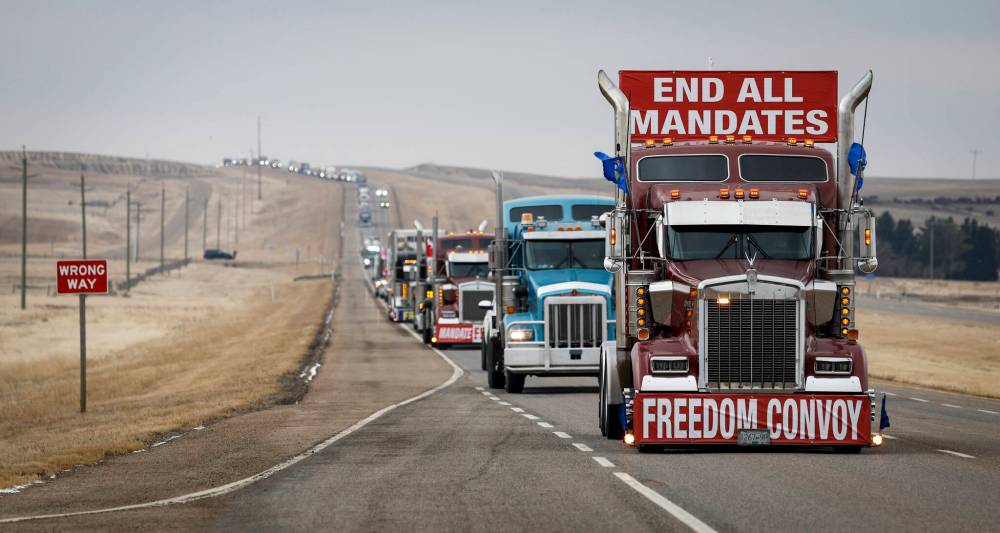
FILE
The truck convoy at Coutts, Alta. Two men have been convicted for their involvement in the 2022 blockade.
But the sentences after a conviction of this kind were always going to be severe, as any experienced lawyer would have explained to clients facing similar charges.
Sentencing is both an art and a sliding scale that depends on the particular details of each individual crime, and that takes into account everything from the ability of the guilty to be rehabilitated to deterring others from doing the same thing.
Breaking a store window because you’re drunk and disorderly will get one kind of sentence — break a store window because you’re taking part in a post-playoff-game riot because your team lost and you’ll get a quite different one.
That’s because rioting and similar crimes carry their own particular weight — they are not just a crime against another individual, but a crime against public order itself — and that means a message has to be sent to others to ensure they don’t believe following in the same footsteps won’t carry much in the way of a penalty.
Because of that, judges will tailor sentences more to deter others from taking part in such actions than to rehabilitate the offender.
Sometimes it’s explained frankly by the judge involved, like in this case from the Stanley Cup riot in Vancouver: “I am satisfied that in this and related cases arising from the Vancouver Stanley Cup riot the principles of denunciation and general deterrence must prevail over all other concerns.”
The Coutts Two received the sentences they did not only because of considerations about the individual severity of crimes they were convicted of committing, but because of where and how those crimes were committed.
The backdrop of their weapons charges was that they had weapons at an unstable protest blocking a major highway and an international border — and that they had clearly expressed their belief that violence would occur.
“Both Olienick and Carbert used the blockade as a last stand against police,” Justice David Labrenz said in his sentencing decision. The two “knew they were actively participating in something that was illegal, but they didn’t care because they thought their cause had been worthy.”

The sentences they received are as much for everyone else’s benefit as they are for the two men involved.
Supporters of the Coutts Two have already come out claiming that the sentence is political. That seems to be the go-to now — if you don’t like a decision, blame it on a politician or some evil underground cabal.
But it’s not like that.
It is precisely the way sentencing works, balancing the severity of a crime in all its aspects, and coming up with a sentence that addresses the severity of its impacts, not only on individuals, but on civil society as well.
Should others charged in the convoy fallout be found guilty in the trials they are now facing, it will no doubt be a factor in their sentencing as well.