

A penetrating insight into the obvious
Advertisement
Read this article for free:
or
Already have an account? Log in here »
To continue reading, please subscribe:

Digital Subscription
One year of digital access for only $205*
- Enjoy unlimited reading on winnipegfreepress.com
- Read the E-Edition, our digital replica newspaper
- Access News Break, our award-winning app
- Play interactive puzzles
*First annual payment billed as $205.00 + GST for one year. This annual subscription will automatically renew at $233.00 + GST every 52 weeks (10% off the regular annual price of $259.35). Offer available to new and qualified returning subscribers only. Cancel any time.
To continue reading, please subscribe:
Add Free Press access to your Brandon Sun subscription for only an additional
$1 for the first 4 weeks*
- Enjoy unlimited reading on winnipegfreepress.com
- Read the E-Edition, our digital replica newspaper
- Access News Break, our award-winning app
- Play interactive puzzles
*Your next Brandon Sun subscription payment will increase by $1.00 and you will be charged $17.95 plus GST for four weeks. After four weeks, your payment will increase to $24.95 plus GST every four weeks.
Read unlimited articles for free today:
or
Already have an account? Log in here »
Hey there, time traveller!
This article was published 23/10/2024 (685 days ago), so information in it may no longer be current.
There is, believe it or not, an arm of the federal government that’s making informed “blue-sky” predictions of what might be coming next.
Well, more to the point, maybe their prognostication should be called “black-skying,” because what they’re actually trying to figure out is what sort of disasters are looming in Canada’s future.
Policy Horizons Canada even puts out an annual report on the dangers ahead, and how close those dangers might be.
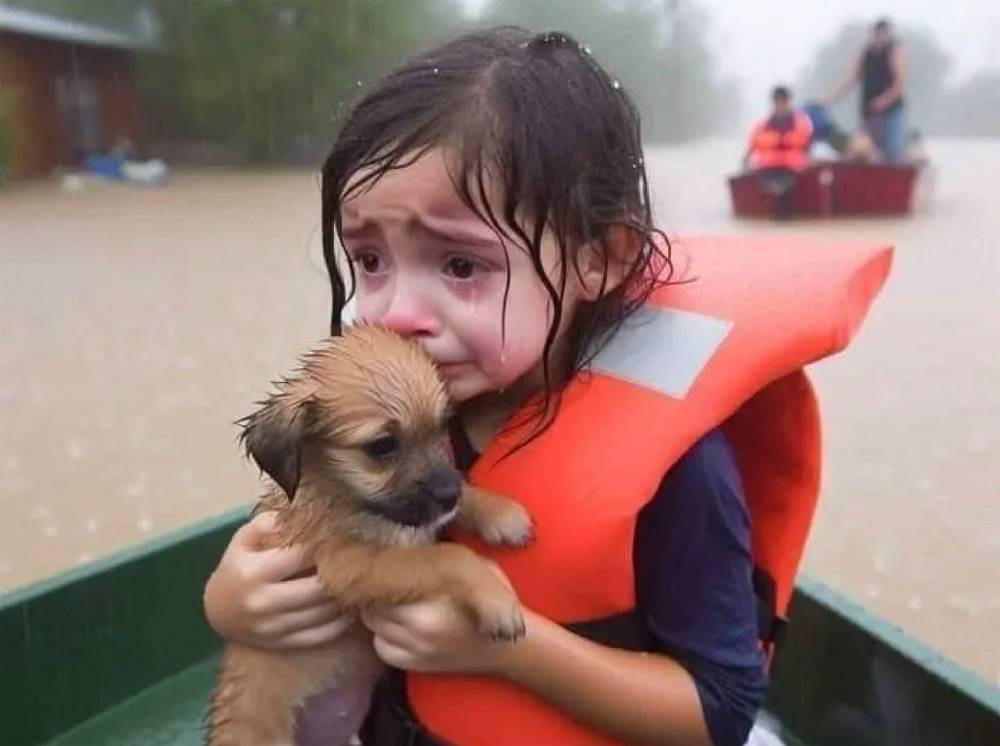
This artificially created image was used to mislead people about post-hurricane floods in North Carolina.
“Predicting the next big upheaval may not be possible, but it is crucial to explore possible disruptions and anticipate potential future scenarios. Even seemingly distant or improbable events and circumstances can suddenly become reality, while overlapping disruptions can lead to compounded societal impacts,” the agency says in an introduction to its 2024 report. “Policy Horizons Canada (Policy Horizons) is committed to supporting the Government of Canada’s decision makers in navigating these uncertainties. We identify and explore potential disruptions to enable the creation of robust and resilient policies.”
The possible disruptions read like the premise of an entire series of dystopian novels: civil war erupts in the United States, antibiotics stop working, world war breaks out, billionaires take over control, cyberattacks disable critical infrastructure, health-care systems collapse, artificial intelligence runs amok, ecosystems collapse…
Surely you’ve seen each and every one of those in a Netflix series by now.
The major “disruption” that’s closest on the horizon? The danger that people cannot tell what is true and what is not.
Except for one thing. That one’s already here.
Here’s the Policy Horizons warning of what the near future may bring (and by the future, they’re thinking of three years from now): “The information ecosystem is flooded with human- and Artificial Intelligence (AI)-generated content. Mis- and disinformation make it almost impossible to know what is fake or real. It is much harder to know what or who to trust.
“More powerful generative AI tools, declining trust in traditional knowledge sources, and algorithms designed for emotional engagement rather than factual reporting could increase distrust and social fragmentation. More people may live in separate realities shaped by their personalized media and information ecosystems. These realities could become hotbeds of disinformation, be characterized by incompatible and competing narratives, and form the basis of fault lines in society. Research and the creation of scientific evidence could become increasingly difficult. Public decision making could be compromised as institutions struggle to effectively communicate key messaging on education, public health, research, and government information.”
Yes, yes, yes, yes, yes and yes.
Virtually every part of those two paragraphs is already occurring — broadly. Look no further than a picture from the recent hurricane-caused floods in western North Carolina, and the picture of a crying little girl, hair in rain-soaked ringlets, sitting in a boat with her equally soaked puppy.
Hundreds commented on it, saying everything from that it deserved the Pulitzer Prize to that it was the fault of the U.S. Federal Emergency Management Agency and President Joe Biden.

Except there was no little girl, no boat and no puppy.
It was an AI image — there were in fact several varieties of the same general image — created to sow doubt about U.S. emergency response. People already live inside their own informational silos, reading and listening to the things they already want to believe, and disregarding everything else.
Hotbeds of disinformation are already harming public acceptance of education, along with health, science and government information. And it’s only getting worse.
Buckle up. A bleak future is already upon us. We have to get better at separating the informational wheat from the chaff.
And fast.