

Arctic is now producing carbon, not storing it
Advertisement
Read this article for free:
or
Already have an account? Log in here »
To continue reading, please subscribe:

Digital Subscription
One year of digital access for only $205*
- Enjoy unlimited reading on winnipegfreepress.com
- Read the E-Edition, our digital replica newspaper
- Access News Break, our award-winning app
- Play interactive puzzles
*First annual payment billed as $205.00 + GST for one year. This annual subscription will automatically renew at $233.00 + GST every 52 weeks (10% off the regular annual price of $259.35). Offer available to new and qualified returning subscribers only. Cancel any time.
To continue reading, please subscribe:
Add Free Press access to your Brandon Sun subscription for only an additional
$1 for the first 4 weeks*
- Enjoy unlimited reading on winnipegfreepress.com
- Read the E-Edition, our digital replica newspaper
- Access News Break, our award-winning app
- Play interactive puzzles
*Your next Brandon Sun subscription payment will increase by $1.00 and you will be charged $17.95 plus GST for four weeks. After four weeks, your payment will increase to $24.95 plus GST every four weeks.
Read unlimited articles for free today:
or
Already have an account? Log in here »
Hey there, time traveller!
This article was published 16/12/2024 (614 days ago), so information in it may no longer be current.
As we sit shivering through the past few days of extremely cold weather — the first real cold of this winter — it seems slightly contradictory to write an editorial about how the Arctic is warming faster than any place on Earth.
As is often necessary in pieces about climate change, we have to point out that weather and climate are two different things.
It’s becoming clear that pieces like this one won’t change some minds that are already firmly made up — those who choose to believe climate change is some kind of massive hoax will continue to believe that.
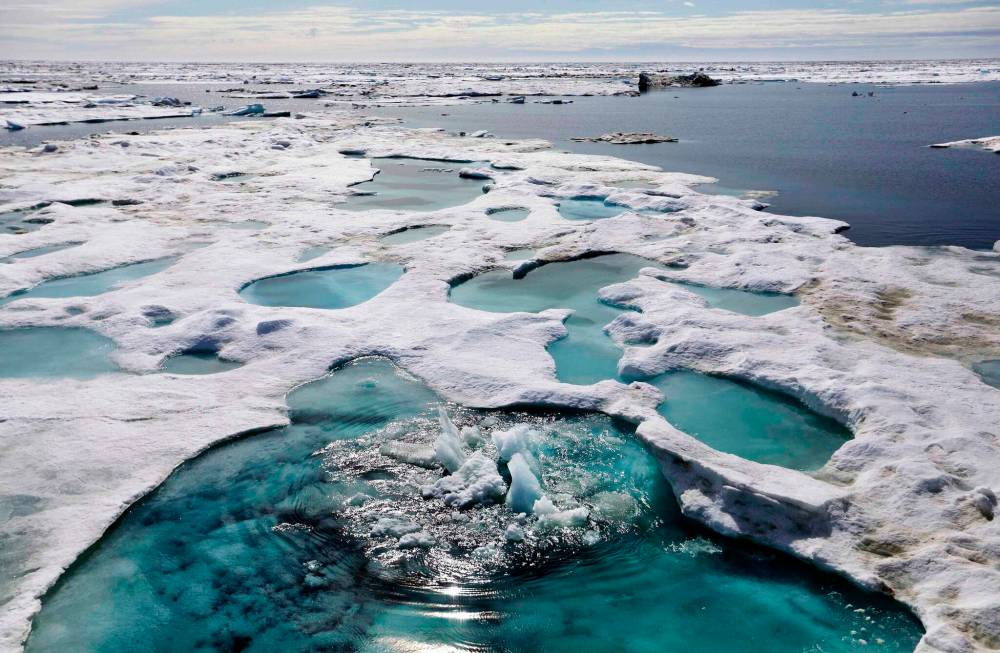
David Goldman / Associated Press Files
The Arctic is warming quickly.
But for those who want to watch the science — and consider just what exactly it’s telling us — there was critical information about the way the Arctic has turned a crucial corner.
It’s not news that the Arctic as a whole just went through its second-warmest winter ever, nor, if you’ve been paying attention, that the Arctic is warming at a rate four times faster than the global rate of temperature increases.
What’s new is research from the U.S. National Oceanic and Atmospheric Administration (NOAA) suggesting that permafrost melt — due to higher temperatures in the Arctic — and increased wildfires in the North are combining to make the region a carbon-dioxide-producing area. (NOAA, by the way, is one of the agencies that’s believed to have been singled out as facing potential dismantlement under the Trump administration for cost-cutting reasons.)
For millennia, Arctic regions have acted as a carbon sink, trapping and sequestering carbon.
“Our observations now show that the Arctic tundra, which is experiencing warming and increased wildfire, is now emitting more carbon than it stores, which will worsen climate change impacts,” said NOAA Administrator Rick Spinrad at the release of the 2024 Arctic Report Card. “This is yet one more sign, predicted by scientists, of the consequences of inadequately reducing fossil fuel pollution.”
The picture in the North is disquieting, to say the least: the last nine years were the nine warmest years on record in the Arctic, while the 18 years with the minimum ice extent in the Arctic — measured in September — have all fallen within the last 18 years.
The work was compiled by 97 scientists working across 11 different countries. They found profound changes, from increased plankton blooms in Arctic waters to large decreases in caribou populations. Snow melt in the Canadian Arctic is coming an average of one to two weeks earlier than it has in the past and the snow season was the shortest this past year that it has been in 26 years.
But in its own way, the change in the Arctic’s role as a carbon sink is perhaps the most ominous. As a carbon sink, it could actually help to slow climate change: Instead, it now has a role in accelerating that change.

It’s obvious this information is unlikely to change the minds of those who think that, as long as it’s out of our direct line of sight, climate change can safely be kept out of mind.
So why keep harping on the topic?
At the moment, there are politicians in both Canada and the United States who believe short-term employment and financial goals are more important that the long-term health of the planet and its inhabitants.
Their message — that the economy is more important than the environment — is being heard and supported by a substantial part of the electorate in both countries.
It’s crucial that information on what’s happening to the world we live in — and what we can expect that to do to our quality of life and the quality of life of our children — still make its way to the eyes and ears of those willing to see and to listen.