

Insurance companies on climate change: act now
Advertisement
Read this article for free:
or
Already have an account? Log in here »
To continue reading, please subscribe:

Digital Subscription
One year of digital access for only $205*
- Enjoy unlimited reading on winnipegfreepress.com
- Read the E-Edition, our digital replica newspaper
- Access News Break, our award-winning app
- Play interactive puzzles
*First annual payment billed as $205.00 + GST for one year. This annual subscription will automatically renew at $233.00 + GST every 52 weeks (10% off the regular annual price of $259.35). Offer available to new and qualified returning subscribers only. Cancel any time.
To continue reading, please subscribe:
Add Free Press access to your Brandon Sun subscription for only an additional
$1 for the first 4 weeks*
- Enjoy unlimited reading on winnipegfreepress.com
- Read the E-Edition, our digital replica newspaper
- Access News Break, our award-winning app
- Play interactive puzzles
*Your next Brandon Sun subscription payment will increase by $1.00 and you will be charged $17.95 plus GST for four weeks. After four weeks, your payment will increase to $24.95 plus GST every four weeks.
Read unlimited articles for free today:
or
Already have an account? Log in here »
Hey there, time traveller!
This article was published 15/01/2025 (604 days ago), so information in it may no longer be current.
There are none so blind as those who will not see.
That’s the simplified version of Jeremiah 5:21: “Now hear this, you foolish and senseless people, Who have eyes but do not see, Who have ears but do not hear.”
It’s an oft-used saying, and one that fits aptly to describe those who choose to simply deny that things are changing in our climate.
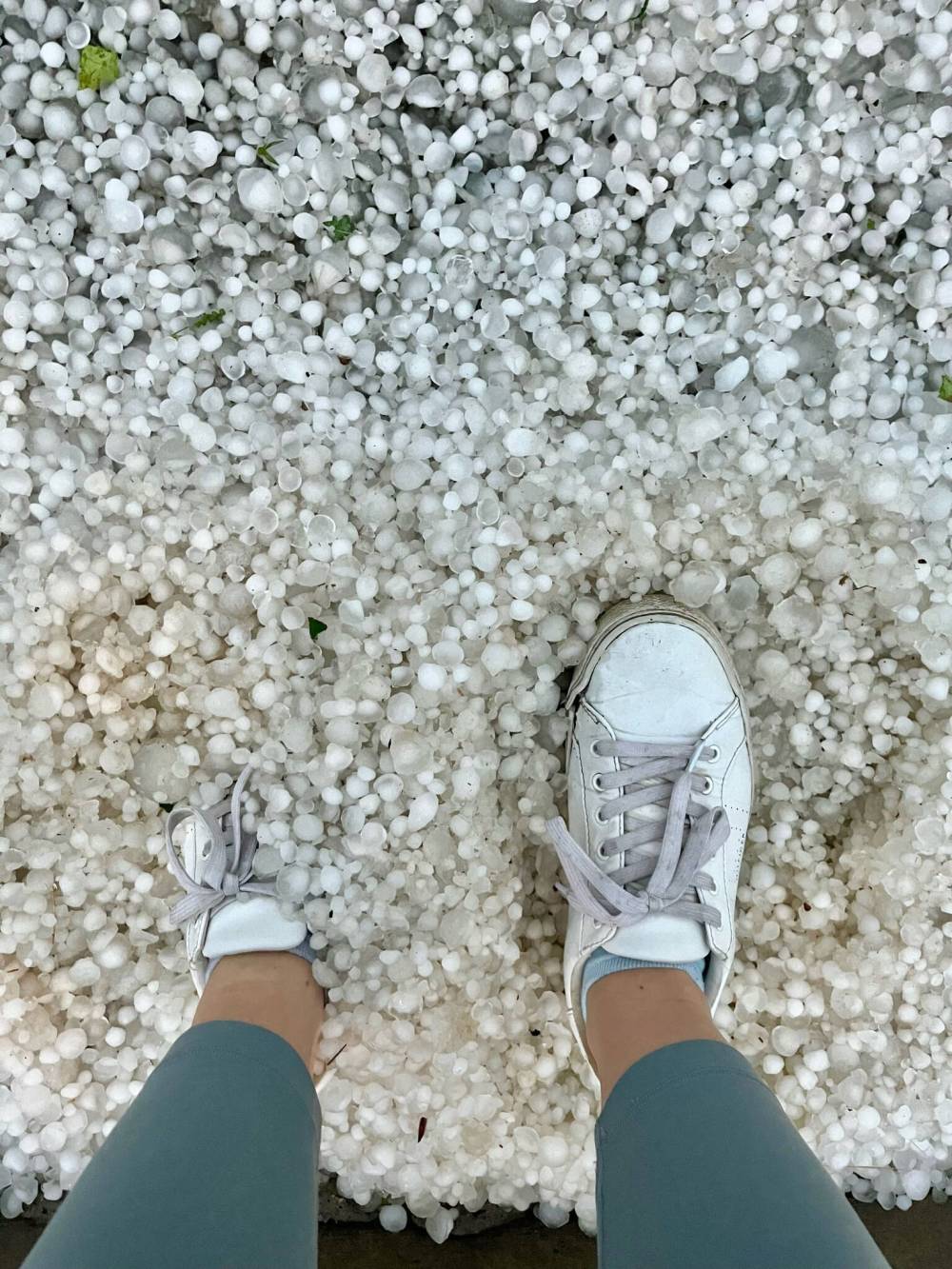
Brittany (Filion) Kennedy
Hail from a Calgary summer storm
The insurance industry sees: it sees very clearly indeed.
The industry isn’t talking about isolated events, about how “weather events aren’t climate change” or about the fact that the internet can cough up any amount of unsupportable pseudoscience to explain away the effects of a warming climate.
Instead, the industry is dealing with the very real facts that properties that have been insured for decades no longer represent an acceptable business risk.
The costs of coverage simply outstrip the money they can take in from premiums.
Last year was the worst year ever — by far — for weather-driven insurance damage. In 2024, insurance companies paid out $8.55 billion for weather-related damage, easily topping the $6.2 billion in 2016 that included the wildfire destruction of Fort McMurray.
And insurers are paying attention.
Not only are insurance companies voting with their feet — refusing to offer coverage in some high-risk areas — but they are also warning of increasing insurance costs generally as higher risks in hard-hit areas are spread across the entire pool of insurance customers.
How those damage costs spread across the customer base may become even more evident as governments try to tip the scales by doing things like the state of California has — legislating that insurance companies that do business in that state have to insure Californians, despite the level of risk their homes and other properties may face.
And on top of that, insurers are talking about mitigation.
“Canada is clearly becoming a riskier place to live, work and insure. As insurers price for risk, this increased risk is now impacting insurance affordability and availability,” Craig Stewart, the Insurance Bureau of Canada’s vice-president of climate change and federal issues, said in a news release. “Canadian governments must be more proactive to properly manage and mitigate risk. Governments need to invest in infrastructure that defends against floods, adopt land-use planning rules that ensure homes are not built on flood plains, facilitate FireSmart in communities in high-risk wildfire zones and implement long-delayed building codes that better protect homes and livelihoods.”
If there really isn’t any overall climate change, well, there isn’t anything to mitigate, is there?
Without mitigation, you’ll just keep paying more.
“With severe weather-related losses continuing to escalate exponentially across our country, IBC is stressing the disproportionate impact these catastrophic events are having on home insurance costs,” the IBC points out. “Since 2019, Canada has experienced a 115 per cent increase in the number of claims for personal property damage and a 485 per cent increase in the costs for repairing and replacing personal property.”
The last five years all make the list of the top 10 worst years ever for severe weather-related insurance claims in Canada.

The Bible can be a bit apocalyptic: the IBC can be, too. Their message: address climate change on one hand, while also mitigating the risks from climate-driven destructive weather.
“If that doesn’t happen, we should all get ready to live in an uninsurable country a decade from now,” the IBC says.
Follow the money, and listen to what they’re saying.
Burying your head in the sand may go some way towards protecting it from flying debris during a severe weather event.
But it won’t insure your house and property.
Related Articles
Severe weather did record damage in 2024 with more than $8B in insured losses

Advertisement Advertise With Us
Advertisement Advertise With Us