

The importance of more diverse governments
Advertisement
Read this article for free:
or
Already have an account? Log in here »
To continue reading, please subscribe:

Digital Subscription
One year of digital access for only $205*
- Enjoy unlimited reading on winnipegfreepress.com
- Read the E-Edition, our digital replica newspaper
- Access News Break, our award-winning app
- Play interactive puzzles
*First annual payment billed as $205.00 + GST for one year. This annual subscription will automatically renew at $233.00 + GST every 52 weeks (10% off the regular annual price of $259.35). Offer available to new and qualified returning subscribers only. Cancel any time.
To continue reading, please subscribe:
Add Free Press access to your Brandon Sun subscription for only an additional
$1 for the first 4 weeks*
- Enjoy unlimited reading on winnipegfreepress.com
- Read the E-Edition, our digital replica newspaper
- Access News Break, our award-winning app
- Play interactive puzzles
*Your next Brandon Sun subscription payment will increase by $1.00 and you will be charged $17.95 plus GST for four weeks. After four weeks, your payment will increase to $24.95 plus GST every four weeks.
Read unlimited articles for free today:
or
Already have an account? Log in here »
Hey there, time traveller!
This article was published 25/02/2025 (573 days ago), so information in it may no longer be current.
The numbers are sobering. Over the past 151 years, only 33 women have been elected to Winnipeg city council. That’s only a fraction (7.2 per cent to be precise) of the 456 men that have won seats on council during that period.
The municipal government has become more diverse in recent years as more women have entered politics. Still, of the 16 members on city council today, only five are women, just under a third. That’s the highest proportion in Winnipeg’s history.
Worse, only two women of colour have ever been elected to Winnipeg city council, both of whom are sitting members: Couns. Devi Sharma (Old Kildonan) and Vivian Santos (Point Douglas). That is disappointing, considering Winnipeg is one of the most diverse cities in Canada.
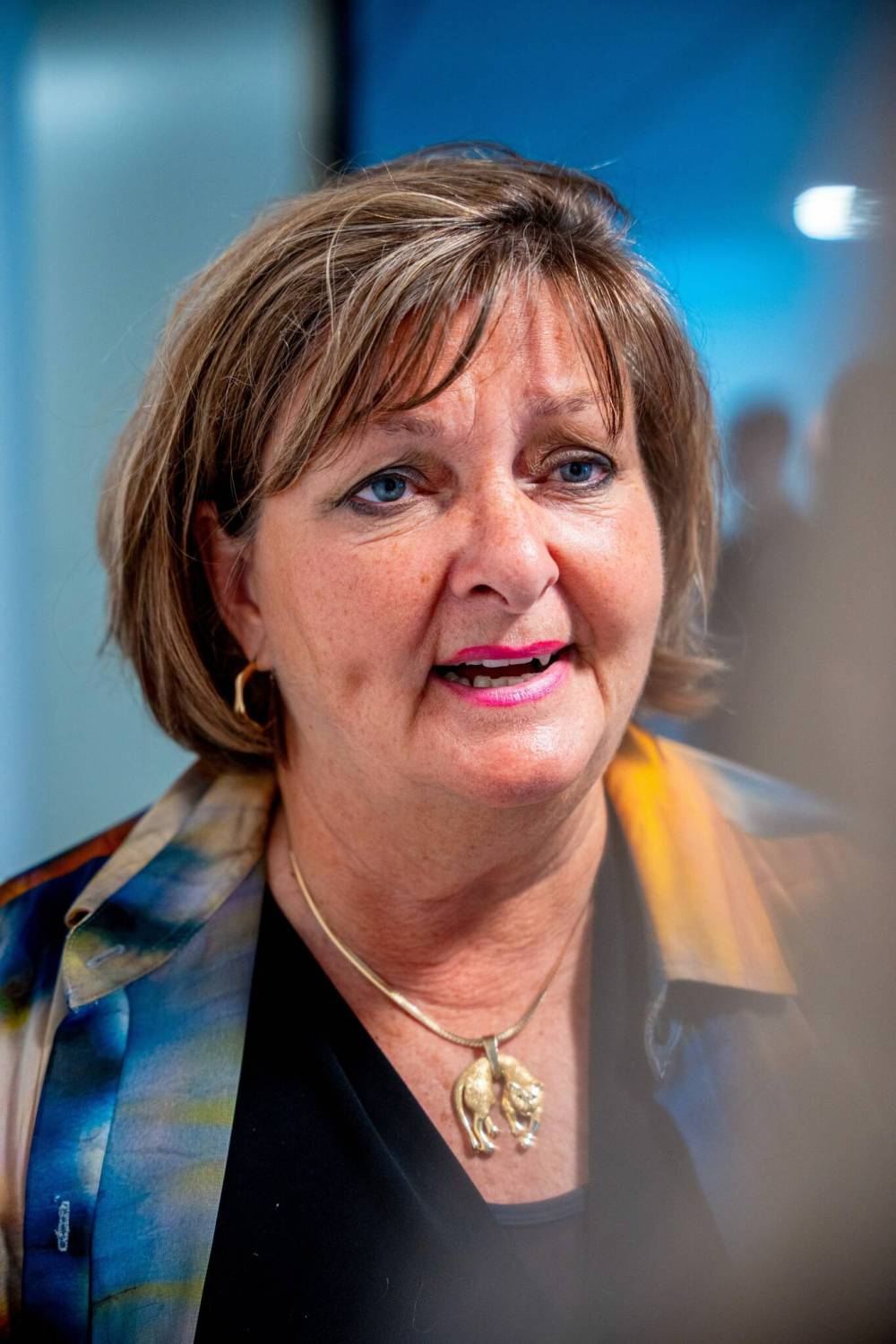
NIC ADAM / FREE PRESS
Waverley West Coun. Janice Lukes
Meanwhile, Winnipeg has only had one woman mayor, and that was over 25 years ago — Susan Thompson, who served two terms in office and was first elected in 1992.
Those are just a few of the numbers crunched by a panel event held this past weekend at RBC Convention Centre in downtown Winnipeg. The purpose of the event was to highlight the under-representation of women and gender-diverse people in politics and to explore ways of encouraging more women and others to run for office.
The panel was hosted by the five sitting women on city council, which in addition to Sharma and Santos included Cindy Gilroy (Daniel McIntyre), Sherri Rollins (Fort Rouge-East Fort Garry) and Janice Lukes (Waverley West).
“I think letting women know that there are other women out there that have been able to accomplish all this allows them to consider politics as an option for them,” said Gilroy.
City council is not the only level of government where women and others are underrepresented. Equal Voice Foundation, a group that seeks to improve gender representation in Canadian politics, found women and gender-diverse people fill only 18 of 57 seats in the Manitoba legislature and 103 of 338 seats in the House of Commons.
“I think about the unbelievably powerful, amazing immigrant women in my ward, they could easily take on this role,” said Lukes. “Lots of times, I think women maybe don’t think about (running), they need a bit more encouragement to do it.”
They also need more supports, including identifying barriers that may be discouraging women and gender-diverse people from running for office.
Politics in Canada has become increasingly combative and remains male-dominated. Many women politicians across the country have also been victims of vicious misogynistic attacks.

Panels like the one held Saturday go a long way towards addressing those realities and bringing awareness around the benefits of having greater diversity at all three levels of government.
It’s critical that those making decisions on our behalf reflect the make-up of society. Women, gender-diverse people and people of colour bring different experiences and perspectives to the table. It’s important that their views are heard and are incorporated into all areas of public policy.
With the next civic election set for 2026 and a provincial election expected the following year, it’s important that all potential candidates, including women, gender-diverse people and people of colour, are made aware of the opportunities that exist to seek public office.
“We don’t expect gender parity any time soon and we certainly won’t get it if we don’t ask women to run and we don’t show and tell what this looks like,” said Rollins.
Some progress has been made to encourage more women and gender-diverse people to enter politics. But we still have a long way to go. The numbers are crystal clear on that.
Related Articles
Female councillors aim to empower women to run for office
Advertisement Advertise With Us
Advertisement Advertise With Us