

A federal election, and needing a united front
Advertisement
Read this article for free:
or
Already have an account? Log in here »
To continue reading, please subscribe:

Digital Subscription
One year of digital access for only $205*
- Enjoy unlimited reading on winnipegfreepress.com
- Read the E-Edition, our digital replica newspaper
- Access News Break, our award-winning app
- Play interactive puzzles
*First annual payment billed as $205.00 + GST for one year. This annual subscription will automatically renew at $233.00 + GST every 52 weeks (10% off the regular annual price of $259.35). Offer available to new and qualified returning subscribers only. Cancel any time.
To continue reading, please subscribe:
Add Free Press access to your Brandon Sun subscription for only an additional
$1 for the first 4 weeks*
- Enjoy unlimited reading on winnipegfreepress.com
- Read the E-Edition, our digital replica newspaper
- Access News Break, our award-winning app
- Play interactive puzzles
*Your next Brandon Sun subscription payment will increase by $1.00 and you will be charged $17.95 plus GST for four weeks. After four weeks, your payment will increase to $24.95 plus GST every four weeks.
Read unlimited articles for free today:
or
Already have an account? Log in here »
Hey there, time traveller!
This article was published 30/04/2025 (527 days ago), so information in it may no longer be current.
We are in for interesting times. Interesting, fractious, as-yet-unfinished, developing times.
Monday’s federal election brought yet another Liberal minority government, the personal defeat of not one but two federal party leaders, the near total collapse of the NDP — there are storylines galore, and the results will be discussed and debated for months.
There are, at least at this point, MPs representing every province in the country in the government caucus this time around.
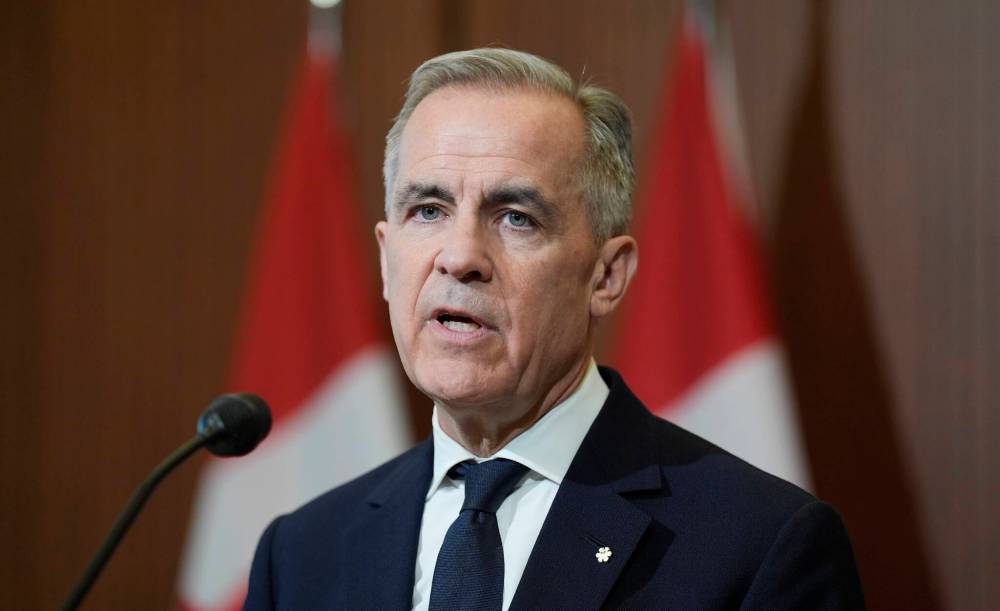
Adrian Wyld / THE CANADIAN PRESS files
Prime Minister Mark Carney
But there are also troubling signs of expanding national rifts that will be hard to heal.
With each passing election, the urban/rural split in the electorate becomes more clear, the east/west split more divisive. Again this election, the Prairies stay almost completely Tory blue, the heart of Toronto glows almost completely red.
It’s a recipe for reacting to the things that divide us, rather than the things that bring us together.
But one of the real changes that brought the Liberals to power again, and toppled a Conservative party that was way, way out in front in the polls only a few months ago, was the unifying effects of a direct threat to this country: U.S. President Donald Trump’s tariffs, and his oft-repeated musings or threats about making Canada the 51st American state.
Canadians rightly realized that, for the country’s sake, there was only one answer to that suggestion: a clearly enunciated, loudly repeated “no.”
But Trump hasn’t been taking “no” for an answer, going so far as to repeat his intentions in an election-day social media message.
Part of good leadership is moving ahead with good ideas, wherever they come from.
At the very tail end of the English language leaders’ debate on April 17, Bloc Québecois Leader Yves-François Blanchet asked Mark Carney how he would deal with the U.S. Trump-and-tariff crisis.
As part of that question, Blanchet had a proposition: “I propose that … one week after the election … we all meet, whatever the result, and we start dealing with this crisis together, because this is what people, either they are from Alberta or Quebec or wherever, this is what people expect.”
Carney, in full election mode, responded by talking about what his team had done as soon as he had taken the reins as prime minister, and talked about being willing to listen to others.
Post-election, that’s not enough.
Carney should meet with the other party leaders about the threats posed by our American neighbours, and quickly. Pierre Poilievre, though he was defeated in his own constituency, should clearly be there as well as leader of the Conservatives — particularly if he’s likely to find a home in the House of Commons as a candidate in a safe-seat byelection after another Conservative resigns to allow Poilievre to run.
Hopefully, all of Canada’s political parties can see the importance of a completely united front. Different political parties will always have different priorities and goals — but all Canadian political parties should see the need to speak the same language when it comes to economic attacks and existential threats to our nation.
Without that clear and comprehensive message, self-interested politicians from other countries, foreign misinformation campaigns and even poisonous Canadian social media actors will continue to try and pick us apart at the seams.

Enemies — and we have them, both outside the country and in — will be looking to capitalize on Canada’s post-election weak points and touch points.
Let’s take some of those weak points away.
More than ever, Canada needs a united front where the concerns of all parts of the country — east and centre and west, urban and rural, right and left — have a voice at the table.
United we stand. Divided?
You know the rest of that saying.