

Sewage dumping into Winnipeg rivers must end
Advertisement
Read this article for free:
or
Already have an account? Log in here »
To continue reading, please subscribe:

Digital Subscription
One year of digital access for only $205*
- Enjoy unlimited reading on winnipegfreepress.com
- Read the E-Edition, our digital replica newspaper
- Access News Break, our award-winning app
- Play interactive puzzles
*First annual payment billed as $205.00 + GST for one year. This annual subscription will automatically renew at $233.00 + GST every 52 weeks (10% off the regular annual price of $259.35). Offer available to new and qualified returning subscribers only. Cancel any time.
To continue reading, please subscribe:
Add Free Press access to your Brandon Sun subscription for only an additional
$1 for the first 4 weeks*
- Enjoy unlimited reading on winnipegfreepress.com
- Read the E-Edition, our digital replica newspaper
- Access News Break, our award-winning app
- Play interactive puzzles
*Your next Brandon Sun subscription payment will increase by $1.00 and you will be charged $17.95 plus GST for four weeks. After four weeks, your payment will increase to $24.95 plus GST every four weeks.
Read unlimited articles for free today:
or
Already have an account? Log in here »
Hey there, time traveller!
This article was published 13/05/2025 (467 days ago), so information in it may no longer be current.
Every year, billions of litres of diluted raw sewage flow into Winnipeg’s rivers. During most rainfalls and snowmelts, the city’s aging combined sewer system — which services about one-third of Winnipeg — overflows, sending a toxic mix of stormwater and untreated human waste directly into the Red and Assiniboine rivers.
Between 2013 and 2023, about 115 billion litres of diluted raw sewage poured into Winnipeg rivers, enough to fill nearly 46,000 Olympic swimming pools.
This is not just an eyesore or a public embarrassment, it’s an environmental and health crisis. And yet, both the provincial and federal governments continue to shirk their responsibility to help fund a solution.
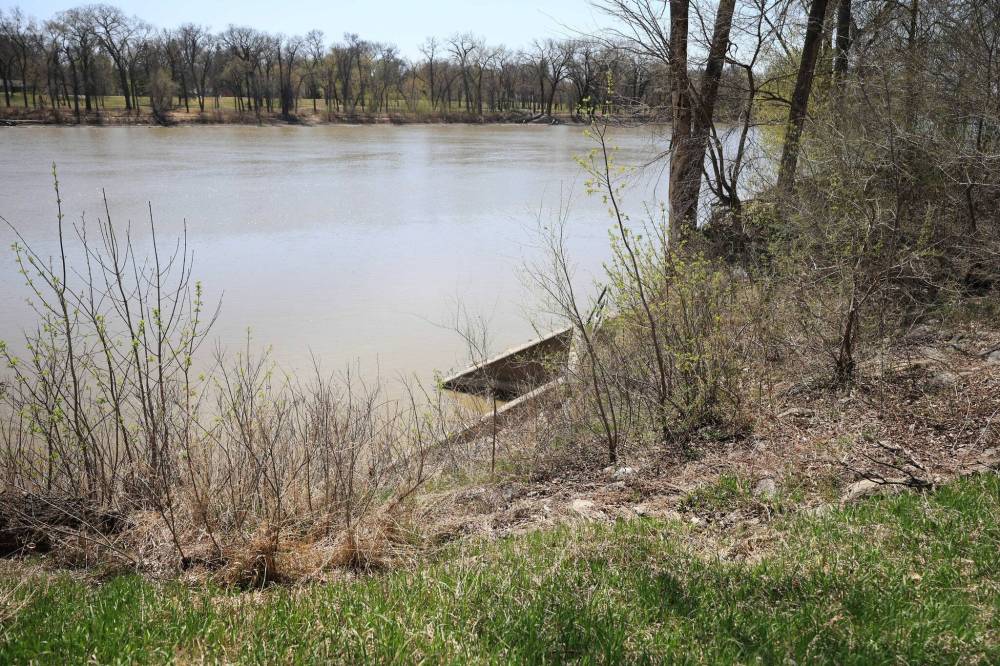
Ruth Bonneville / Free Press files
Sewage still flows into the Red River.
Winnipeg’s combined sewers — legacy infrastructure built over a century ago in the oldest parts of the city — were never designed to handle today’s volume of precipitation, population density or environmental scrutiny. Under dry conditions, these systems transport both sewage and stormwater to treatment plants.
But when overwhelmed, they divert excess flow into rivers, to prevent backups into homes and streets. It is a necessary evil, but only because upgrading these systems is prohibitively expensive for a single municipality to shoulder alone.
These sewage overflows contain bacteria, viruses, pharmaceuticals and pollutants that pose serious threats to aquatic ecosystems. They fuel algae blooms in Lake Winnipeg, damage fish populations and compromise recreational use of our waterways. The moral and ecological cost of continued inaction is indefensible.
The City of Winnipeg has committed to tackling the problem. The most recent plan aims to reduce overflow volume by 85 per cent, at an estimated cost of $2 billion.
Trouble is, the timeline for fixing the problem is far too long. If the city goes it alone, it would take until about 2095 to complete. However, if the provincial and federal governments kick in funding, the work could be completed by around 2045.
Winnipeg has already begun work on upgrading sections of its sewer network by separating combined sewer pipes. Unfortunately, both the provincial and federal governments have refused to commit their fair share toward solving this crisis, despite lofty rhetoric about climate resilience and environmental stewardship.

This is not just a Winnipeg problem, it is a national environmental failure. The Red River, after all, does not stop at Winnipeg’s northern limits — it flows north into Lake Winnipeg, one of the world’s largest freshwater bodies and a vital resource for fisheries, tourism and Indigenous communities. The degradation of this lake is already a national concern, highlighted repeatedly in environmental reports.
The provincial and federal governments have crucial roles to play. Provincial and federal leaders must recognize that protecting our rivers and lakes is not optional, it is a constitutional and ethical duty. Waiting for Winnipeg to slowly fund its way out of its aging infrastructure is irresponsible, shortsighted and ultimately more expensive when the broader environmental toll is accounted for.
We need a clear commitment — today — from both provincial and federal governments to help Winnipeg fast-track its sewer separation plan. This means direct capital investment, matched funding and a multi-decade strategy with timelines and targets. Winnipeg cannot — and should not — be left to pay the entire tab for a crisis that impacts the entire province and country.
Environmental degradation does not wait for budget cycles. Fish do not understand jurisdictional boundaries. Algae blooms do not care who signed the last infrastructure deal.
If Canada is serious about environmental sustainability, then its governments must fund the systems that keep waste out of our waters. Anything less is a betrayal, not only of Winnipeggers, but of every Canadian who believes our rivers and lakes are worth protecting.