

Taxes, negotiations and dealing with a bully
Advertisement
Read this article for free:
or
Already have an account? Log in here »
To continue reading, please subscribe:

Digital Subscription
One year of digital access for only $205*
- Enjoy unlimited reading on winnipegfreepress.com
- Read the E-Edition, our digital replica newspaper
- Access News Break, our award-winning app
- Play interactive puzzles
*First annual payment billed as $205.00 + GST for one year. This annual subscription will automatically renew at $233.00 + GST every 52 weeks (10% off the regular annual price of $259.35). Offer available to new and qualified returning subscribers only. Cancel any time.
To continue reading, please subscribe:
Add Free Press access to your Brandon Sun subscription for only an additional
$1 for the first 4 weeks*
- Enjoy unlimited reading on winnipegfreepress.com
- Read the E-Edition, our digital replica newspaper
- Access News Break, our award-winning app
- Play interactive puzzles
*Your next Brandon Sun subscription payment will increase by $1.00 and you will be charged $17.95 plus GST for four weeks. After four weeks, your payment will increase to $24.95 plus GST every four weeks.
Read unlimited articles for free today:
or
Already have an account? Log in here »
Hey there, time traveller!
This article was published 04/07/2025 (440 days ago), so information in it may no longer be current.
In the current perilous and mercurial moment, it was undoubtedly the right thing to do. But the practical reality of the matter doesn’t make it any less viscerally unpleasant.
The decision last Sunday by Prime Minister Mark Carney to rescind the digital services tax might be, as he attempted to ensure Canadians, a small element of a larger negotiating strategy, but for those who have grown sick and tired of the petulant tirades and deplorable tactics of U.S. President Donald Trump, it felt more like backing down in the face of a bully’s threats.
The DST, which was introduced by the then-Trudeau-led Liberals in 2020 and was set to take effect June 30, would have imposed a three per cent tax on tech giants with Canadian revenues in excess of $20 million per year.
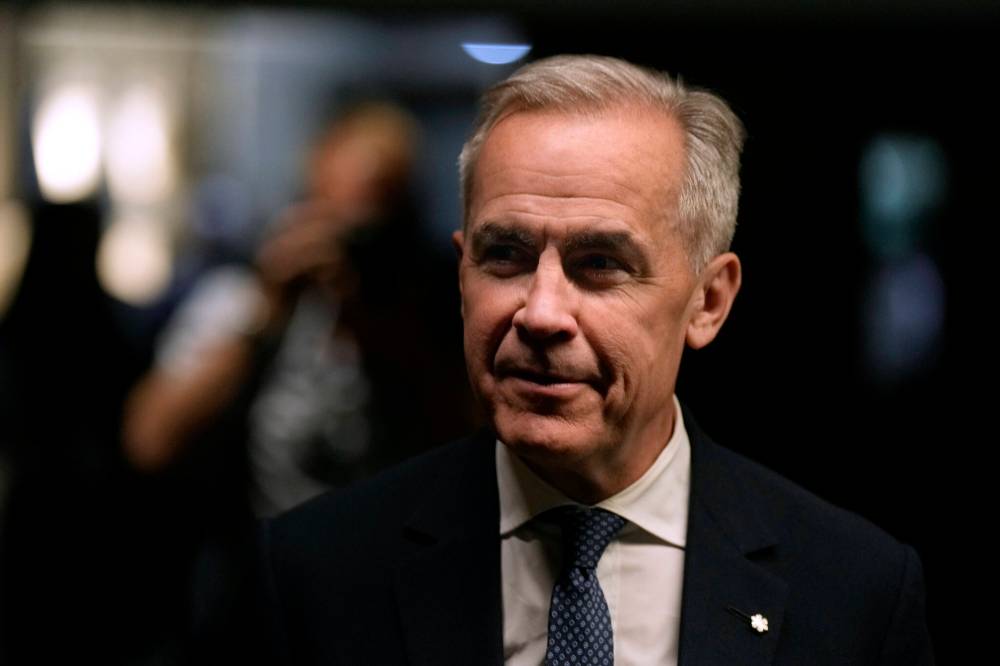
Adrian Wyld / The Canadian Press
Prime Minister Mark Carney
The primary targets, of course, were U.S.-based firms such as Meta (Facebook, Instagram), Amazon, Google, X Corp. (formerly Twitter) and others, which have siphoned off billions in revenue from this country’s retail, commercial and media sectors without contributing anything to the Canadian economy.
Other nations, including France, the United Kingdom, Spain and Italy, have imposed their own versions of a DST, and the Organization for Economic Co-operation and Development (OECD) continues its long and often-stalled effort to create an international framework for regulating and taxing global tech companies.
But Trump, who since being re-elected has fabricated numerous rationales for imposing tariffs and other penalties on Canada, last week described the DST as “a direct and blatant attack” on the U.S. and declared he would cease all trade negotiations until Canada “straighten(s) out their act.”
Given that Carney has invested considerable time and political capital into repairing Canada-U.S. relations that had turned toxic largely because of the U.S. president’s deep dislike for former prime minister Justin Trudeau, it isn’t surprising that the decision was made to shelve the DST, at least temporarily. Carney’s priority is to restart talks aimed at reaching a trade deal that addresses the punitive tariffs that have been capriciously applied since Trump’s return to the White House.

“It’s part of a bigger negotiation,” Carney said of the DST withdrawal. “It’s something that we expected in the broader sense that would be part of a final deal.” Trade talks between Canada and the U.S. resumed Monday, with the previously agreed-upon deadline of July 21 still being the target for reaching an agreement.
Whether the last-minute cancellation of the digital tax truly was a tactical move or simply amounts to an act of sheepish acquiescence, it’s difficult for Canadians to view it as anything but loathsome. We’re all taught, from childhood, that we should never give in to a bully, because doing so will only embolden the tormentor to attack again, demand more and extract as much as can be gained for as long as the bullying tactics continue to work.
In addition to the direct costs of seeking to appease, there’s also an emotional toll that comes with letting a bully get away with it, a sickening feeling deep in the pit of one’s stomach at the idea the bad guys are winning, yet again, and that maybe the arc of history does not — as former president Barack Obama and others have professed — bend toward justice.
For now, all we have is our trust that Carney really is playing a long game, and that Canadians will be rewarded for their patience in this moment of profound frustration.
Giving in to a bully is deeply unpleasant; now, it’s up to the PM to prove to us all it was worth it.