

A social media message about sugar — and consequences
Advertisement
Read this article for free:
or
Already have an account? Log in here »
To continue reading, please subscribe:

Digital Subscription
One year of digital access for only $205*
- Enjoy unlimited reading on winnipegfreepress.com
- Read the E-Edition, our digital replica newspaper
- Access News Break, our award-winning app
- Play interactive puzzles
*First annual payment billed as $205.00 + GST for one year. This annual subscription will automatically renew at $233.00 + GST every 52 weeks (10% off the regular annual price of $259.35). Offer available to new and qualified returning subscribers only. Cancel any time.
To continue reading, please subscribe:
Add Free Press access to your Brandon Sun subscription for only an additional
$1 for the first 4 weeks*
- Enjoy unlimited reading on winnipegfreepress.com
- Read the E-Edition, our digital replica newspaper
- Access News Break, our award-winning app
- Play interactive puzzles
*Your next Brandon Sun subscription payment will increase by $1.00 and you will be charged $17.95 plus GST for four weeks. After four weeks, your payment will increase to $24.95 plus GST every four weeks.
Read unlimited articles for free today:
or
Already have an account? Log in here »
Hey there, time traveller!
This article was published 18/07/2025 (445 days ago), so information in it may no longer be current.
Let’s talk about one sweet little mess.
In yet another of his late-night social media pronouncements, U.S. President Donald Trump proclaimed that he’d reached a deal with Coca-Cola: “I’ve been speaking to Coca-Cola about using REAL Cane Sugar in Coke in the United States, and they have agreed to do so. I’d like to thank all those in authority at Coca-Cola. This will be a very good move by Them — You’ll see. It’s just better!”
As often is the case with Trump’s off-the-cuff announcements, the business involved was, well, not exactly on the same page. The company said it appreciates “President Trump’s enthusiasm for our iconic Coca-Cola brand,” and said it will have more details on “new innovative offerings within our Coca-Cola product range … soon.”

Jacquelyn Martin / The Associated Press
U.S. President Donald Trump
If Trump is right about the change — and the jury’s clearly still out — moving to cane sugar would present some interesting issues.
The largest would be where the cane sugar would come from.
Global production of cane sugar in 2023-24 was around 150 million metric tonnes.
The world’s largest cane sugar producer, Brazil, accounted for 42 million metric tonnes in 2023-24, followed by India at 36 million metric tonnes, Thailand at 11.2 million metric tonnes, and China at 10 million metric tonnes.
The U.S. ranks well down in cane sugar production: although the U.S. had total sugar production of 8.4 million metric tonnes, the majority of that, 4.62 million tonnes, came from sugar beets, not sugar cane. (And U.S. sugar producers imported US$2.6 billion worth of Brazilian and Mexican sugar cane last year to reach their current production level.)
And at this point, the U.S. is a net importer of sugar, with Americans consuming 11.5 million tonnes of sugar annually. The country imported 2.2 million metric tonnes of sugar in 2024/25.
That means a switch to cane sugar by Coca-Cola is likely to require more sugar imports.
But then, U.S. national security throws a spike in the wheels.
Tariffs that Trump has imposed for “security” reasons have added tariffs to all imports from Brazil (a 50 per cent tariff), India (a 26 per cent tariff), Thailand (a 36 per cent tariff) and China (at least a 34 per cent tariff). On top of that, China is already a net importer of sugar, and India consumes 31 million metric tonnes of sugar, meaning it only exported five million metric tonnes of cane sugar last year, meaning supplies are limited.
So, a change by Coca-Cola would definitely carry the risk of consumer price hikes for their product. A beverage giant is not going to lose money simply to please a president’s taste buds.
At the same time, using cane sugar would displace high-fructose corn syrup from Coca-Cola’s current formulation of the Coke product — corn syrup which is a key product of the American agricultural industry.

The U.S. Corn Refiners Association stepped into the argument in a hurry, issuing a statement saying: “Replacing high fructose corn syrup with cane sugar would cost thousands of American food manufacturing jobs, depress farm income, and boost imports of foreign sugar, all with no nutritional benefit.”
All in all, displacing an American-made agricultural product for a higher-priced import likely to cost even more due to high tariffs sounds like the antithesis of “America First.”
But then again, it’s completely on brand for Donald Trump’s scattergun approach to tariffs, the global economy, and a world he views through the lens of his personal likes and dislikes.
Chances are, the best guess is probably that Coca-Cola introduces a higher-priced, boutique cane sugar “variety” of Coca-Cola to mollify the president and allow him to declare victory, and everything else stays just the way it was.
A sweet and hollow success story.
Related Articles
Trump says Coke will shift to cane sugar. But increasingly, shoppers want no sugar in their sodas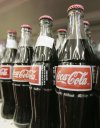

Advertisement Advertise With Us
Advertisement Advertise With Us
History
Updated on Friday, July 18, 2025 9:13 AM CDT: Corrects reference to cane sugar