

Seniors deserve decent care home food
Advertisement
Read this article for free:
or
Already have an account? Log in here »
To continue reading, please subscribe:

Digital Subscription
One year of digital access for only $205*
- Enjoy unlimited reading on winnipegfreepress.com
- Read the E-Edition, our digital replica newspaper
- Access News Break, our award-winning app
- Play interactive puzzles
*First annual payment billed as $205.00 + GST for one year. This annual subscription will automatically renew at $233.00 + GST every 52 weeks (10% off the regular annual price of $259.35). Offer available to new and qualified returning subscribers only. Cancel any time.
To continue reading, please subscribe:
Add Free Press access to your Brandon Sun subscription for only an additional
$1 for the first 4 weeks*
- Enjoy unlimited reading on winnipegfreepress.com
- Read the E-Edition, our digital replica newspaper
- Access News Break, our award-winning app
- Play interactive puzzles
*Your next Brandon Sun subscription payment will increase by $1.00 and you will be charged $17.95 plus GST for four weeks. After four weeks, your payment will increase to $24.95 plus GST every four weeks.
Read unlimited articles for free today:
or
Already have an account? Log in here »
Hey there, time traveller!
This article was published 07/08/2025 (425 days ago), so information in it may no longer be current.
It’s a seven-word statement that speaks volumes about the plight facing far too many Manitoba seniors: “Quality food is important for quality of life.”
The observation was offered by Gary Ledoux, CEO of the Bethania Mennonite Personal Care Home, in reference to the 162,000 meals that are prepared on-site annually to feed the facility’s 148 residents. At every meal, two entree choices are offered, along with salad and fresh vegetables. Bethania also convenes a monthly tasting panel at which residents talk about the food.
Based on recent reporting in the Free Press, it seems the mealtime experiences of residents at this North Kildonan care home are the exception rather than the rule. In many cases, what’s on the menu at Manitoba’s care homes is reported to be somewhere between unappealing and downright inedible.
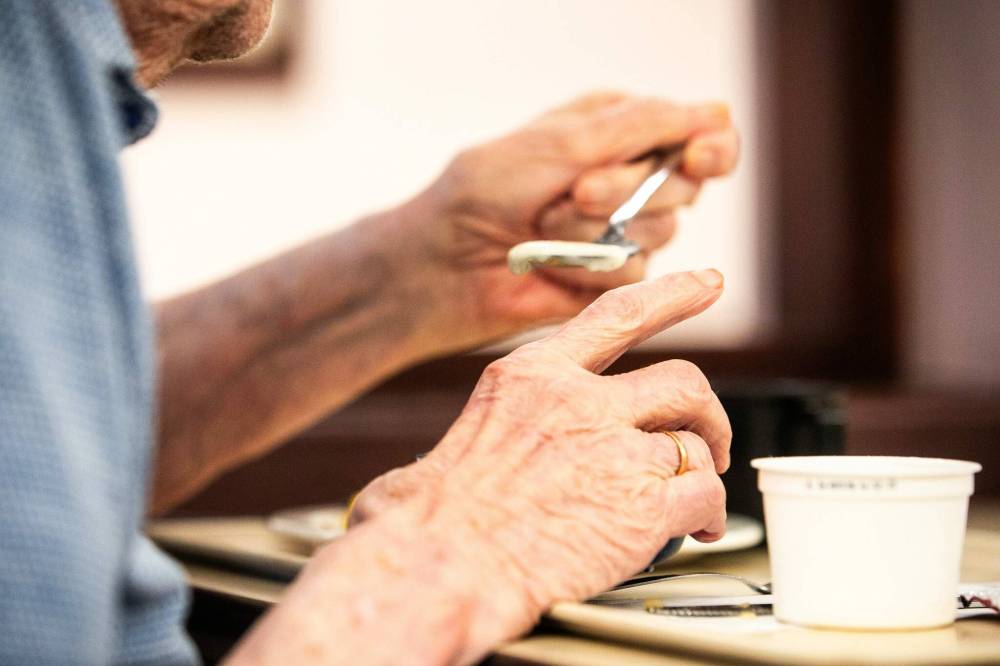
MIKAELA MACKENZIE / FREE PRESS FILES
Personal care home food needs improvement.
In a recent article, terms used to describe food served to seniors included “grey, colourless mush,” “tasteless,” “no fresh stuff” and “a side order of something unidentifiable,” in “minuscule and unappetizing”portions. One family member added the observation that “prisoners get better meals.”
And while the factors and challenges related to preparing and serving meals to the elderly in care are manifold and complex, there’s one element of the palatable-food equation that could be addressed directly: money.
Anyone who has traversed the aisles of a grocery store lately can attest that food costs more now than it ever has. Inflation has made life, and accessing the food necessary to sustain it, much more difficult — including for those charged with preparing and serving meals to seniors in care homes.
But the funding provided by government, by way of the province’s regional health authorities, to care homes has not increased since 2009. Despite the rising costs of food, year to year and particularly since the pandemic-fueled recession, the support afforded to care homes has not been adjusted upward for more than a decade and a half, through governments of both Manitoba’s prevailing stripes.
At Bethania, the annual per-resident cost of food was $2,582 in 2009. In 2023, the cost was $4,056. And we all know what has happened to grocery prices in the past 18 months.
It’s likely Ledoux speaks for the management of every one of the 37 care homes in Winnipeg when he says, “Lack of funding is our No. 1 challenge.”

In addition to absorbing the rising cost of food, care homes are also struggling to attract and retain staff; shortages of personnel mean fewer workers available to assist seniors whose physical and/or cognitive impairments make it impossible for them to consume meals on their own.
In many cases, meal quality is such that family members feel compelled to bring in outside food so their loved ones will have something they’re willing to eat. When one family member advised her father’s favourite food was fruit, a social worker’s response was “At $6.40 per day (of funding) per senior, he won’t be getting that here. (But) you can bring in anything you want.”
The bureaucratic responses are familiar and frustrating: the RHA states it doesn’t receive enough money from the province, and the province says it’s up to the health authority to decide how/where to spend the money it receives.
Inevitably, discussions about food fade into the background and seniors’ nutrition once again becomes an “out of sight, out of mind” consideration.
Now that the issue has been brought back to the forefront, however, perhaps it’s time to demand an answer to the question that has been obvious all along: don’t seniors in care in this province deserve better?