

Climate change: the danger is everywhere
Advertisement
Read this article for free:
or
Already have an account? Log in here »
To continue reading, please subscribe:
Monthly Digital Subscription
$0 for the first 4 weeks*
- Enjoy unlimited reading on winnipegfreepress.com
- Read the E-Edition, our digital replica newspaper
- Access News Break, our award-winning app
- Play interactive puzzles
*No charge for 4 weeks then price increases to the regular rate of $19.95 plus GST every four weeks. Offer available to new and qualified returning subscribers only. Cancel any time.
Monthly Digital Subscription
$4.99/week*
- Enjoy unlimited reading on winnipegfreepress.com
- Read the E-Edition, our digital replica newspaper
- Access News Break, our award-winning app
- Play interactive puzzles
*Billed as $19.95 plus GST every four weeks. Cancel any time.
To continue reading, please subscribe:
Add Free Press access to your Brandon Sun subscription for only an additional
$1 for the first 4 weeks*
*Your next subscription payment will increase by $1.00 and you will be charged $16.99 plus GST for four weeks. After four weeks, your payment will increase to $23.99 plus GST every four weeks.
Read unlimited articles for free today:
or
Already have an account? Log in here »
As climate change continues to turn up the temperature around the world, it’s becoming increasingly clear that nowhere, no matter how developed, is truly safe from its effects.
A recent housing analysis in the U.K., as reported by the Guardian earlier this week, revealed that a significant portion (48 per cent) of homes belonging to “the poorest fifth of English households,” are at risk of overheating as England contends with higher summer temperatures. Minority ethnic U.K. residents, children and seniors face particular danger.
Even the wealthiest English are not entirely spared — 17 per cent are at risk. Private rented homes fare better in their ability to manage heat than rentals.
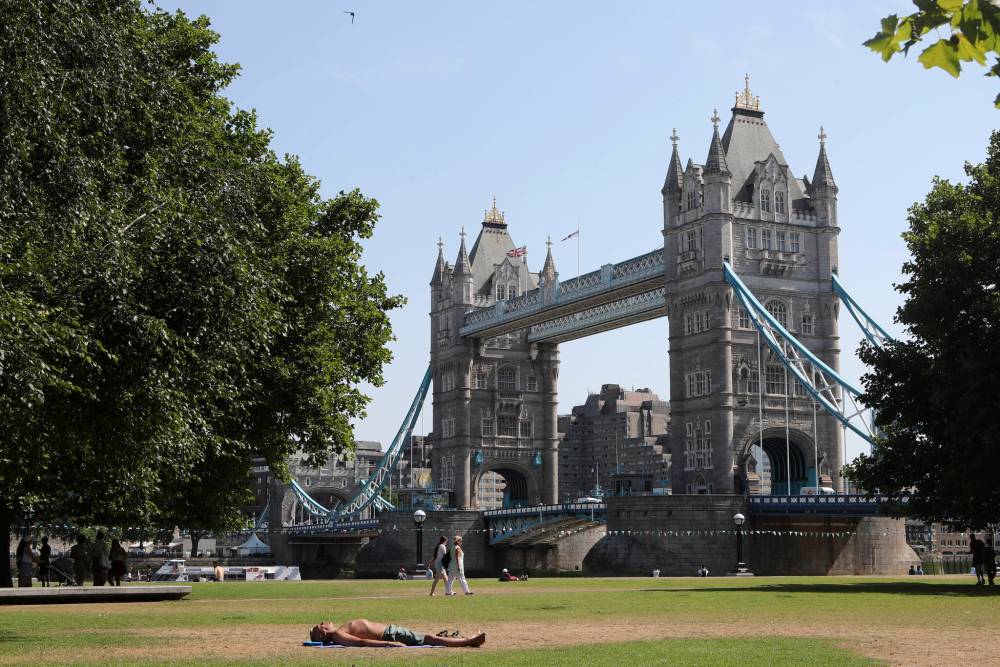
As the country endures a summer of heat waves, the risks associated with a too-hot home are quite real. High temperatures in homes are connected to everything from respiratory issues to mental health problems. And while first-world countries such as the U.K. are considered to be developed, post-industrial ones, their construction standards for decades have followed the requirements of a bygone era — they do have, for example, the same level of air conditioning seen in many homes where warmer temperatures have been the norm.
Experts in the U.K. have called on government to update future homes to better contend with the climate realities of today. But even if recommendations come to fruition as expected in 2027, that is a long-term project which does little to help people stuck in overheating homes built in the past century. Like many people, those residents may have to face the difficult choice between sticking it out, or leaving for cooler pastures — or at least pastures with superior A/C.
That said, the idea of waves of climate refugees flooding into the first world is a misguided one, at least according to the data. The UN Refugee Agency, via a webpage dedicated to debunking climater refugee myths, states “suggestions that large numbers of people fleeing climate change in the Global South will head to the Global North are not supported by current evidence,” as most people displaced by climate-related disasters relocate within their own countries, or sometimes to a neighbouring nation. According to the agency, in 2022 more than 32 million people were internally displaced due to floods, storms, wildfires, and other weather-related disasters. That’s a 41 per cent increase from 2008.
We’re getting a view of that here in Manitoba as well, as people in the province’s North are evacuated to the south amid raging wildfires. The era of the climate refugee is here, but they are not coming from abroad.
However the UN is clear that disasters aren’t the only things which can make one a climate refugee — climate change is a “threat multiplier” exacerbating poverty, loss of work, and other factors, which can themselves drive people to move elsewhere — which is closer to the situation the U.K. is facing.

It is difficult, according to the UN, to establish just how many people climate change will displace, because it depends on how humanity tackles the crisis from here on out. But what’s clear is this: from Manitoba’s North, to English apartment buildings, to ecologically ravaged nations in the Global South, nowhere is free and clear of the damage.
That means governments around the world are all equally incentivized to mitigate the damage before too many people are driven too far from home because of it — and it means all of us will have to find a way to help all those who are forced to flee.