

Retaliation, tariffs and strategy — it’s a process
Advertisement
Read this article for free:
or
Already have an account? Log in here »
To continue reading, please subscribe:
Monthly Digital Subscription
$1 per week for 24 weeks*
- Enjoy unlimited reading on winnipegfreepress.com
- Read the E-Edition, our digital replica newspaper
- Access News Break, our award-winning app
- Play interactive puzzles
*Billed as $4.00 plus GST every four weeks. After 24 weeks, price increases to the regular rate of $19.95 plus GST every four weeks. Offer available to new and qualified returning subscribers only. Cancel any time.
Monthly Digital Subscription
$4.99/week*
- Enjoy unlimited reading on winnipegfreepress.com
- Read the E-Edition, our digital replica newspaper
- Access News Break, our award-winning app
- Play interactive puzzles
*Billed as $19.95 plus GST every four weeks. Cancel any time.
To continue reading, please subscribe:
Add Free Press access to your Brandon Sun subscription for only an additional
$1 for the first 4 weeks*
*Your next subscription payment will increase by $1.00 and you will be charged $16.99 plus GST for four weeks. After four weeks, your payment will increase to $23.99 plus GST every four weeks.
Read unlimited articles for free today:
or
Already have an account? Log in here »
Hey there, time traveller!
This article was published 27/08/2025 (209 days ago), so information in it may no longer be current.
Prime Minister Mark Carney’s decision last week to roll back some of the retaliatory tariffs Canada imposed on U.S. imports marks a clear shift in Ottawa’s trade strategy.
For the first time in months, the federal government is moving away from a posture of tit-for-tat escalation and signalling a willingness to lower the temperature on Canada’s ever-changing trade dispute with the U.S.
It is not without risk. Trade policy under U.S. President Donald Trump is anything but stable. What the president praises one day, he often disparages the next.
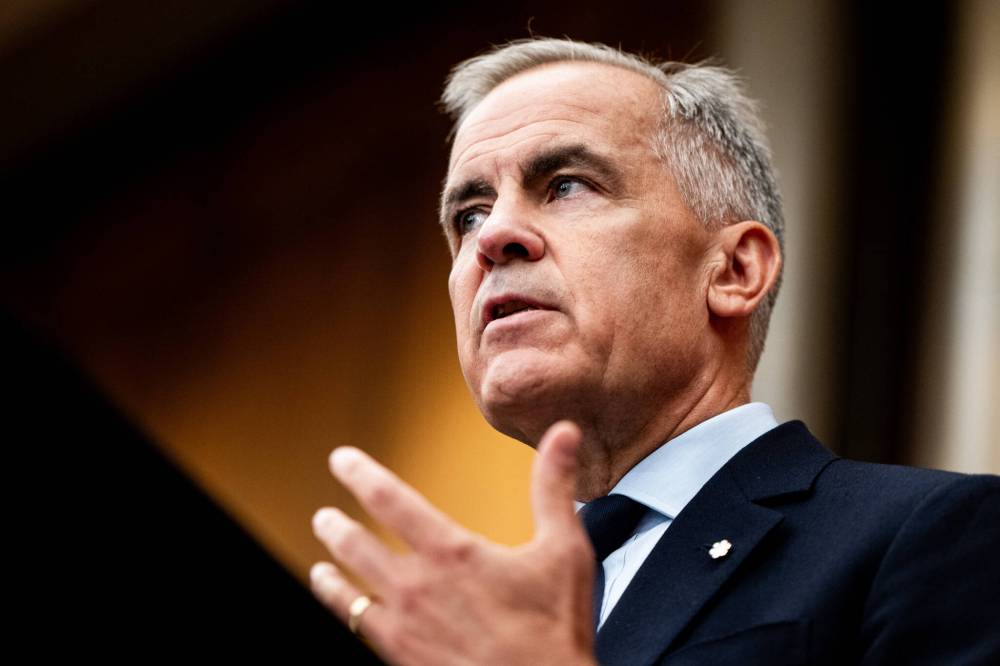
Spencer Colby / The Canadian Press
Prime Minister Mark Carney
His comments following Carney’s announcement — describing Ottawa’s move as “nice” — are hardly a guarantee of lasting goodwill. If history is any guide, the prospect of new tariffs being imposed with little warning remains as real today as it was yesterday.
Still, the prime minister’s pivot deserves recognition for what it is: a pragmatic step aimed at creating an opening for meaningful trade talks with Washington. After months of stalemate and mounting costs for Canadian businesses and consumers, doing nothing was no longer an option.
When Canada imposed retaliatory tariffs in response to U.S. levies on steel, aluminum, and other goods, the move was justified. Ottawa had little choice but to stand up for its industries and workers against an administration bent on weaponizing trade. Retaliation was meant to show that Canada would not be bullied, and to create leverage at the bargaining table.
But time has shown the limits of that approach. While the tariffs inflicted some pain on U.S. exporters, they also drove up costs for Canadian manufacturers, farmers, and families. In many cases, businesses that depend on cross-border supply chains ended up as collateral damage in a war they never asked for.
For a country so dependent on trade with its southern neighbour, there is no denying the imbalance of power. Canada is a significant market for American goods, but the United States is indispensable to Canada. When Washington decides to play hardball, Ottawa has only a handful of cards to play.
Carney’s decision reflects a sober recognition of that reality. By easing some of Canada’s retaliatory measures, Ottawa is extending an olive branch designed to restart dialogue on more equal terms. The alternative — digging in further — risked prolonging a costly stalemate with no end in sight.

Critics will argue that Canada has given up leverage by blinking first. They may be right, to a degree. In a textbook negotiation, one does not surrender bargaining chips without extracting something in return. But real-world diplomacy rarely follows the textbook, especially when one side refuses to play by the rules.
The U.S. president has shown time and again that he views tariffs not as a negotiating tool to be traded away, but as a cudgel to be wielded at will. To cling to the fiction that Ottawa’s retaliatory measures would eventually force Washington’s hand is to ignore the reality of the Trump era.
The prime minister has made a calculated retreat, one that acknowledges Canada’s limited options while keeping the door open to progress. The gesture may or may not bear fruit, but it resets the tone of a relationship that has become increasingly acrimonious. If nothing else, it signals to American businesses and policymakers that Canada remains committed to finding solutions, even when Washington does not.
If it leads to renewed talks and fewer barriers at the border, it will be remembered as a turning point in a strained relationship. If not, Canada may find itself back where it started — only with fewer bargaining chips.
Carney’s move was likely the best Canadians could hope for at this stage of the game. Time will tell if it was the right one.