

Agreement breeds even more disagreement
Advertisement
Read this article for free:
or
Already have an account? Log in here »
To continue reading, please subscribe:

Digital Subscription
One year of digital access for only $205*
- Enjoy unlimited reading on winnipegfreepress.com
- Read the E-Edition, our digital replica newspaper
- Access News Break, our award-winning app
- Play interactive puzzles
*First annual payment billed as $205.00 + GST for one year. This annual subscription will automatically renew at $233.00 + GST every 52 weeks (10% off the regular annual price of $259.35). Offer available to new and qualified returning subscribers only. Cancel any time.
To continue reading, please subscribe:
Add Free Press access to your Brandon Sun subscription for only an additional
$1 for the first 4 weeks*
- Enjoy unlimited reading on winnipegfreepress.com
- Read the E-Edition, our digital replica newspaper
- Access News Break, our award-winning app
- Play interactive puzzles
*Your next Brandon Sun subscription payment will increase by $1.00 and you will be charged $17.95 plus GST for four weeks. After four weeks, your payment will increase to $24.95 plus GST every four weeks.
Read unlimited articles for free today:
or
Already have an account? Log in here »
Hey there, time traveller!
This article was published 04/12/2025 (245 days ago), so information in it may no longer be current.
The intention, no doubt, was to streamline processes, ease tensions and generally make things simpler.
With his recently announced pipeline agreement, however, Prime Minister Mark Carney has accomplished none of the above.
Late last week, Carney and Alberta Premier Danielle Smith signed a deal that lays the groundwork for a new pipeline to carry bitumen from northern Alberta to the British Columbia coast. The agreement signals in big, bold letters that the prime minister is set on reframing the nation’s economic agenda, moving aggressively and pragmatically away from the green-hued climate and regulatory policies pursued by his predecessor, Justin Trudeau.
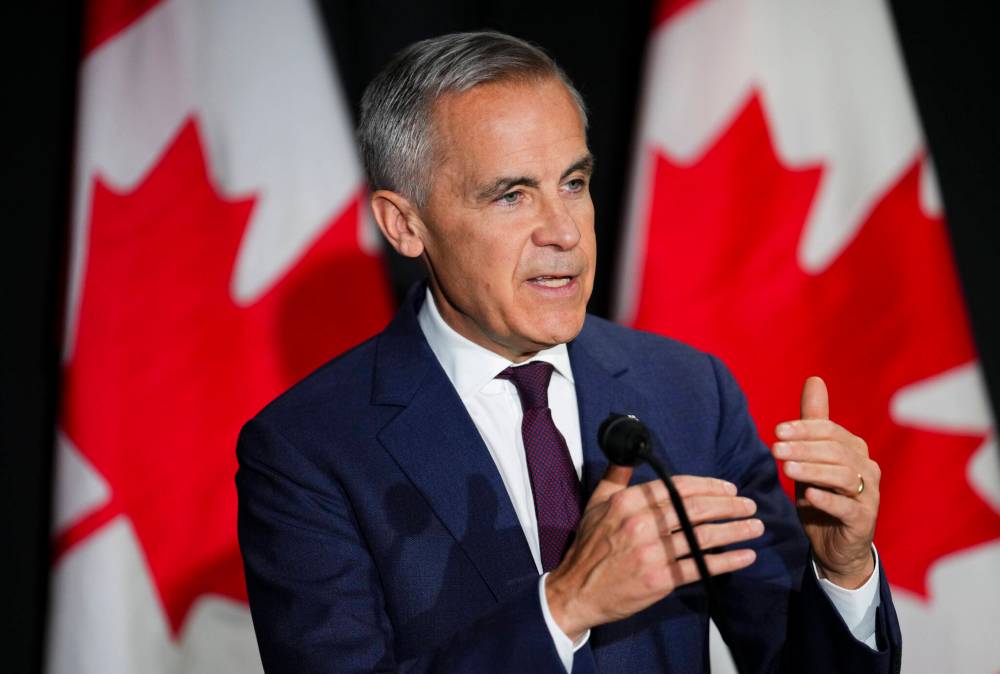
Sean Kilpatrick / The Canadian Press files
Prime Minister Mark Carney
The memorandum of understanding states the proposed pipeline — described as “a project of national interest” — would move more than a million barrels a day to deepwater ports in northern B.C. for export (mostly) to markets in Asia. The so-called national interest relies, as the agreement states, on “increasing production of Alberta oil and gas to reach Canada’s export and national security goals.”
The project would have to be financed and built by the private sector, and is contingent on consultation and agreements with Indigenous communities and leadership — a condition which, as the days following the signing have amply demonstrated, might be near-impossible to satisfy.
Clearly, pursuing this oil-export-focused exercise in Alberta appeasement is a key element in Carney’s ambitious effort to make Canada less reliant on the U.S. as a trading partner. Upon signing the agreement, the prime minister declared the project “sets the stage for an industrial transformation … that’s going to make Canada stronger, more independent, more resilient, more sustainable.”
It might even be argued the agreement makes Canada more united — in rejection of the plan. First Nations don’t like it. Opposition parties don’t like it. Other provinces — including B.C., through which the pipeline would necessarily extend on its way to the coast — don’t like it.
Environmentalists and regular folks concerned about the climate crisis and the potential damage a pipeline could cause in sensitive wilderness areas don’t like it. Heck, some in Carney’s own Liberal caucus don’t like it — with one of them being so vehemently opposed that he resigned his cabinet seat in protest.
And if last Thursday’s flourish of pen strokes was a moment of triumph for Carney and Smith, it was decidedly short-lived.

Every day since has been a cavalcade of criticisms, questions and rejections so emphatic that the idea of getting a new pipeline built from Alberta’s oilsands to the B.C. coast seems more remote now than ever.
B.C. Premier David Eby said he isn’t completely averse to discussing another pipeline project through his province, but added that any such discussions must include maintaining the currently existing ban on oil-tanker traffic off B.C.’s north coast. Adjustments to the ban “if necessary” are a key component of the Carney-Smith deal, of course, because all that oil piped to the coast has to be transported by sea.
And then there’s the Indigenous-interests reaction to the accord, which might charitably be described as tepid. At its annual meeting in Ottawa, the Assembly of First Nations on Tuesday voted unanimously to demand withdrawal of the Alberta-Ottawa deal and expressed full support for the coastal B.C. First Nations opposed to the pipeline. AFN delegates also passed an emergency resolution in support of the offshore tanker ban.
Carney has vowed he will consult with First Nations leadership, but it’s difficult to see where his pipeline deal goes from here.
It’s almost as if Conservative Leader Pierre Poilievre nailed it when he dismissed the Carney-Smith signing ceremony as a public-relations stunt.