

Time to clean up a world of ‘slop’
Advertisement
Read this article for free:
or
Already have an account? Log in here »
To continue reading, please subscribe:

Digital Subscription
One year of digital access for only $205*
- Enjoy unlimited reading on winnipegfreepress.com
- Read the E-Edition, our digital replica newspaper
- Access News Break, our award-winning app
- Play interactive puzzles
*First annual payment billed as $205.00 + GST for one year. This annual subscription will automatically renew at $233.00 + GST every 52 weeks (10% off the regular annual price of $259.35). Offer available to new and qualified returning subscribers only. Cancel any time.
To continue reading, please subscribe:
Add Free Press access to your Brandon Sun subscription for only an additional
$1 for the first 4 weeks*
- Enjoy unlimited reading on winnipegfreepress.com
- Read the E-Edition, our digital replica newspaper
- Access News Break, our award-winning app
- Play interactive puzzles
*Your next Brandon Sun subscription payment will increase by $1.00 and you will be charged $17.95 plus GST for four weeks. After four weeks, your payment will increase to $24.95 plus GST every four weeks.
Read unlimited articles for free today:
or
Already have an account? Log in here »
Hey there, time traveller!
This article was published 20/12/2025 (292 days ago), so information in it may no longer be current.
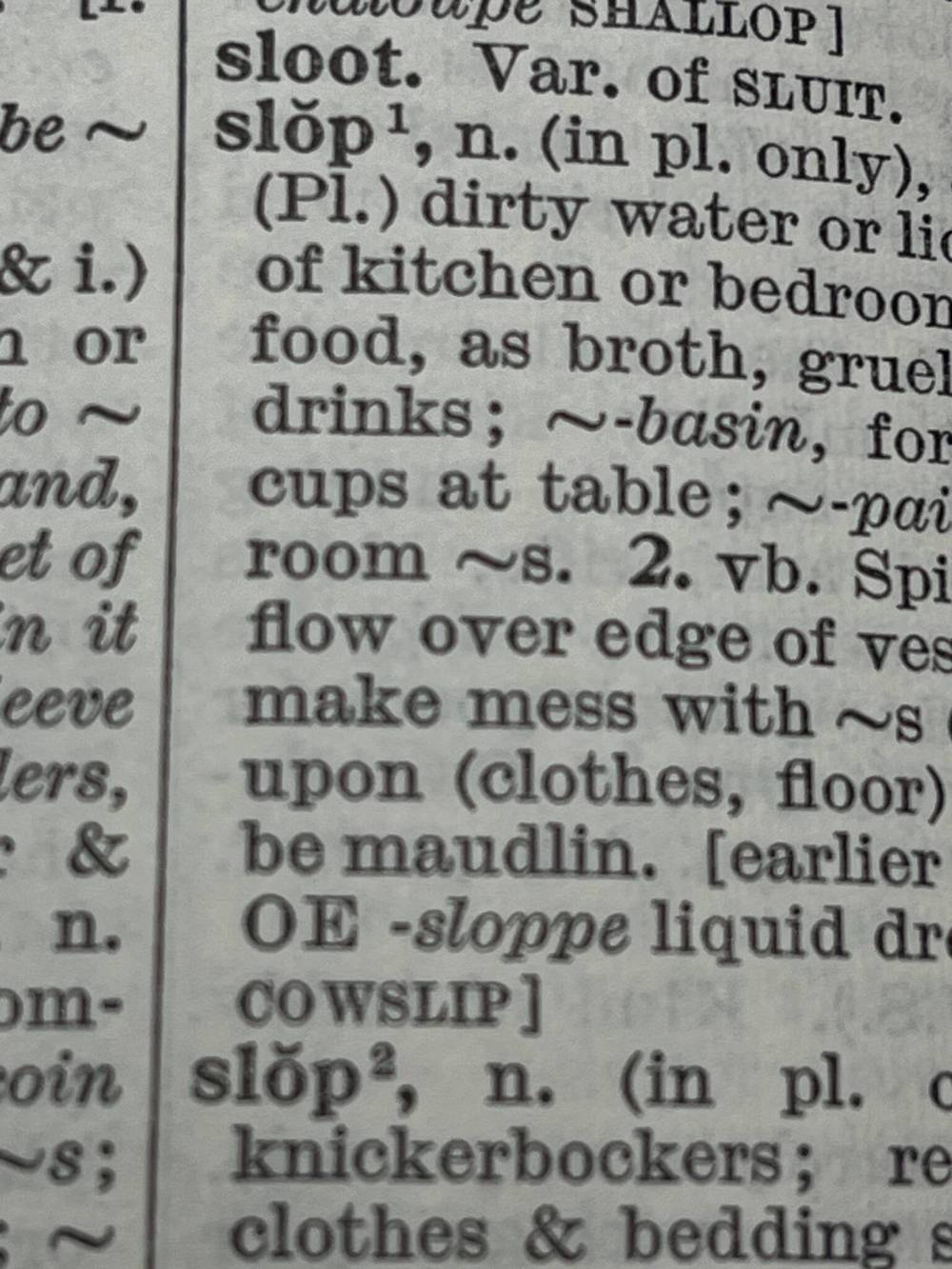
Merriam-Webster chose its word of the year correctly, and for more reasons than it might realize.
“Slop” is the word of 2025, according to the dictionary publisher. The decision was motivated primarily by the public’s encounters with, and reaction to, content generated by “artificial intelligence” large-language models.
Despite the best efforts of the technology’s proponents, people are quickly getting tired of being inundated with gaudy, glossy, lazy AI-generated images and videos practically everywhere they turn, from social media platforms to T-shirt vendors.
FILE
Slop has been named the word of the year.
According to a Pew Research Center survey of U.S. residents released in September, respondents were more concerned than excited by the technology, and were “generally pessimistic about AI’s effect on people’s ability to think creatively…”
The “slop” is more than just annoying. It’s environmentally destructive, considering that the data centres needed to run the AI models consume great quantities of electricity and water. It’s also politically destructive, as bad actors use the technology to create, in essence, an alternate (read: false) reality which is eagerly gobbled up by those who want to believe what the images and videos portray.
In April, Concordia University released research showing social media algorithms were a prime spot for exploitation by AI-run automated bots.
“The platforms’ own vulnerabilities to outside manipulation make them tempting targets for malicious actors who hope to sow discord and unsettle societies,” the university’s report states.
In this case, the “slop” isn’t just a lousy-looking photo of a celebrity made to look like a character in The Simpsons, but rather an entire false personality whose purpose is to make online users argue with someone who doesn’t really exist. An artificial gadfly, built to muddy water and waste time.
Younger cohorts are far from free of it either. YouTube, for example, is quickly becoming overrun with AI-generated videos which, frankly, make previous forms of YouTube drek look like pure cinema in comparison.
In an era which feels increasingly dystopian, AI slop is a cherry on a very particular sundae: “art” stripped of artistry, made in seconds by people with questionable intentions and flooding every space into which it can be jammed. It’s artistically dispiriting and somewhat maddening. Did this short-form video you scrolled by on your phone, depicting a shocking event, actually happen? Or should you watch it a few more times to look for tell-tale signs it might be fake?

These are questions we shouldn’t have to ask so often, but we do in the age of slop. We add those moments of frustrating doubt to the doubt experienced by teachers at all levels of education who must ask themselves if their student really wrote the essay they handed in. Add all of that to the real concerns that AI-powered children’s toys might teach those children terrible things.
These AI models have left the barn, but it’s not entirely impossible to get them back in. Legislators do not have to be hopelessly behind the times when creating rules around new technology and new paradigms. We are able to tell, after only a short period of time in which the public has had access to the tech, how it can be — and is being — abused.
And as irritating as it is, the slop cluttering Facebook and YouTube is the least of it. As long as these models are allowed to operate unfettered, they will continue to impede (genuine) artistic expression andacademic pursuit and compromise an already tattered consensus of reality.
There is still time to put some controls on this technology. So, let’s encourage lawmakers to put a different word at the top of their mind for 2026.
“Regulation.”