

The environmental cost of instant delivery
Advertisement
Read this article for free:
or
Already have an account? Log in here »
To continue reading, please subscribe:

Digital Subscription
One year of digital access for only $205*
- Enjoy unlimited reading on winnipegfreepress.com
- Read the E-Edition, our digital replica newspaper
- Access News Break, our award-winning app
- Play interactive puzzles
*First annual payment billed as $205.00 + GST for one year. This annual subscription will automatically renew at $233.00 + GST every 52 weeks (10% off the regular annual price of $259.35). Offer available to new and qualified returning subscribers only. Cancel any time.
To continue reading, please subscribe:
Add Free Press access to your Brandon Sun subscription for only an additional
$1 for the first 4 weeks*
- Enjoy unlimited reading on winnipegfreepress.com
- Read the E-Edition, our digital replica newspaper
- Access News Break, our award-winning app
- Play interactive puzzles
*Your next Brandon Sun subscription payment will increase by $1.00 and you will be charged $17.95 plus GST for four weeks. After four weeks, your payment will increase to $24.95 plus GST every four weeks.
Read unlimited articles for free today:
or
Already have an account? Log in here »
Hey there, time traveller!
This article was published 30/12/2025 (273 days ago), so information in it may no longer be current.
The box arrives before you’ve finished your coffee. That, in a nutshell, is the modern miracle — and modern problem — of online shopping.
With a few taps, whatever you want appears on your doorstep the same day, overnight or tomorrow. We have come to expect it. We have come to demand it. And rarely do we stop to consider what that speed costs the climate.
Here is the uncomfortable truth: lowering emissions from online shopping may be one of the simplest climate fixes available — if we are willing to wait.
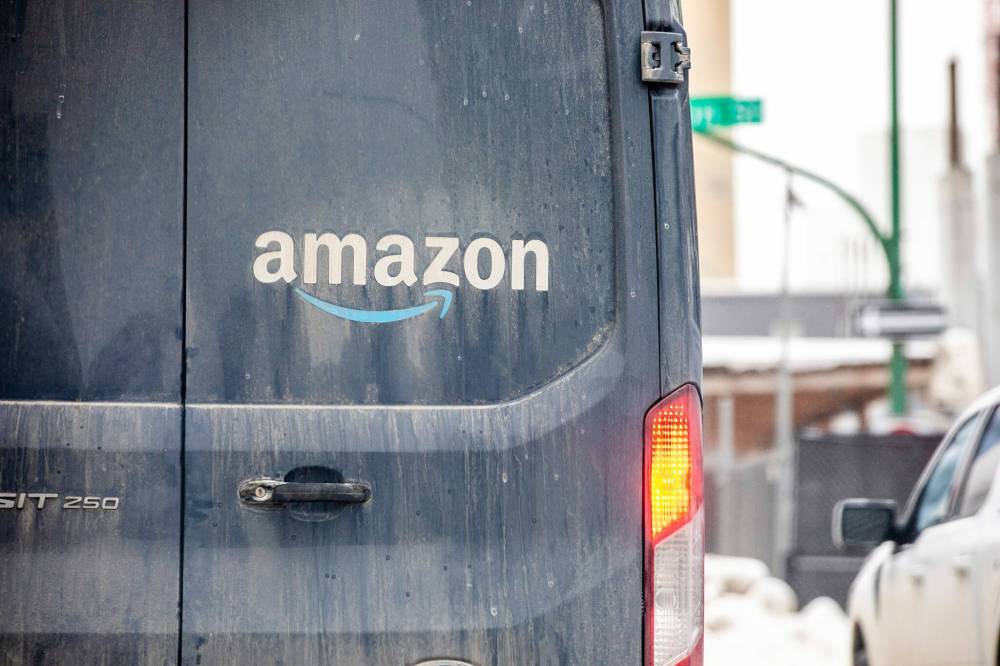
MIKAELA MACKENZIE / FREE PRESS
An Amazon van in Winnipeg.
Not weeks. Not months. Just a day or two. Maybe three or four. That small pause could slash emissions by double digits.
Recent data cited by logistics experts show delaying delivery by one to two days can reduce carbon dioxide emissions by roughly 36 per cent. Stretch that to three or four days and the reduction jumps to more than 50 per cent.
Those are not marginal gains. They are substantial, immediate and achievable.
Yet the moment of decision — the checkout screen — rarely feels like a climate choice. It feels like convenience versus inconvenience. Click fast shipping, get instant gratification. Click standard delivery, feel as though you’re settling for less.
But fast shipping is not just faster. It is dirtier.
When customers choose express options, delivery systems abandon efficiency in favour of speed. Trucks leave warehouses half-empty. Drivers loop the same neighbourhood multiple times a day. Retailers lean on air freight — the most carbon-intensive mode of transportation — to meet tight deadlines.
The so-called “last kilometre” — the final leg from a fulfilment centre to your front door — is especially emissions-heavy. And it gets worse when shoppers place multiple small orders across a week instead of bundling them together.
Each box represents another stop, another truck rolling, another round trip that may end with an empty vehicle heading back to the depot.
Companies like Amazon are not oblivious to this. They point to electric delivery vans, expanded use of rail and even foot and bicycle deliveries in dense urban areas. They highlight efforts to consolidate orders.
By their own data, those options eliminated hundreds of millions of delivery stops and tens of thousands of tonnes of carbon emissions in 2025, alone.
Those are real improvements. They matter. But they do not erase the fundamental tension: speed and sustainability pull in opposite directions.
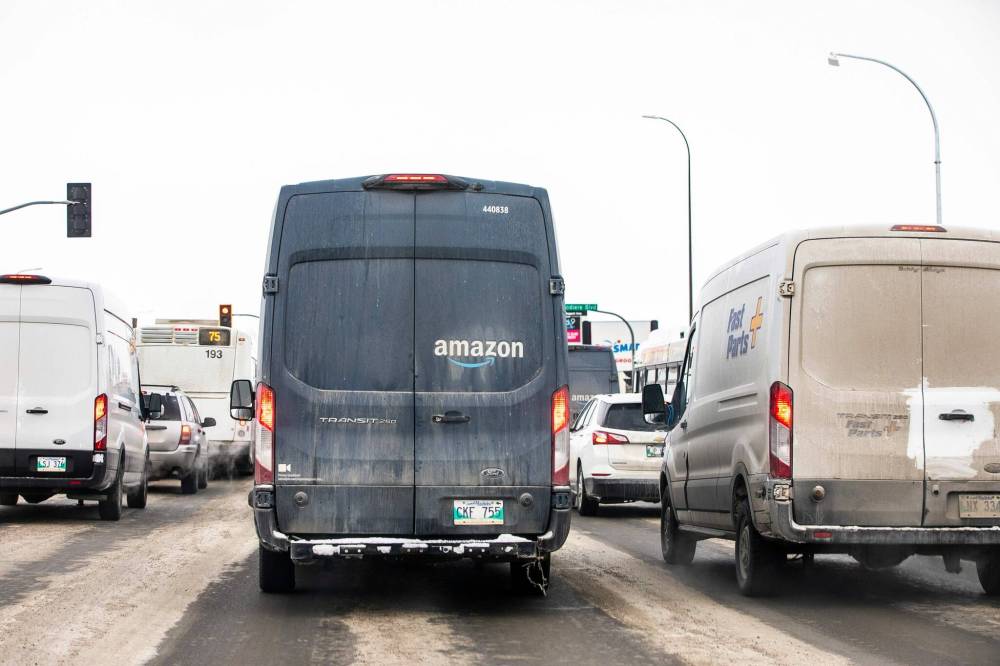
MIKAELA MACKENZIE / FREE PRESs fileS
An Amazon van in Winnipeg
So, how do we resolve it?
Do governments step in with regulation — limiting express shipping or taxing carbon-heavy delivery methods? Do we rely on public service announcements, gently reminding shoppers that patience is greener?
Or, do companies redesign checkout screens so the climate impact of each shipping option is as visible as the delivery date?

Evidence suggests information works. When consumers are shown the environmental impact of fast shipping, many choose to wait. Not all. But enough to make a difference.
That points to a broader truth: this is not about banning convenience. It is about recalibrating expectations.
Fast shipping will not disappear, nor should it. There will always be moments when speed matters — medicines, urgent needs, time-sensitive goods. But the vast majority of online purchases are not emergencies. They are wants, not needs. And wants can wait.
The climate challenge can feel overwhelming, filled with abstract targets and distant deadlines. But here is one action that is immediate, personal and almost laughably simple: when you shop online, choose the slower option.
The box will still arrive. Just not before your coffee is finished. And that small act of patience, multiplied by millions, could deliver something far more valuable than same-day convenience: a meaningful cut in emissions.