

To belt on school buses or not to belt
Advertisement
Read this article for free:
or
Already have an account? Log in here »
To continue reading, please subscribe:
Digital Subscription
One year of digital access for only $1.44 a week*
- Enjoy unlimited reading on winnipegfreepress.com
- Read the E-Edition, our digital replica newspaper
- Access News Break, our award-winning app
- Play interactive puzzles
*Billed as $5.77 plus GST every four weeks. After 52 weeks, price increases to the regular rate of $19.95 plus GST every four weeks. Offer available to new and qualified returning subscribers only. Cancel any time.
To continue reading, please subscribe:
Add Free Press access to your Brandon Sun subscription for only an additional
$1 for the first 4 weeks*
- Enjoy unlimited reading on winnipegfreepress.com
- Read the E-Edition, our digital replica newspaper
- Access News Break, our award-winning app
- Play interactive puzzles
*Your next Brandon Sun subscription payment will increase by $1.00 and you will be charged $17.95 plus GST for four weeks. After four weeks, your payment will increase to $24.95 plus GST every four weeks.
Read unlimited articles for free today:
or
Already have an account? Log in here »
Hey there, time traveller!
This article was published 10/01/2026 (289 days ago), so information in it may no longer be current.
To seatbelt or not to seatbelt?
That is the question that generations of school officials and transportation safety experts have been trying to answer.
On first pass, the argument for mandatory seatbelts in school buses seems like a no-brainer. Seatbelts are, unequivocally, one of the greatest safety devices ever introduced to the world of transportation. Still, they are not universally used.

Ruth Bonneville / Free Press
School buses and safety
Trains, for example, do not normally offer seatbelts. The same goes for most forms of public transit: buses, streetcars and light rail. And then there are school buses.
Although you can find lap, shoulder or harness-style belts in school buses, it remains the exception to the rule. In Canada, although many provinces have studied or at least contemplated the idea, there is no jurisdiction that makes seatbelts mandatory in school buses.
Even so, the idea continues to draw support.
Buses used for highway transportation of school-age children and sports teams are required to have seatbelts. And many bus manufacturers are starting to include seatbelts as standard equipment.
In Manitoba, a school bus driver named Jodi Ruta who was involved in a serious collision in 2023 has been lobbying the province to make seatbelts mandatory on all school buses. Thanks in large part to her advocacy, a private member’s bill is before the Manitoba legislature that would make school bus seatbelts mandatory by 2026.
Even with this newly stoked attention, it is not clear seatbelts will become obligatory in this or any other province. The commonly embraced wisdom among many transportation safety experts is that school buses — one of the safest forms of vehicular transportation — are better off without restraints than with them.
That is the perspective of the Canada Safety Council, a national non-profit organization that has for decades provided evidence-based advice on safety training programs and protective devices of all kinds. The CSC currently does not recommend seatbelts for school buses. In fact, the CSC actually argues that they may create more risks than they eliminate.

The CSC says that given their weight and height, school buses are 16 times safer than other types of passenger vehicles. It further argues that a design feature called “compartmentalization” — created by separating students by high-backed, padded seats securely anchored to the floor — ensures students are well-protected from most types of collisions.
The CSC also raises concerns about management and oversight of seatbelts. It would be imperative that someone verifies children are restrained in the correct manner to ensure they do not slip out of restraints and suffer injuries as a result. With up to 70 students in a single bus, the council raises concerns about how passengers could be effectively monitored throughout their trip.
It would be good for all involved if there was some social science that could determine whether the pro- or anti-seatbelt constituencies represented the safest possible option. Unfortunately, there is little in the way of focused studies.
Ottawa did perform a series of pilot projects in a handful of communities to see if seatbelts could be safely implemented. The results of those pilot projects have not been released, but a federal task force report that was allegedly informed by the pilot projects did not recommend widespread seatbelt use.
Where does that leave concerned parents? Seatbelts may become the norm, particularly as manufacturers make them standard equipment. Until then, it appears that school buses are as they have always been — one of the safest vehicles on the road.
Related Articles
Campaign calls on province to make seatbelts mandatory in school buses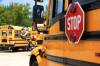

Advertisement Advertise With Us
Advertisement Advertise With Us