

A law whose time has come
Advertisement
Read this article for free:
or
Already have an account? Log in here »
To continue reading, please subscribe:
Monthly Digital Subscription
$1 per week for 24 weeks*
- Enjoy unlimited reading on winnipegfreepress.com
- Read the E-Edition, our digital replica newspaper
- Access News Break, our award-winning app
- Play interactive puzzles
*Billed as $4.00 plus GST every four weeks. After 24 weeks, price increases to the regular rate of $19.95 plus GST every four weeks. Offer available to new and qualified returning subscribers only. Cancel any time.
Monthly Digital Subscription
$4.99/week*
- Enjoy unlimited reading on winnipegfreepress.com
- Read the E-Edition, our digital replica newspaper
- Access News Break, our award-winning app
- Play interactive puzzles
*Billed as $19.95 plus GST every four weeks. Cancel any time.
To continue reading, please subscribe:
Add Free Press access to your Brandon Sun subscription for only an additional
$1 for the first 4 weeks*
*Your next subscription payment will increase by $1.00 and you will be charged $16.99 plus GST for four weeks. After four weeks, your payment will increase to $23.99 plus GST every four weeks.
Read unlimited articles for free today:
or
Already have an account? Log in here »
It’s a move to protect Manitobans from intimate partner violence which should have been made years ago.
The provincial government is slowly gearing up to implement a new law, the Disclosure to Protect Against Intimate Partner Violence Act, set to come into law March 1. The law allows people who believe they are at risk of intimate partner violence to request verbal disclosure of their significant other’s history of violence, if such documentation exists.
The province has come under criticism for taking so long to implement the law — the bill received royal assent several years ago. Families Minister Nahanni Fontaine has countered that it takes time to create the necessary infrastructure to enact such a law. That’s fair — we want the system to be able to do its job as well as possible, especially when the safety of individuals can be on the line.
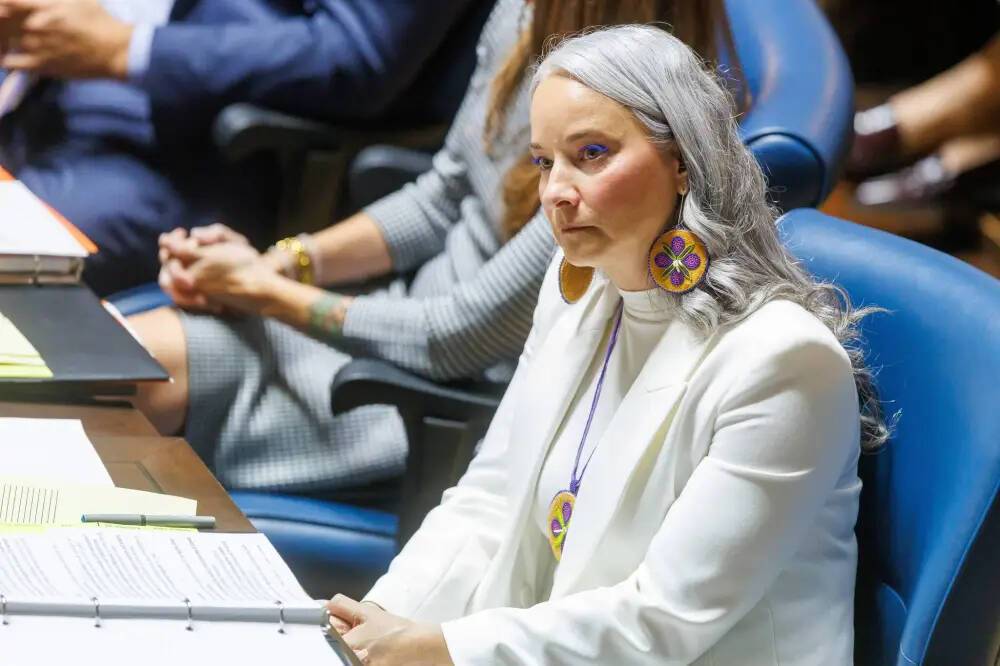
Mike Deal/Winnipeg Free Press
Manitoba Minister of Families Nahanni Fontaine
Let us hope the time spent getting ready was spent well.
Intimate partner violence is a bigger issue in Manitoba than some readers may realize. According to data published in the Free Press from Statistics Canada, the Manitoba Association of Women’s Shelters, and The Daily, Manitoba had among the highest rates of such violence, with 568 reported family violence victims and 607 incidents of intimate partner violence per 100,000 in population. Saskwatchewan’s rate was higher, with 737 family violence victims and 714 intimate partner violence victims per 100,000, so this is a troubling problem for the Prairie region in general.
Being able to request a partner’s documented history of violence may not sound like much, but it makes a significant difference considering how intimate partner violence tends to work. Perpetrators of violence against their significant others often pass unnoticed, moving from relationship to relationship without their new partners having any awareness of their history. Abusive personalities often work by slowly isolating their victims and gaining ever-greater control over them, by which point the victim can have few avenues of escape.
“Abusive partners can harass, intimidate, isolate, emotionally blackmail, threaten, and become physically or sexually violent,” Social Supports New Brunswick states on its website. “They may also control their partner’s income and finances, and restrict who they socialize with and where they can go, as a way to take away their independence.”

Such situations often end in tragedy, as in the case of Clare Wood, who in 2009 was murdered in England by an ex-boyfriend with a long record of sexual violence. The case led the U.K. to adopt the same intimate partner violence legislation — “Clare’s Law” — as Manitoba is now preparing to implement.
And so, the ability to learn of any accusations, complaints, or convictions made against a new partner can provide one with the information necessary to get out of a bad situation before it can fester and, possibly, become inescapable.
There will be more to do to address the crisis than just providing the means to obtain this information. Victims of family or intimate partner violence have many struggles in the aftermath of the abuse they suffered. Government must also do good work in providing mental health services, economic supports, and protection for victims as they try to begin anew. But anything helps, and this implementation of Clare’s Law on this side of the Atlantic will certainly help.
Intimate partner violence can come down to matters of life and death. This new law, and the measures being taken to put it in practice, must function properly so that those at risk of falling into such a situation can get out when they need to.
Which is to say, as soon as possible.