

Remembering history to move ahead
Advertisement
Read this article for free:
or
Already have an account? Log in here »
To continue reading, please subscribe:
Monthly Digital Subscription
$1 per week for 24 weeks*
- Enjoy unlimited reading on winnipegfreepress.com
- Read the E-Edition, our digital replica newspaper
- Access News Break, our award-winning app
- Play interactive puzzles
*Billed as $4.00 plus GST every four weeks. After 24 weeks, price increases to the regular rate of $19.95 plus GST every four weeks. Offer available to new and qualified returning subscribers only. Cancel any time.
Monthly Digital Subscription
$4.99/week*
- Enjoy unlimited reading on winnipegfreepress.com
- Read the E-Edition, our digital replica newspaper
- Access News Break, our award-winning app
- Play interactive puzzles
*Billed as $19.95 plus GST every four weeks. Cancel any time.
To continue reading, please subscribe:
Add Free Press access to your Brandon Sun subscription for only an additional
$1 for the first 4 weeks*
*Your next subscription payment will increase by $1.00 and you will be charged $16.99 plus GST for four weeks. After four weeks, your payment will increase to $23.99 plus GST every four weeks.
Read unlimited articles for free today:
or
Already have an account? Log in here »
With his party’s long-anticipated leadership review squarely in the rear-view mirror and armed with a resounding endorsement from its membership, Pierre Poilievre can set his focus on setting the future direction of the Conservative Party of Canada.
In determining the party’s path forward, he would do well to spend a bit of time considering its past.
Despite having received the support of 87 per cent of delegates at the CPC convention in Calgary — a lofty figure that surpasses the 84 per cent approval received by Stephen Harper in a 2005 leadership review following a loss in his first federal election as leader — Poilievre’s popularity among the broader spectrum of the population remains a challenge.
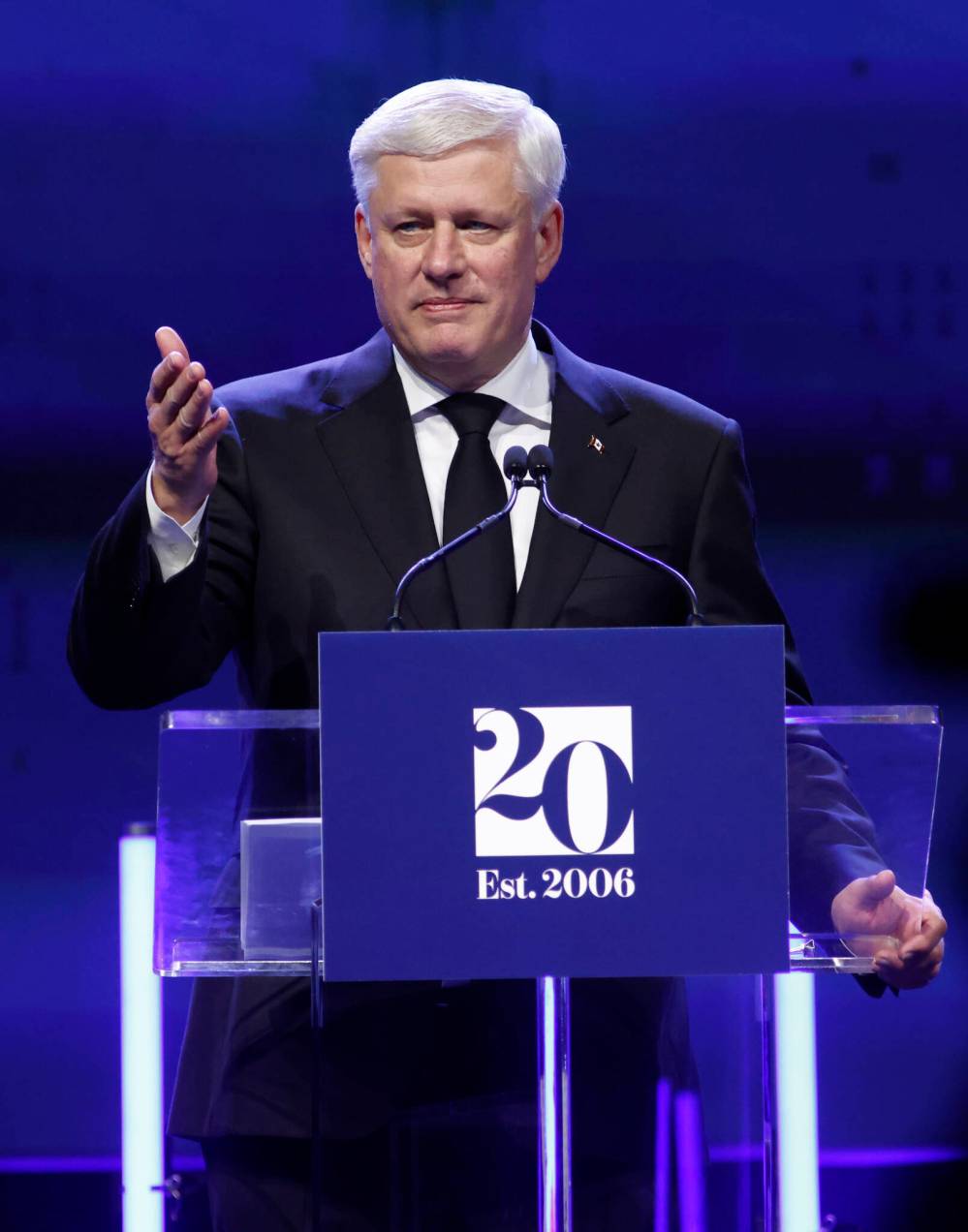
THE CANADIAN PRESS/ Patrick Doyle
Former prime minister Stephen Harper
According to recent polls, nearly 60 per cent of Canadians view Poilievre unfavourably, while approval numbers for Prime Minister Mark Carney — the man the CPC leader will inevitably face in the next federal election — also remain at around 60 per cent.
That means Poilievre — who enjoyed a massive polling lead last year before Justin Trudeau exited the Liberal leadership and Donald Trump began his second term as U.S. president with a flurry of anti-Canadian tariffs and tirades — has a lot of work to do to convince voters he’s the best choice to steer Canada through what are sure to be increasingly perilous times.
So, how does he get from the current level of voter skepticism about his fitness to lead to a level of popularity that might give him a fighting chance at forming a Conservative government? Again, a look to the past might prove instructive.
After the aforementioned 2005 leadership review that brought him 84 per cent support, Harper went on to win a minority mandate in the 2006 election brought about by the defeat of Paul Martin’s Liberal government on a non-confidence vote. During the ensuing nine years he would serve as prime minister, Harper demonstrated a tendency toward level-headed conservativism that has been sorely missing during Poilievre’s decidedly combative tenure as CPC leader.
Having been forced by circumstance to abandon his concerted effort to sound and act as much like Trump as possible — a tactic that seemed to be working rather well until it suddenly became the worst possible approach to leading a Canadian party — perhaps Poilievre could take a lesson or two from the prime minister who effectively gave him his start in federal politics.
At a gala dinner in Ottawa last week to mark the 20th anniversary of his government, Harper told the Conservative supporters Canada must adapt to new geopolitical realities brought on by Trump’s tumultuous second term. While all that ails Canada can’t be blamed solely on Trump, he said, it’s unwise to assume things will go back to normal once his presidency ends.
“In these perilous times, both parties, whatever their other differences, (must) come together against external forces that threaten our independence and against domestic policies that threaten our unity,” Harper instructed.

What’s worth noting is that Harper never suggested Canada is “broken” or “woke” or “stupid”; rather, he still seems to envision this as a country whose positive attributes and abundant potential should be celebrated, protected and advanced.
Poilievre, of course, was among the party faithful in attendance at the Harper celebration, and therefore heard what his erstwhile mentor had to say.
If he’s looking for a leader to emulate as he navigates the months and years ahead, last week’s event offered a viable non-Trumpian option.
Unity, rather than division. Statesmanship, not cynicism. Opting for constructive debate instead of catchphrases and name-calling.
Respecting what worked in the past might provide Poilievre with a useful start at setting the CPC’s future direction.