

Writing bylaws requires more careful consideration
Advertisement
Read this article for free:
or
Already have an account? Log in here »
To continue reading, please subscribe:

Digital Subscription
One year of digital access for only $205*
- Enjoy unlimited reading on winnipegfreepress.com
- Read the E-Edition, our digital replica newspaper
- Access News Break, our award-winning app
- Play interactive puzzles
*First annual payment billed as $205.00 + GST for one year. This annual subscription will automatically renew at $233.00 + GST every 52 weeks (10% off the regular annual price of $259.35). Offer available to new and qualified returning subscribers only. Cancel any time.
To continue reading, please subscribe:
Add Free Press access to your Brandon Sun subscription for only an additional
$1 for the first 4 weeks*
- Enjoy unlimited reading on winnipegfreepress.com
- Read the E-Edition, our digital replica newspaper
- Access News Break, our award-winning app
- Play interactive puzzles
*Your next Brandon Sun subscription payment will increase by $1.00 and you will be charged $17.95 plus GST for four weeks. After four weeks, your payment will increase to $24.95 plus GST every four weeks.
Read unlimited articles for free today:
or
Already have an account? Log in here »
Hey there, time traveller!
This article was published 02/03/2026 (224 days ago), so information in it may no longer be current.
Winnipeg City Hall has seen few instances of poetic justice more profound than a recent decision by a city councillor to withdraw a proposed bylaw to ban “nuisance” protests after being overwhelmed by a citizen protest opposed to his plans.
It was not surprising that Coun. Evan Duncan’s proposal to ban certain kinds of protests in certain locations of the city failed, although it was difficult to say for sure that it was always doomed. In these fractious times, where elected officials are frequently confronted by “if-you’re-not-with-me-you’re-against-me” ultimatums, it was impossible to be sure city council would not have been possessed by the same poor judgment when asked to vote on the bylaw.
Thankfully, it never got that far.
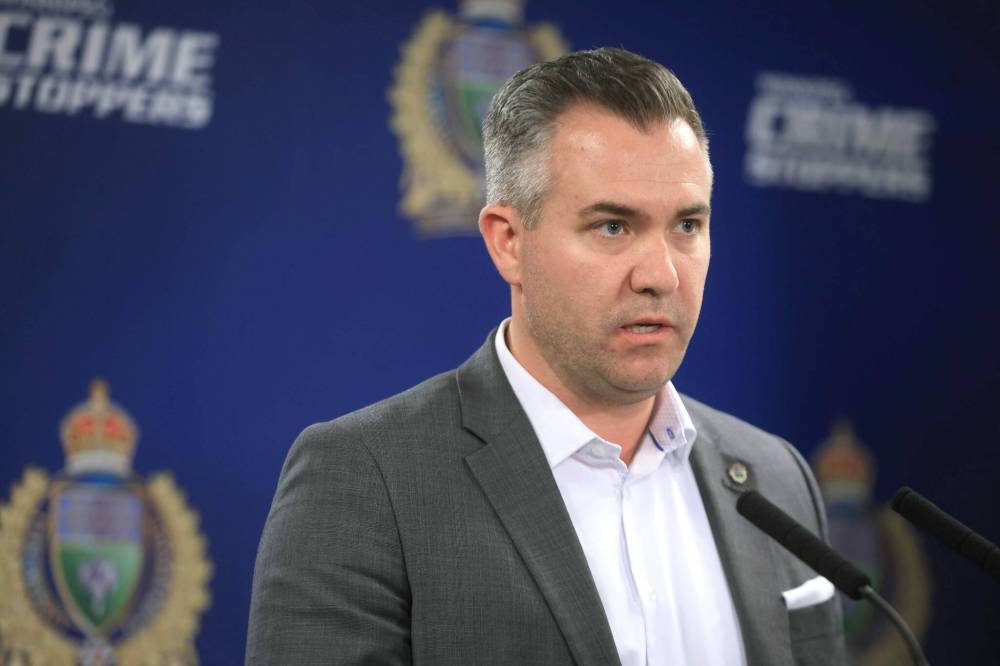
Ruth Bonneville / Free Press
Winnipeg Coun. Evan Duncan
After hundreds of citizens registered to speak to the proposal at council, and a peaceful protest in the city hall courtyard, Duncan withdrew the bylaw. The councillor for Charleswood-Tuxedo-Westwood claimed he was standing down the proposed bylaw because of widespread “misinformation” about what he was trying to accomplish.
“At no point in time was it ever my intention to ban peaceful protests,” Duncan said.
Duncan’s proposed bylaw was many things. Naively conceived, practically impaired and — in all likelihood — constitutionally illegal. But one thing it was not was misunderstood.
Duncan’s proposal would have banned what he termed “nuisance” demonstrations from a buffer zone of 100 metres around public buildings — schools, libraries, health-care facilities — any place of worship and even cemeteries. He defined “nuisance” demonstrations as “any in-person protest or demonstration” that involves “the expression by any means … of objection or disapproval towards an idea, action, person or group based on or related to any specific characteristics.” Or any event that “obstructed pedestrians or motor vehicles” without obtaining the appropriate permits.
If you take the bylaw at its literal word, it would have banned most protests — which all involve some act of disapproval towards an idea, person or group — or severely limited the locations in the city where the protests could be conducted.

Anyone with a speck of imagination would have understood the obvious overreach involved. Drafters of rules have a responsibility to look at impacts beyond reaching their own ends — clearly, Duncan did not.
We all have a right to protest, and those who are not protesting have a right to be protected from physical threat, property damage or any other actions that would be considered criminal in nature. There are already several legal tools available, including the Criminal Code, to deal with protests that graduate into a public threat. What citizens of a democracy do not have is the right to be free of the nuisance caused by a protest. Nuisance is not just a collateral effect; it is really the point of protest.
Duncan never expressly described his motivation for introducing the bylaw. Last fall, he claimed he and his office staff received “an influx of calls when (a protest is) taking place, and residents are frustrated that no action’s being taken.” However, it’s not a stretch to think that some of Duncan’s concerns were related to pro-Palestine protests that have become frequent in Winnipeg, as they have in cities around the world.
Duncan did have some support on council. Mayor Scott Gillingham acknowledged that limiting the number and scope of protests was a good idea because of the cost of the additional police resources required to provide security.
It is, perhaps, too much to have Duncan, Gillingham and others on council who supported a ban on “nuisance” protests admit this was a bad idea from the start. It is gratifying, however, that protesters created just enough nuisance to convince councillors to do the right thing.
Related Articles
'Nuisance' protest bylaw stalled after hundreds object



Advertisement Advertise With Us
Advertisement Advertise With Us