

Concrete actions to find new trading partners
Advertisement
Read this article for free:
or
Already have an account? Log in here »
To continue reading, please subscribe:

Digital Subscription
One year of digital access for only $205*
- Enjoy unlimited reading on winnipegfreepress.com
- Read the E-Edition, our digital replica newspaper
- Access News Break, our award-winning app
- Play interactive puzzles
*First annual payment billed as $205.00 + GST for one year. This annual subscription will automatically renew at $233.00 + GST every 52 weeks (10% off the regular annual price of $259.35). Offer available to new and qualified returning subscribers only. Cancel any time.
To continue reading, please subscribe:
Add Free Press access to your Brandon Sun subscription for only an additional
$1 for the first 4 weeks*
- Enjoy unlimited reading on winnipegfreepress.com
- Read the E-Edition, our digital replica newspaper
- Access News Break, our award-winning app
- Play interactive puzzles
*Your next Brandon Sun subscription payment will increase by $1.00 and you will be charged $17.95 plus GST for four weeks. After four weeks, your payment will increase to $24.95 plus GST every four weeks.
Read unlimited articles for free today:
or
Already have an account? Log in here »
Hey there, time traveller!
This article was published 12/03/2026 (195 days ago), so information in it may no longer be current.
The most difficult trick in politics is navigating the dauntingly broad metaphorical gap between talking the talk and walking the walk.
For holders of public office, words are the stock in trade. Those campaigning for election delineate what’s wrong and promise to fix it; those in government make pronouncements and seek to defend their legislative decisions; and those in opposition offer criticism and try to convince the public they, if given the chance the next time ballots are cast, would do better.
The truly effective politician, however, takes things a step (or several) further by following all those words with actions that produce tangible results. A pretty good example of that can be found in Prime Minister Mark Carney’s recent trip across Asia.
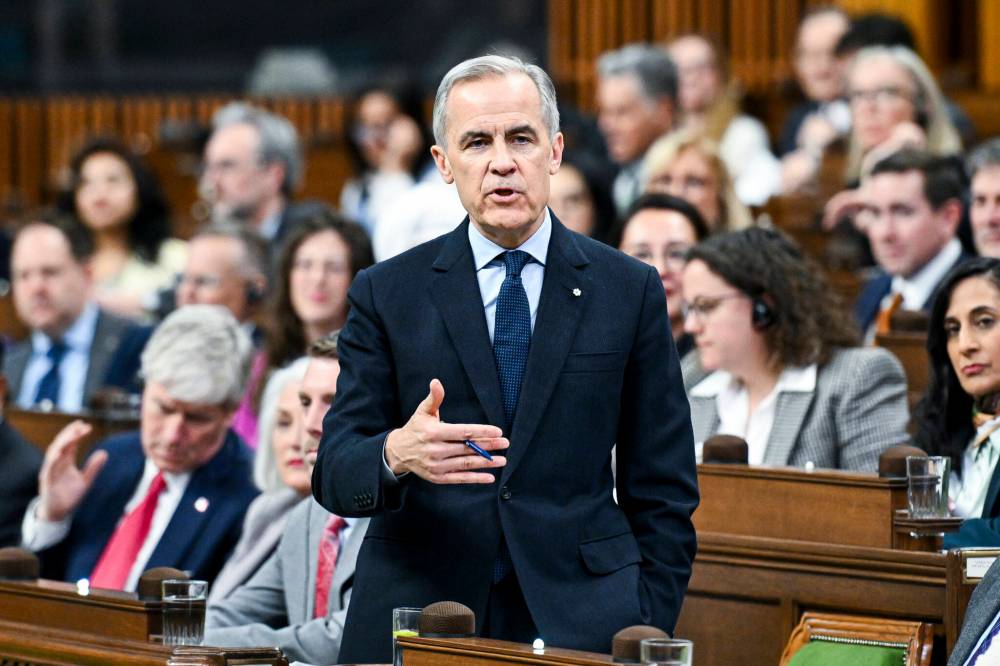
THE CANADIAN PRESS/Spencer Colby
Prime Minister Mark Carney
In January at the World Economic Forum, Carney turned heads and drew praise by delivering an address that cut to the very heart of the world’s current macropolitical predicament. Without specifically mentioning the U.S. president by name, Carney described how the turmoil caused by Donald Trump’s ill-considered trade hostilities and erratic decision-making have upset the rules-based order that used to govern international commerce.
“We are in the midst of a rupture, not a transition,” he said. “More recently, great powers have begun using economic integration as weapons, tariffs as leverage, financial infrastructure as coercion, supply chains as vulnerabilities to be exploited.
“You cannot live within the lie of mutual benefit through integration, when integration becomes the source of your subordination.”
Carney insisted “middle power” countries such as Canada are not powerless in the face of global economic upheaval; rather, they can defend their interests in principled and pragmatic ways by building strength at home while diversifying trade and creating strategic partnerships abroad.
As examples, he cited new trade and defence initiatives with the European Union, a dozen new trade and security deals spread over four continents and strengthened partnerships and/or in-progress agreements with China, India, Thailand, the Philippines and beyond. “We’re pursuing variable geometry,” he explained, “in other words, different coalitions for different issues based on common values and interests.”

The speech drew immediate praise from many at the forum and, of course, the ire of Trump, who the next day referred to Carney as ungrateful and seethed Canada “lives because of the United States.”
Owing to geographic proximity and long-established trade links, the Canada-U.S. relationship will always be this country’s most important driver of economic activity. But Carney’s declaration of the need for a new middle-powers approach is well considered, and what he has done since delivering the address shows he is serious about following the path he described in Davos.
Having already visited China in January — a stop focused on enhanced access for Canadian canola in China and Chinese electric vehicles in Canada — Carney embarked last month on a whirlwind 10-day tour of Asia, stopping in India to sign multi-billion-dollar agreements on energy, critical minerals and artificial intelligence, in Australia to discuss diversification of supply chains and in Japan to sign a new strategic partnership enhancing co-operation on defence, energy, trade and technology.
None of these agreements will, on their own, shake Canada free of its reliance on U.S. trade. But they, along with earlier recent efforts and future deals Carney has pledged to pursue, offer ample evidence he has made a thoughtfully considered commitment to giving Canada the best possible chance to survive — and, perhaps, even thrive — in the tumult created by Trump’s arbitrary antagonisms and the lingering after-effects his presidency will have produced.
Canada’s path forward, he said, is “wide open to any country willing to take it with us.”