

Federal immigration has to enforce visa rules
Advertisement
Read this article for free:
or
Already have an account? Log in here »
To continue reading, please subscribe:

Digital Subscription
One year of digital access for only $205*
- Enjoy unlimited reading on winnipegfreepress.com
- Read the E-Edition, our digital replica newspaper
- Access News Break, our award-winning app
- Play interactive puzzles
*First annual payment billed as $205.00 + GST for one year. This annual subscription will automatically renew at $233.00 + GST every 52 weeks (10% off the regular annual price of $259.35). Offer available to new and qualified returning subscribers only. Cancel any time.
To continue reading, please subscribe:
Add Free Press access to your Brandon Sun subscription for only an additional
$1 for the first 4 weeks*
- Enjoy unlimited reading on winnipegfreepress.com
- Read the E-Edition, our digital replica newspaper
- Access News Break, our award-winning app
- Play interactive puzzles
*Your next Brandon Sun subscription payment will increase by $1.00 and you will be charged $17.95 plus GST for four weeks. After four weeks, your payment will increase to $24.95 plus GST every four weeks.
Read unlimited articles for free today:
or
Already have an account? Log in here »
If you want to do well in education, you have to do your homework.
You also have to, well, actually attend school.
If you don’t even bother to do that, there’s a pretty good chance that you’re either not a real student, or you’re not going to be one for long. It’s just that simple.
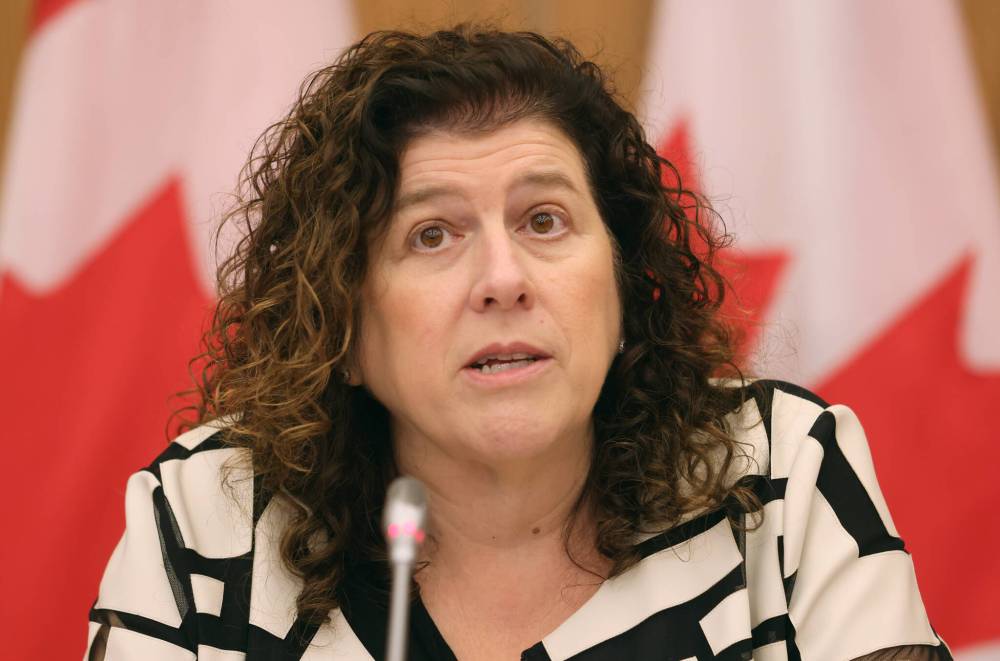
Patrick Doyle / The Canadian Press FILES
Federal Auditor General Karen Hogan
And if you’re in Canada on a visa to study, well, you should be studying.
Turns out, though, that the federal government hasn’t been checking to ensure that people in Canada on student visas were actually going to school.
The federal auditor general, Karen Hogan, found that in 2023 and 2024, 150,000 foreign students were flagged as high-risk immigration problems because there was evidence that they weren’t complying with the terms of their visas.
Problem is, the federal immigration department didn’t have enough resources to investigate the abuse concerns — only about 4,000 were investigated, and 1,600 of those investigations ended as inconclusive because the students involved didn’t respond in any way to Immigration, Refugees and Citizenship Canada.
And the numbers look even worse in the future: staff of the federal department told the auditor that current funding will only allow roughly 2,000 investigations a year until 2028.
That’s just not good enough.
There’s no doubt that Canada needs immigration, if for no other result than to ameliorate the effects of an aging population that will need supports, and Canada’s low birth rate leaving a shortage of young Canadians. Immigration, done right, benefits everyone: it increases tax revenues, boosts employment, and finds people to fill jobs, frankly, that Canadians aren’t willing to take at the wages being offered.
In the last quarter of 2025, for the first time since Confederation, Canada’s population actually dropped, sliding backwards by 150,000 people, with those losses being tied to a drop of non-permanent residents on work or study permits in this country.
There’s also no doubt that our education system has a valuable product to provide to foreign students, and that, equally, those institutions need foreign students and their tuition to continue to operate the way they do now. If we have a product to sell to the world, we should sell it.
At the same time, education can’t essentially be a front for illegal immigration — there have to be rules about student visas, and those rules have to be applied equally and fairly.
And part of having equal and fair application of rules is making sure that they are being enforced.
Oversight has to be done — and people have to see it being done. You can’t just say that there will be consequences for breaking the rules, when it’s abundantly clear that a vast number of those who break the rules are seeing no consequences at all.

Think about it this way: if you don’t actually take shoplifting seriously, more and more people will recognize that there are no repercussions for shoplifting, even if you happen to get caught. You can get away with not having enforcement for a while, as long as people still believe there’s a risk they may be arrested, but after that, the wheels come off.
There will be more and more theft as a result, and the resources available to try to address it will be more and more stretched.
Winnipeg is almost an object lesson in that regard, with retail theft at epidemic levels. And that genie doesn’t go back into the bottle easily.
If you don’t police immigration, you can hardly expect that people will keep playing by the rules, because you’ve tacitly said that the rules don’t matter.
And surprise, surprise: they are not abiding by the rules.