

Racing pigeons, airports and compassion
Advertisement
Read this article for free:
or
Already have an account? Log in here »
To continue reading, please subscribe:
Digital Subscription
One year of digital access for only $1.44 a week*
- Enjoy unlimited reading on winnipegfreepress.com
- Read the E-Edition, our digital replica newspaper
- Access News Break, our award-winning app
- Play interactive puzzles
*Billed as $5.77 plus GST every four weeks. After 52 weeks, price increases to the regular rate of $19.95 plus GST every four weeks. Offer available to new and qualified returning subscribers only. Cancel any time.
To continue reading, please subscribe:
Add Free Press access to your Brandon Sun subscription for only an additional
$1 for the first 4 weeks*
- Enjoy unlimited reading on winnipegfreepress.com
- Read the E-Edition, our digital replica newspaper
- Access News Break, our award-winning app
- Play interactive puzzles
*Your next Brandon Sun subscription payment will increase by $1.00 and you will be charged $17.95 plus GST for four weeks. After four weeks, your payment will increase to $24.95 plus GST every four weeks.
Read unlimited articles for free today:
or
Already have an account? Log in here »
Hey there, time traveller!
This article was published 28/03/2026 (203 days ago), so information in it may no longer be current.
It may be there is such a thing as too much precaution.
A family in Winnipeg’s West End was left disappointed this week when they were informed they have to take down their backyard aviary, which is home to 12 racing pigeons. The pigeons are beloved companions of one of the children in the family who is autistic and non-verbal, and for whom the pigeons provide important emotional support.
It is a bit of a saga. The coop was constructed about one year ago by Ronald Lobo, who was not aware he needed a permit for the birds. After being visited by a bylaw officer following up on complaints, the family sought and obtained approval for the structure.
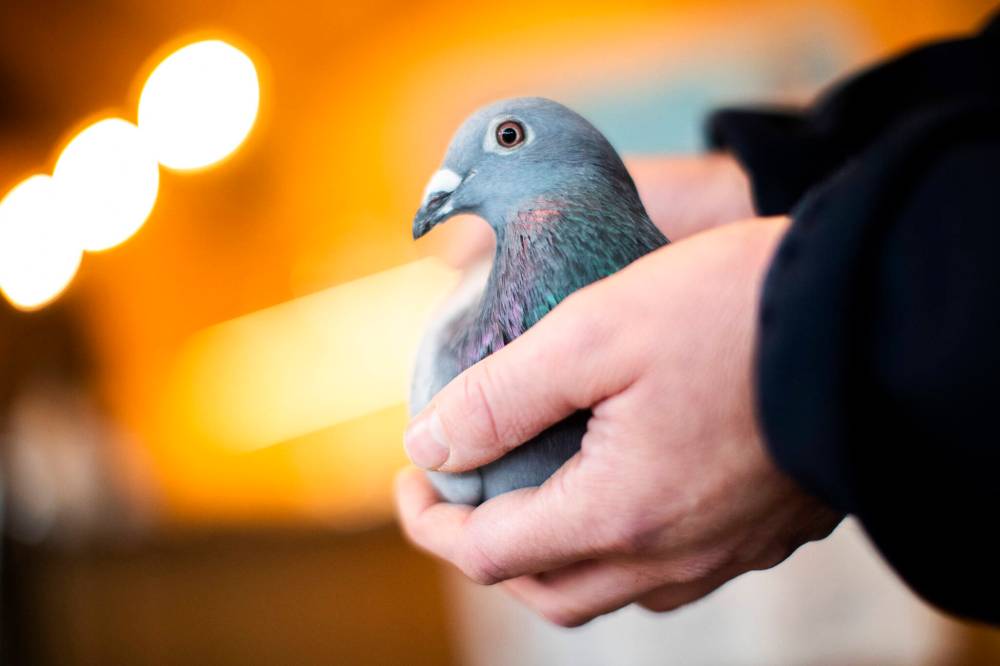
Francisco Seco / The Associated Press
A racing pigeon.
Neighbours appealed the decision, citing sanitary and other concerns, but the decision not to allow the family to keep the coop came partly as a result of concerns raised by the Winnipeg Airport Authority as well. The family’s home falls within the bounds of the WAA’s airport vicinity protection area, and the airport was concerned the birds’ flights to and from the property could pose a risk.
It is tricky territory. On one hand, one does not want to understate the importance of airport safety and air traffic safety. Making sure flights in and out of Richardson International Airport carry on smoothly and without incident is paramount. Because of that, it is easy to understand why the WAA would want to take every precaution possible.
The Bird Strike Assocation of Canada, using adapted data from Transport Canada, provides a 10-category ranking system for the hazard posed by birds. “Rock pigeons” occupy the 3b ranking slot, about the middle of the rankings, along with crows and other species of flocking birds weighing 200 to 1,000 grams. Birds posing a greater hazard include peregrine falcons, mallards, eagles and geese.
While pigeons aren’t the greatest hazard, they are nevertheless among them, so one can see why the WAA would rather not have them around if they have a say. But in the great scheme of things, which actually came first — airports or birds? The answer there is obvious.
The Lobo family does not have hundreds or even dozens of pigeons flocking to and from their home each day in the general vicinity of the airport. The family ‘s 12 birds are all contained within their 3.9-square-metre aviary, and they are only released in pairs (Ronald also claims the birds don’t go near the airport, but that seems difficult to know for certain and also not really necessary to prove).

The Lobo family has already kept the birds for one year. The bylaw officer who visited the property said the enclosure was clean, the birds appeared to be well cared for, and that the aviary was not out of character for the neighbourhood.
The benefits to the family have been enormous. The Free Press reported that Hannah Lobo became emotional during the hearing when speaking to how the birds have helped her 10-year-old brother.
“They are not just pets … they are his emotional support. Taking them away would have a serious negative impact for his well-being.”
It is because of the birds’ importance to the family we can be relatively assured they will continue to be well cared for. While one does not want to dismiss the airport authority’s concerns out of hand, it seems unlikely that two extra birds in the sky — small ones, at that — represent a significant increase in risk when considering the much greater population of wild birds with which is already contends.
In this case, it seems an overabundance of caution has won out — at the expense of compassion.