

Guilt, innocence and the role of courts
Advertisement
Read this article for free:
or
Already have an account? Log in here »
To continue reading, please subscribe:

Digital Subscription
One year of digital access for only $205*
- Enjoy unlimited reading on winnipegfreepress.com
- Read the E-Edition, our digital replica newspaper
- Access News Break, our award-winning app
- Play interactive puzzles
*First annual payment billed as $205.00 + GST for one year. This annual subscription will automatically renew at $233.00 + GST every 52 weeks (10% off the regular annual price of $259.35). Offer available to new and qualified returning subscribers only. Cancel any time.
To continue reading, please subscribe:
Add Free Press access to your Brandon Sun subscription for only an additional
$1 for the first 4 weeks*
- Enjoy unlimited reading on winnipegfreepress.com
- Read the E-Edition, our digital replica newspaper
- Access News Break, our award-winning app
- Play interactive puzzles
*Your next Brandon Sun subscription payment will increase by $1.00 and you will be charged $17.95 plus GST for four weeks. After four weeks, your payment will increase to $24.95 plus GST every four weeks.
Read unlimited articles for free today:
or
Already have an account? Log in here »
Hey there, time traveller!
This article was published 01/04/2026 (197 days ago), so information in it may no longer be current.
There is a foundational principle in criminal law — that everyone is innocent until they’re found guilty in a court of law.
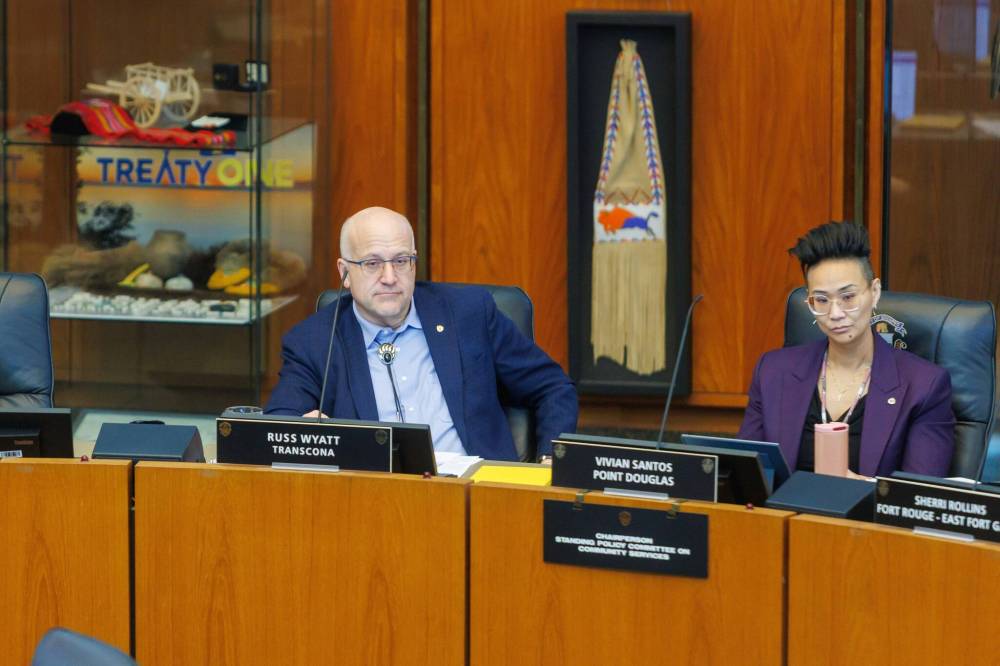
It’s worth keeping in mind after Russ Wyatt, the city councillor representing Transcona, was charged with sexual assault and administering a noxious substance.
Wyatt was charged. He has not been convicted.
MIKE DEAL / FREE PRESS
Winnipeg Coun. Russ Wyatt (Transcona)
In the eyes of the law, he is innocent.
Laws, though, are not beliefs.
For example, you can, and should, believe victims when they come to you and reveal that they have been attacked. You can, and should, support those victims, rather then dismissing or minimizing what they say they have experienced.
Coun. Cindy Gilroy said she supported victims by deliberately turning her back on Wyatt when he spoke in the council chamber during a meeting he chose to attend the day after he was charged.
“I’m very uncomfortable with the situation. I want to make sure I’m making a stance so that I am supporting the many victims out there and the people in the room that maybe do not feel comfortable with the presence,” Gilroy said.
But where it gets difficult is when support for potential victims collides with the right of someone who is accused of a crime to be treated with the fairness the law requires.
You might be among those with complete faith in the police — and believe that they wouldn’t charge someone unless that person had done something wrong — but that would be replacing the function of the courts with the police. The role of the courts is to ensure that the evidence the police have collected supports a finding of guilt beyond a reasonable doubt.
You might also be among those who argue that someone in a position of power — such as Wyatt — should be held to a higher standard, and should be required to step aside if allegations are made against him.
Police officers facing potential charges or discipline, for example, are often required to be removed from active policing — it’s a condition of the job, officers know it in advance, and it is done to protect the public’s confidence in police officers.
Right now, the City of Winnipeg’s charter allows a councillor facing criminal charges to continue in their role.
But that could change.
“I’m open to the province taking a look at the current provisions within the charter and updating them. I don’t know the last time they’ve been updated,” Mayor Scott Gillingham told reporters Thursday. “I think that there’s certainly some room for improvement.”
There are other councillors who agree with that stance, but as in all things, timing is everything.
If there is to be an update to the charter mandating that councillors step away from their municipal responsibilities if they’re charged criminally, then that change should be made when no councillors are in the midst of actually facing charges.

Changing the rules now would make it more difficult for Wyatt’s charges to be heard fairly in court, because council itself would be essentially jumping ahead of the courts and imposing its own form of punishment, specifically on Wyatt.
The best situation right now is to keep the existing rules — however unpalatable other councillors may find them — and not make any changes until after Wyatt’s time in court is complete.
Because courts decide who is guilty and who is not. It’s not the role of the mayor and other councillors.
Once the change is made, you can make the argument that the rules are the rules, and that they apply without regard to the specific situation of any particular councillor — and also don’t have any impact on whether a councillor is found guilty or innocent of the specific charges involved.
Until this current round is done, just let the courts do their job.
Related Articles
Wyatt maintains he’s innocent after being charged with sex assault

Advertisement Advertise With Us
Advertisement Advertise With Us