

Trying to read the budgetary tea leaves
Advertisement
Read this article for free:
or
Already have an account? Log in here »
To continue reading, please subscribe:
Digital Subscription
One year of digital access for only $1.44 a week*
- Enjoy unlimited reading on winnipegfreepress.com
- Read the E-Edition, our digital replica newspaper
- Access News Break, our award-winning app
- Play interactive puzzles
*Billed as $5.77 plus GST every four weeks. After 52 weeks, price increases to the regular rate of $19.95 plus GST every four weeks. Offer available to new and qualified returning subscribers only. Cancel any time.
To continue reading, please subscribe:
Add Free Press access to your Brandon Sun subscription for only an additional
$1 for the first 4 weeks*
- Enjoy unlimited reading on winnipegfreepress.com
- Read the E-Edition, our digital replica newspaper
- Access News Break, our award-winning app
- Play interactive puzzles
*Your next Brandon Sun subscription payment will increase by $1.00 and you will be charged $17.95 plus GST for four weeks. After four weeks, your payment will increase to $24.95 plus GST every four weeks.
Read unlimited articles for free today:
or
Already have an account? Log in here »
It’s not even a month past the tabling of Manitoba’s 2026-27 budget and there’s already been some good news — and some bad news.
On the good news front, the Morningstar Dominion Bond Rating Service, one of the world’s largest credit rating agencies, felt that the spending and revenue plan tabled by the NDP government last month put the province “within reach” of being balanced.
The budget featured a massive reduction in the overall deficit, going from a projected $1.6 billion for the end of the last fiscal year to roughly $500 million. Those intentions were enough to convince Morningstar DBRS that Premier Wab Kinew’s pledge to balance the budget by the end of his first term — which would come in the 2027-28 fiscal year — was achievable.
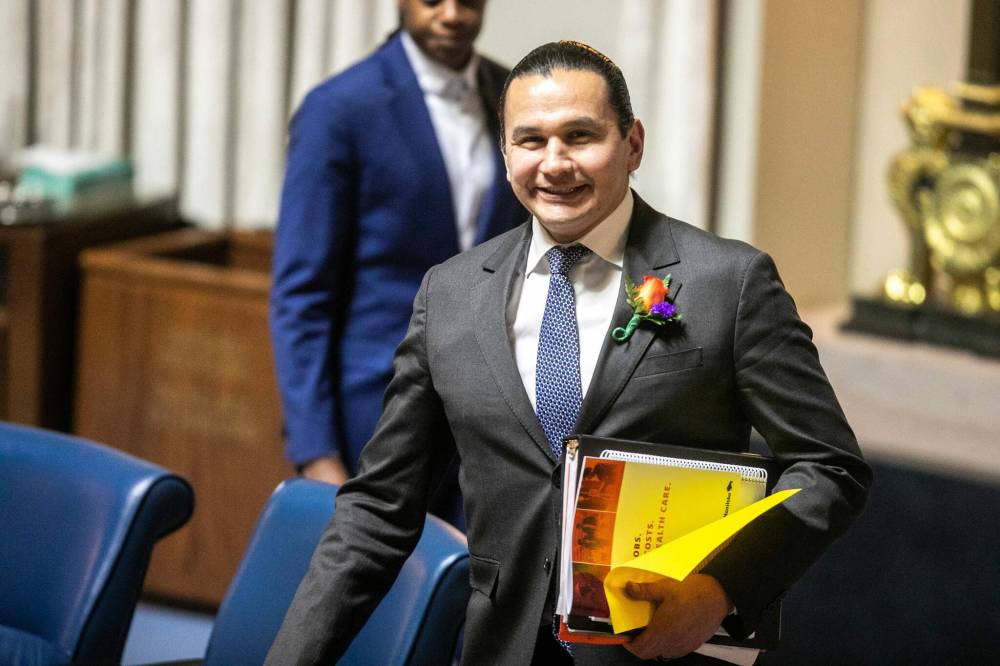
MIKAELA MACKENZIE / FREE PRESS
Manitoba Premier Wab Kinew
That’s a fair assessment of the budget, as long as GDP growth projections come to fruition. And that’s where we get to the bad news.
This week, Deloitte, a professional business services firm and a key voice in economic projections, cautioned Canada and its provinces that economic growth over the next year will likely be lower than anticipated just a few months ago.
In its latest economic forecast, Deloitte said Manitoba’s GDP will increase by one per cent, down from 1.4 per cent in January. Manitoba is not alone in suffering a small slip in projected economic activity; both the federal government and most provinces are seeing diminished economic prospects, thanks to the war in Iran and the spike in oil prices. Only Alberta and Saskatchewan, both oil-producing provinces, have a better outlook and then, only slightly better.
The difference between 1.4 per cent and one per cent may seem insignificant, but by year end it could result in a nine-figure change in fortune on the province’s balance sheet. It could also have an immediate impact on the NDP’s government’s political fortunes.
Kinew took great pride in presenting a budget for the current fiscal year that was a careful blend of modest affordability measures along with increased investment in health care and a dose of fiscal restraint. Just a month out of the gate, and Manitoba’s just-tabled budget is showing signs of stress and Kinew’s frequent boast these days about having the lowest deficit in the country in this fiscal year is starting to wear thin.

Such is the fate of governments that try to earn political points by being too optimistic in their economic projections.
It used to be standard fiscal strategy for governments to be as modest as possible in forecasting revenues and as cautious as possible in estimating possible expenditures. Sober and restrained estimates of both sides of the budget create the opportunity to perform better than expected, which is a good place for any government to be.
Will Manitoba turn out to be overly optimistic or modestly cautious? The saving grace for the Kinew government is also the greatest source of peril: global economic conditions will most definitely change before the end of the current fiscal year. Right now, nobody knows whether they will change for the better, or worse.
U.S. President Donald Trump is trying desperately to find an off-ramp from the war in Iran, but seems stuck between wanting to cease hostilities now before he has accomplished any of his five stated goals, or prolong the attacks in the hopes of bringing the Iranian regime to its knees.
While Trump dithers, global economic markets are roiling and oil prices are skyrocketing. If Trump finds a way out of his war with Iran, markets will likely respond in robust fashion; if he doesn’t, then all bets — including those built into the Manitoba budget — will be off.