

Ground squirrels and city sports fields
Advertisement
Read this article for free:
or
Already have an account? Log in here »
To continue reading, please subscribe:
Digital Subscription
One year of digital access for only $1.44 a week*
- Enjoy unlimited reading on winnipegfreepress.com
- Read the E-Edition, our digital replica newspaper
- Access News Break, our award-winning app
- Play interactive puzzles
*Billed as $5.77 plus GST every four weeks. After 52 weeks, price increases to the regular rate of $19.95 plus GST every four weeks. Offer available to new and qualified returning subscribers only. Cancel any time.
To continue reading, please subscribe:
Add Free Press access to your Brandon Sun subscription for only an additional
$1 for the first 4 weeks*
- Enjoy unlimited reading on winnipegfreepress.com
- Read the E-Edition, our digital replica newspaper
- Access News Break, our award-winning app
- Play interactive puzzles
*Your next Brandon Sun subscription payment will increase by $1.00 and you will be charged $17.95 plus GST for four weeks. After four weeks, your payment will increase to $24.95 plus GST every four weeks.
Read unlimited articles for free today:
or
Already have an account? Log in here »
Hey there, time traveller!
This article was published 11/04/2026 (198 days ago), so information in it may no longer be current.
Winnipeg has a problem and there doesn’t seem to be a universally acceptable solution.
Granted, that could refer to quite a bit. In this case we refer here to the problem of ground squirrels, the risk they pose on the city’s athletic fields, and what to do about them. As it stands, the ground squirrel population is in for a miserable future: the city began using rodenticides to control the population on Tuesday, using Rozol RTU field rodent bait and RoCon concentrate rodenticide at parks throughout the city.
The reason for the control effort is straightforward. Ground squirrels are burrowing animals, and the holes they dig in the city’s athletic field are a safety hazard for those who use the spaces. The city also said Tuesday it was forced to close fields in recent years because of damage caused by the squirrels.
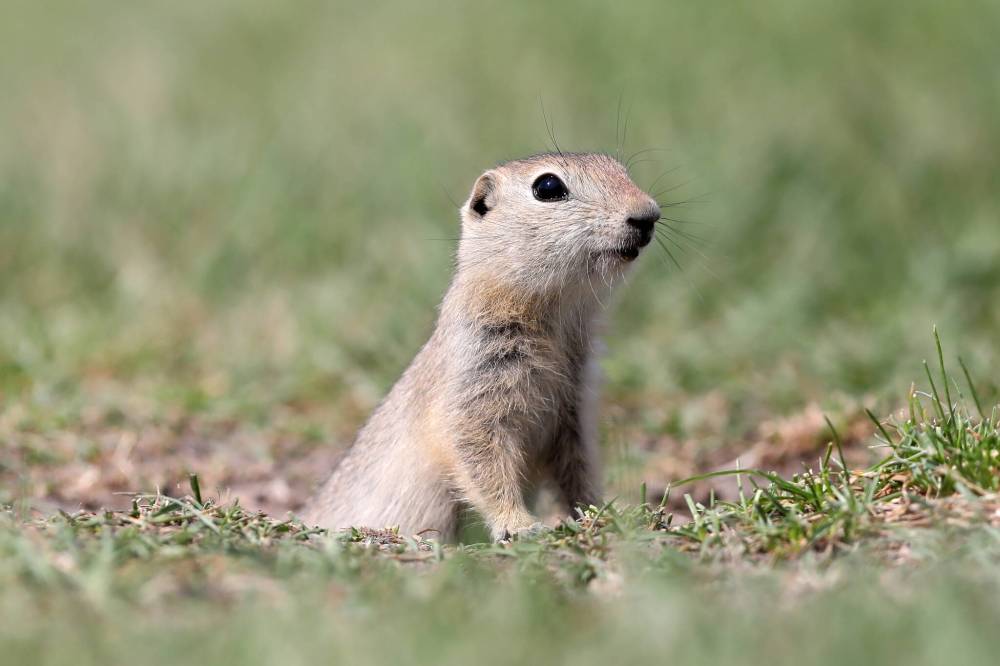
File/Brandon Sun
A Richardson’s ground squirrel.
The Winnipeg Humane Society, Animal Justice (an animal law group) and a University of Manitoba biologist are appealing the city’s provincial permit to carry out the program. They argue the rodenticides being used are unnecessarily cruel to the squirrels — Rozol in particular will result in a slow and agonizing death for ground squirrels exposed to it, argues U of M professor emeritus of biological sciences James Hare.
“They begin… hemorrhaging and they basically bleed out. It’s not a humane death at all,” Hare told the Free Press.
There is also a concern the rodenticides could affect other animals, such as Winnipeggers’ pets.
The city is allowed to continue the program while the appeal is heard.
This is not the first ground-squirrel controversy the city has dealt with. Last year it planned to use “Giant Destroyer” on the ground squirrels, a pesticide involving sulfur gas, but the plan faced great community pushback and the permit was refused by the province.
The city is in a difficult position. Ground squirrels do need to be controlled and the holes they dig are a problem — ask any Manitoba farmer how their pasture land tends to look once the prairie dogs move in. Female Richardson’s ground squirrels have litters of six to 14 pups per year, according to information provided by the City of Saskatoon. You can end up with a lot of them fast.

But it is concerning and disheartening that the only solution appears to be brutal death en masse. Giant Destroyer would have filled their burrows with noxious gas, asphyxiating them; the aforementioned Rozol causes them to internally and painfully bleed to death.
It is not realistic to suggest the city humanely trap and release such an overpopulated creature in order to avoid their deaths. Unfortunately, the scale of the problem does mean culling is how this problem must be mitigated. Hare says he would like to see the creatures trapped but then “humanely euthanized,” which seems kinder than the current plan.
It amounts to a problem of values. Ground squirrels are not particularly high on the pecking order of creatures who make their home in Winnipeg — rabbits, the occasional fox, deer passing through, and so on — and being rodents, it is easy to classify them as mere pests. They are nevertheless alive, capable of feeling pain, capable of ending their brief existences frightened and confused as they choke or bleed internally in the dark of their subterranean homes.
People often talk about how a society may be judged by how it treats its most vulnerable, often in human terms: the very young, the very old, the very poor, the very ill. In terms of how we treat animals, a similar logic applies: what kind of city are we if we will engage in any cruel, bloody end to these small creatures, merely because it is expedient?
If there is a better way, we should find it.
Related Articles
Innocuous critter or varmint to vanquish? Debating best approach to Richardson’s ground squirrel long a Prairie predicament
Advertisement Advertise With Us
Advertisement Advertise With Us