

The blunt — and massive — cost of forest fires
Advertisement
Read this article for free:
or
Already have an account? Log in here »
To continue reading, please subscribe:

Digital Subscription
One year of digital access for only $205*
- Enjoy unlimited reading on winnipegfreepress.com
- Read the E-Edition, our digital replica newspaper
- Access News Break, our award-winning app
- Play interactive puzzles
*First annual payment billed as $205.00 + GST for one year. This annual subscription will automatically renew at $233.00 + GST every 52 weeks (10% off the regular annual price of $259.35). Offer available to new and qualified returning subscribers only. Cancel any time.
To continue reading, please subscribe:
Add Free Press access to your Brandon Sun subscription for only an additional
$1 for the first 4 weeks*
- Enjoy unlimited reading on winnipegfreepress.com
- Read the E-Edition, our digital replica newspaper
- Access News Break, our award-winning app
- Play interactive puzzles
*Your next Brandon Sun subscription payment will increase by $1.00 and you will be charged $17.95 plus GST for four weeks. After four weeks, your payment will increase to $24.95 plus GST every four weeks.
Read unlimited articles for free today:
or
Already have an account? Log in here »
It’s a total that’s bound to go up — because all of the costs aren’t clear yet, and even when they are, not every cost can be quantified.
But what we do know is staggering: as a joint Free Press/The Narwhal investigation found out, last year’s Manitoba wildfires cost at least $500 million, both in direct costs and in damages stretching out well into the future.
Some of the costs are simple accounting — the costs of bringing in fire crews from other jurisdictions, the overall costs borne by Manitoba’s own wildfire service, evacuation costs and public and private property losses.
FILE
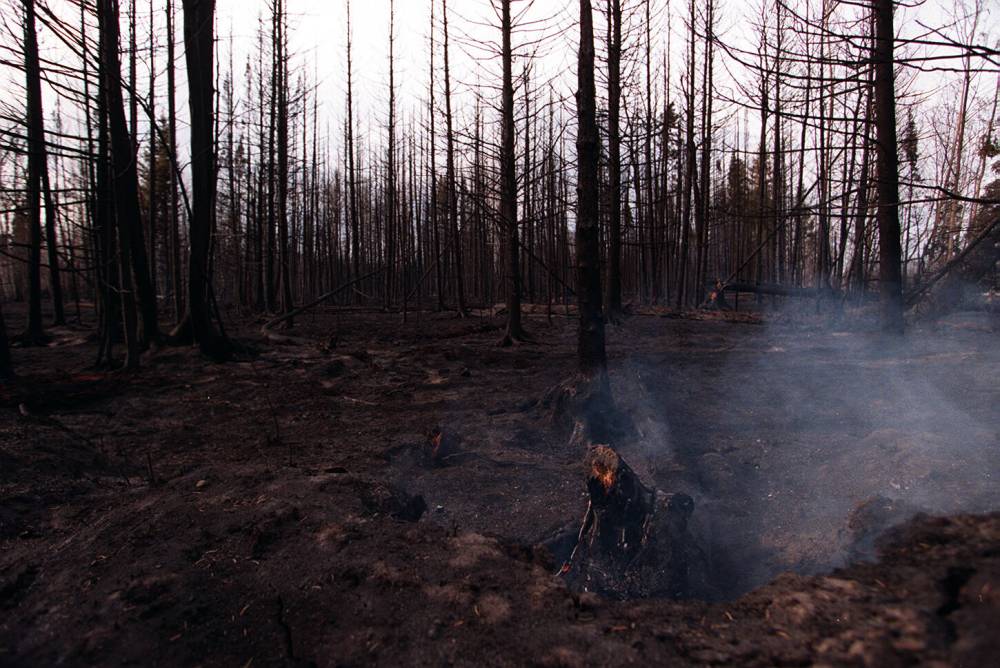
Manitoba forest fire damage
Others are harder to quantify: tourism losses that will continue over years of recovery, the financial effects of the fires releasing a combined 44 megatons of carbon emissions, the cost of health effects from the smoke that blanketed many parts of Manitoba last summer, the costs of any forestry efforts to help burned wildlands recover — and the list goes on.
Provincial government costs — and the interest those costs will inevitably accrue — will be paid by the province’s taxpayers. Insurance settlements for damaged and destroyed property will be recovered from homeowners in the form of insurance rate hikes — hikes that will also include a recognition of the increasing risk of major forest fires doing more damage in the future.
And an as-yet unquantified amount of costs will be borne by individual Manitobans directly affected by the fires.
As will the personal harm done to those directly and indirectly affected by the fires.
It’s more than just the equation of the amounts that are and aren’t covered by insurance.
It’s also the loss of a sense of safety that people may have had.
It’s the loss of things that are irreplaceable, things as simple as a battered old can opener from your mother’s house, or an incomplete but much-loved set of dishes.
The cold hard practicalities of filing a claim may say that a small wooden table that was near your front door has depreciated to the point of having next to no value; its value to you, as a tangible part of your childhood home, is something else again. That table will never be accounted for in the $500-million total we were able to establish, yet it may be the single most important thing you remember losing.
There are costs large and small, macro and micro, personally and provincially; even if you just look at the bare numbers, it’s obvious that we can’t afford to keep doing this again and again. If you consider the personal pain for so many, the lost memories and small tragedies, it seems cruel to even contemplate it.

Having squandered our lead time to deal with the changes in climate we are now facing head on, we only have the option to mitigate, and by mitigating we mean recognizing that an ounce of prevention is worth a pound of cure.
That prevention means significant investment in firefighting equipment and personnel, better co-ordination and training of wildland fire services countrywide, a national quick-response forest fire service with the ability to address needs in different provinces — and a deep-seated understanding that next year’s forest fires are not going to be like forest fires from a decade ago.
Like it or not, when firefighting resources can’t meet the entirety of a crisis, choices have to be made about where and how to dedicate those resources. And those choices don’t always work out the way they are expected to.
There is a fact about the scale of forest fire damage we face now: fires are growing in size and severity, and recent years have demonstrated that clearly.
So, we pay now, or pay much, much more later.
Related Articles
Costs and impacts of last year’s ‘lost summer’ due to historic wildfires continue to reverberate across the province
Advertisement Advertise With Us
Advertisement Advertise With Us