

Justice system should reflect people it serves
Advertisement
Read this article for free:
or
Already have an account? Log in here »
To continue reading, please subscribe:

Digital Subscription
One year of digital access for only $205*
- Enjoy unlimited reading on winnipegfreepress.com
- Read the E-Edition, our digital replica newspaper
- Access News Break, our award-winning app
- Play interactive puzzles
*First annual payment billed as $205.00 + GST for one year. This annual subscription will automatically renew at $233.00 + GST every 52 weeks (10% off the regular annual price of $259.35). Offer available to new and qualified returning subscribers only. Cancel any time.
To continue reading, please subscribe:
Add Free Press access to your Brandon Sun subscription for only an additional
$1 for the first 4 weeks*
- Enjoy unlimited reading on winnipegfreepress.com
- Read the E-Edition, our digital replica newspaper
- Access News Break, our award-winning app
- Play interactive puzzles
*Your next Brandon Sun subscription payment will increase by $1.00 and you will be charged $17.95 plus GST for four weeks. After four weeks, your payment will increase to $24.95 plus GST every four weeks.
Read unlimited articles for free today:
or
Already have an account? Log in here »
Manitoba’s justice system has struggled for decades with a reality that should concern every resident of the province: Indigenous people are dramatically overrepresented in the courts and in custody. Despite countless reports, inquiries, recommendations and promises of reform, the numbers remain stubbornly high and, in some cases, continue to worsen.
That is why the appointment of Judge Jerilee Ryle, who is Anishinaabe from Lake St. Martin First Nation, as Manitoba’s first associate chief judge of reconciliation is an important and welcome development.
The position is the first of its kind in Canada. While it remains unclear exactly how the role will reshape the administration of justice in Manitoba, its creation represents a recognition that the status quo is not working and that meaningful change requires dedicated leadership from within the court system itself.
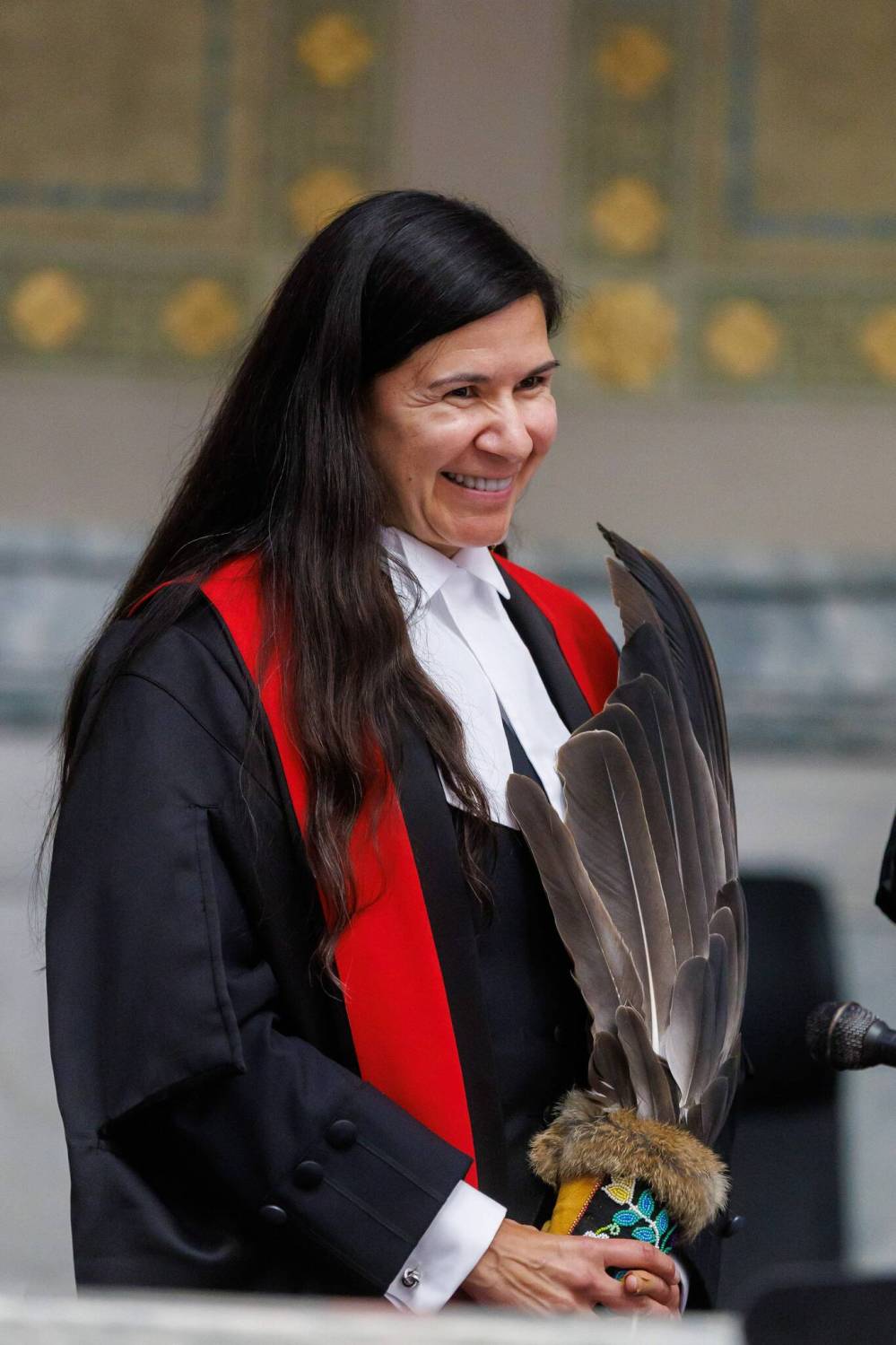
FREE PRESS FILES
Judge Jerilee Ryle, pictured her at her 2025 provincial court swearing-in.
The statistics alone make a compelling case for action. Indigenous people account for a relatively small share of Manitoba’s overall population, yet they make up the overwhelming majority of adults in provincial custody. They are also disproportionately represented as victims and witnesses in criminal proceedings.
Those figures are not merely numbers on a government report. They reflect generations of social, economic and historical challenges rooted in colonial policies, residential schools, family disruption, poverty and systemic discrimination. They also reflect a justice system that many Indigenous people continue to view with skepticism and mistrust.
That mistrust did not emerge overnight. It has been built over decades through experiences that left many Indigenous communities feeling disconnected from institutions that were supposed to serve them fairly.
The challenge facing Manitoba is not simply reducing incarceration rates. It is building a justice system that earns confidence, delivers fair outcomes and recognizes that different approaches may be needed to achieve those goals.
The creation of a reconciliation judge does not guarantee success. It does not automatically reduce the number of Indigenous people entering custody. Nor does it resolve the many complex social issues that often contribute to criminal involvement.
But it creates an opportunity.
For too long, efforts to incorporate Indigenous perspectives into the justice system have often been treated as secondary initiatives rather than core priorities. Establishing a senior judicial position focused specifically on reconciliation sends a signal that the issue deserves sustained attention and institutional commitment.
The broader goal is finding ways for the court system to better reflect Indigenous traditions, values and legal perspectives. That is not a radical concept. In fact, it recognizes something that should be obvious: justice systems function best when the people they serve see themselves reflected within them.
There have already been modest steps in that direction. Courts have increasingly incorporated Indigenous cultural practices and ceremonies. A new Indigenous courtroom is under development in Winnipeg.
The more important question is whether deeper changes can follow.

Can restorative approaches be expanded where appropriate? Can communities play a larger role in addressing harm and promoting accountability? Can sentencing better balance public safety with rehabilitation and healing?
Those are difficult questions without simple answers. They require careful consideration and broad consultation. They also require patience.
The new associate chief judge of reconciliation is expected to spend considerable time listening to Indigenous communities. That is exactly where this work should begin.
Lasting reform cannot be imposed from the top down. It must be informed by the experiences and perspectives of those who have been most affected by the system’s shortcomings.
Manitoba deserves credit for trying something new. When a problem has persisted for generations despite repeated efforts to address it, continuing to do the same thing is unlikely to produce different outcomes.

Advertisement Advertise With Us
Advertisement Advertise With Us