

Brexit: 10 years after
Advertisement
Read this article for free:
or
Already have an account? Log in here »
To continue reading, please subscribe:
Digital Subscription
One year of digital access for only $1.44 a week*
- Enjoy unlimited reading on winnipegfreepress.com
- Read the E-Edition, our digital replica newspaper
- Access News Break, our award-winning app
- Play interactive puzzles
*Billed as $5.77 plus GST every four weeks. After 52 weeks, price increases to the regular rate of $19.95 plus GST every four weeks. Offer available to new and qualified returning subscribers only. Cancel any time.
To continue reading, please subscribe:
Add Free Press access to your Brandon Sun subscription for only an additional
$1 for the first 4 weeks*
- Enjoy unlimited reading on winnipegfreepress.com
- Read the E-Edition, our digital replica newspaper
- Access News Break, our award-winning app
- Play interactive puzzles
*Your next Brandon Sun subscription payment will increase by $1.00 and you will be charged $17.95 plus GST for four weeks. After four weeks, your payment will increase to $24.95 plus GST every four weeks.
Read unlimited articles for free today:
or
Already have an account? Log in here »
On June 23, 2016, a bare majority of the U.K. population — just 51.9 per cent — voted to leave the European Union in a national referendum on the question called by then-prime minister David Cameron.
Ten years on, it seems fair to say that many who voted in favour of Brexit feel a great deal of buyer’s remorse.
Cameron, a Conservative, was riding the crest of an unexpected majority government won in the 2015 U.K. general election. He called the referendum in attempt to appease the “leavers” in his party and to silence the increasingly noisy United Kingdom Independence Party (UKIP), led by Nigel Farage.
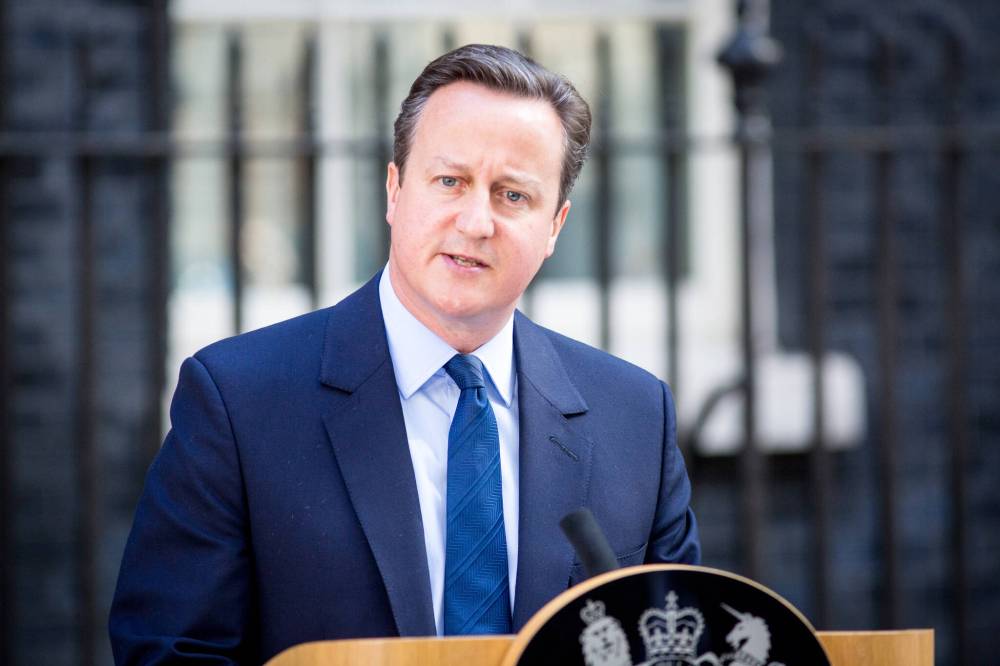
Tribune News Service
Then-U.K. Prime Minister David Cameron speaks outside 10 Downing St. the morning after the EU referendum in 2016.
The prevalent political wisdom was that Cameron could put the issue to bed with a resounding defeat of the referendum question. He campaigned for the Remain side and didn’t think he could lose.
What Cameron and his advisers had not counted on was a robust Vote Leave campaign, led by London mayor Boris Johnson, whose official campaign was conjoined — in the minds of voters, at least — with a grassroots Leave movement led by Farage. Their opportunistic coalition rode a mix of legitimate economic “Euroskepticism,” misplaced nationalist fervour, vestigial memories of imperial glory, anti-immigrant xenophobia and outright misinformation — fuelled by Britain’s right-wing tabloid press — to a narrow referendum victory. The U.K. was thus poised to leave a customs, economic and regulatory union/trading bloc it had been part of since 1973.
What followed has been nothing short of chaos in the British political arena. Cameron resigned as prime minister after the referendum defeat. Theresa May, the home secretary, immediately became prime minister and, while her government formally pulled the legal trigger to leave the EU, she couldn’t get a Brexit deal through parliament and was forced to resign in 2019.
Johnson succeeded her, called an election and campaigned to “Get Brexit Done.” The U.K. formally left the EU on Jan. 31, 2020.
Johnson led Britain through the COVID pandemic but was undone by a series of scandals and resigned in 2022. Then came Liz Truss, whose hard-right economic policies nearly tanked the U.K. economy in six weeks. She was followed by Rishi Sunak, who made history when he became the first British minister of South Asian heritage, but he was soundly defeated by Labour’s Keir Starmer in the 2024 election.
Starmer himself, after two ineffectual years in government and a scandal involving the appointment of Peter Mandelson as ambassador to the U.S. (he’s in the Epstein files), was forced to resign as prime minister and party leader just last Monday. Andy Burnham, the former mayor of Manchester, is now the PM in waiting.
As if that wasn’t enough, few, if any of the touted economic benefits of leaving Europe have materialized.

According to the Guardian, “the verdict on Britain’s economic performance is clear: The economy is significantly smaller… trade has suffered, business investment and productivity growth have stalled, and families are on average thousands of pounds a year worse off.”
There’s a lesson here, of course, for the rest of the world, including Canada.
In Alberta, Premier Danielle Smith seems dead set on holding a referendum on whether to hold a referendum on separating from Canada. One of her primary motivations, as with Cameron 10 years earlier, is to tamp down the rabid separatist element within her United Conservative Party.
And in Quebec, where it’s long been thought separatism was defeated for good in 1995 (even as Bloc Québécois MPs continue to be elected to parliament), the Parti Québécois currently leads polls ahead of a provincial election this fall.
We should all be concerned — and voters considering supporting leaders with isolationist or separatist tendencies should be very careful what they wish for.