

Properly funding legal aid is key to fair trials
Advertisement
Read this article for free:
or
Already have an account? Log in here »
To continue reading, please subscribe:

Digital Subscription
One year of digital access for only $205*
- Enjoy unlimited reading on winnipegfreepress.com
- Read the E-Edition, our digital replica newspaper
- Access News Break, our award-winning app
- Play interactive puzzles
*First annual payment billed as $205.00 + GST for one year. This annual subscription will automatically renew at $233.00 + GST every 52 weeks (10% off the regular annual price of $259.35). Offer available to new and qualified returning subscribers only. Cancel any time.
To continue reading, please subscribe:
Add Free Press access to your Brandon Sun subscription for only an additional
$1 for the first 4 weeks*
- Enjoy unlimited reading on winnipegfreepress.com
- Read the E-Edition, our digital replica newspaper
- Access News Break, our award-winning app
- Play interactive puzzles
*Your next Brandon Sun subscription payment will increase by $1.00 and you will be charged $17.95 plus GST for four weeks. After four weeks, your payment will increase to $24.95 plus GST every four weeks.
Read unlimited articles for free today:
or
Already have an account? Log in here »
Politicians and the public are never short of demands to make the criminal justice system tougher on criminals.
At any given time, someone is clamouring for tougher bail conditions, harsher sentences and more restrictive conditions on parole.
However, in our rush to get harsher, longer and more restrictive when it comes to criminal justice, we forget that it has become financially impossible for the average Manitoban to contest criminal charges.
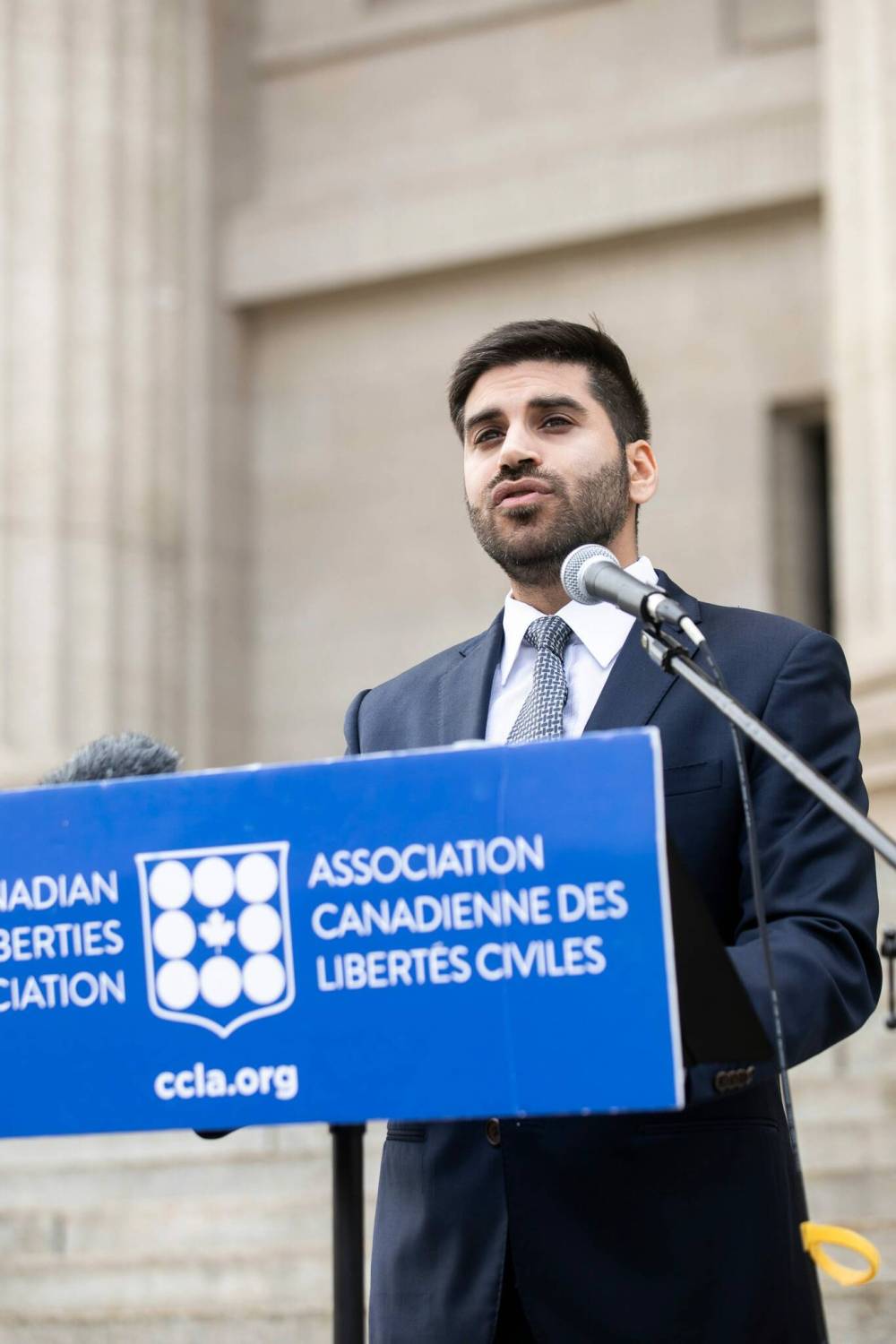
MIKAELA MACKENZIE / FREE PRESS
Shakir Rahim, director of the Criminal Justice program at the Canadian Civil Liberties Association
That is the heart of lawsuit brought by the Canadian Civil Liberties Association against Manitoba and the federal government. The CCLA is arguing that chronic underfunding of legal aid is violating the constitutional rights of accused Manitobans to a fair trial.
A favourable decision might force the two levels of government to provide a more realistic level of funding for an integral part of the criminal justice system.
Chronic underfunding, the lawsuit alleges, has prompted Legal Aid Manitoba to deny counsel to anyone making more than $31,500 per year. This restriction ignores the fact that it can cost tens of thousands of dollars to hire a private lawyer to contest a criminal matter that often requires months of preparation and court time. That is a cost that puts an effective defence against criminal charges out of reach even for people who make two or three times the Legal Aid Manitoba cut-off.
And even those who do get legal aid coverage get little in the way of legal representation. The lawsuit noted that legal aid will only fund two hours of work for a lawyer to represent someone at a contested bail hearing, which is ridiculously low considering the fact that Ottawa has made bail a much more complex and time-consuming matter.
“It is one system of justice for those who can afford to pay and another for those who cannot,” Shakir Rahim, co-counsel in the case, said at a news conference outside the Manitoba legislature Thursday.
Rahim said cases of wrongful conviction, including a number of high-profile miscarriages of justice here in Manitoba, are a reminder that every accused person deserves an effective defence. The likelihood of an innocent person being convicted of a crime goes up exponentially in a system where people cannot afford to hire a lawyer.
The underfunding of Legal Aid Manitoba is a long-standing problem that did not begin with the current NDP government.
Legal aid was initially designed to be cost-shared equally by the federal and provincial governments. Successive federal governments have dialed back their contributions to less than 20 per cent of the total costs of legal aid across the country. That leaves the provinces to cover the more than 80 per cent of program costs.
Provincial demands for more robust funding from Ottawa have consistently fallen on deaf ears.

Why? Crime and punishment is a hot-button political issue, and increased funding to provide more effective defence for accused persons does not fit well into “tough on crime” agendas that political parties of all stripes try to claim.
The politics of criminal justice is particularly galling when you consider the vast majority of people being charged and incarcerated are poor and more likely to come from Indigenous and visible minority communities. Increased restrictions on access to legal aid, and chronic under-funding by the federal government, can only make this situation worse.
It is time for Ottawa to show some courage and fund legal aid at a level that ensures that all accused persons are provided with adequate legal representation, as guaranteed by the Charter of Rights and Freedoms.
That may not make for good politics.
But it will go a long way to injecting some genuine justice back into the justice system.