

Antibody tests crucial next step in COVID-19 fight
Advertisement
Read this article for free:
or
Already have an account? Log in here »
To continue reading, please subscribe:
Monthly Digital Subscription
$1 per week for 24 weeks*
- Enjoy unlimited reading on winnipegfreepress.com
- Read the E-Edition, our digital replica newspaper
- Access News Break, our award-winning app
- Play interactive puzzles
*Billed as $4.00 plus GST every four weeks. After 24 weeks, price increases to the regular rate of $19.95 plus GST every four weeks. Offer available to new and qualified returning subscribers only. Cancel any time.
Monthly Digital Subscription
$4.99/week*
- Enjoy unlimited reading on winnipegfreepress.com
- Read the E-Edition, our digital replica newspaper
- Access News Break, our award-winning app
- Play interactive puzzles
*Billed as $19.95 plus GST every four weeks. Cancel any time.
To continue reading, please subscribe:
Add Free Press access to your Brandon Sun subscription for only an additional
$1 for the first 4 weeks*
*Your next subscription payment will increase by $1.00 and you will be charged $16.99 plus GST for four weeks. After four weeks, your payment will increase to $23.99 plus GST every four weeks.
Read unlimited articles for free today:
or
Already have an account? Log in here »
Hey there, time traveller!
This article was published 20/04/2020 (2160 days ago), so information in it may no longer be current.
When it comes to the rising wave of the COVID-19 pandemic, we all want to know — to borrow a phrase from a famously terrifying movie — when it will be safe to go back in the water.
Given that the virus behind it can be spread by individuals who have no apparent symptoms, the only public responses effective at containing it so far have been in countries conducting widespread testing, contact tracing, and isolation of those who are infected. Many countries are also slowing the spread of COVID-19 through physical distancing.
But the latter is a mitigation strategy. It means the coronavirus will keep spreading, just more slowly, so as not to overwhelm the health-care system. Meanwhile, businesses are closed, sporting, cultural and religious events are cancelled or postponed, and life as we knew it grinds to a halt. The eventual desired result is that enough people will recover from having COVID-19 — so-called “herd immunity” that the virus can no longer run rampant.
The question becomes: who is immune? And can they, at least, stop self-isolating — thereby becoming important contributors to getting the economy back up and running?
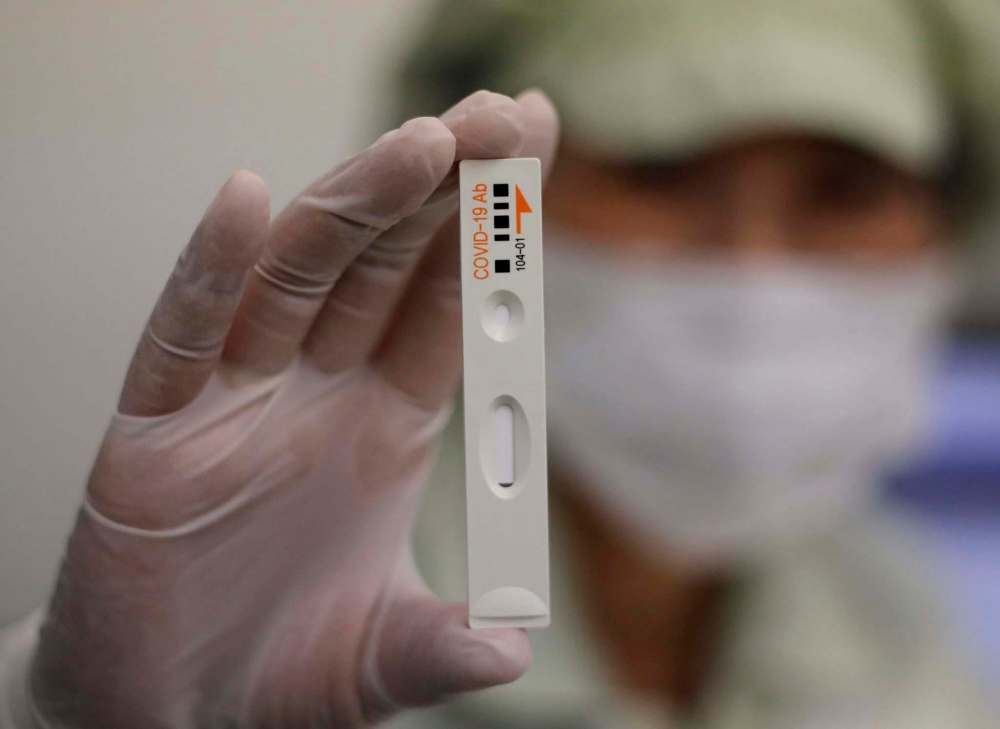
Many countries are working to develop tests that identify whether a person has developed antibodies against the coronavirus. Those serological tests, if deployed on a wide scale, would show who has had the disease, even if it was a mild case, and could be immune to it.
In Italy, the medical diagnostic group DiaSorin is developing such tests and hopes to have them ready by the end of the month. In the United States, Cellex has been granted authorization by the Food and Drug Administration for a rapid antibody test. The U.K. has plans to roll out a serological test citizens can take at home.
In Canada, a researcher at the University of Waterloo, co-ordinating with an international network of academics, has submitted for approval a test that could distinguish between antibodies produced in the early or later stages of a case of COVID-19. (IgM antibodies are ones the body produces when a person initially gets sick, whereas IgG antibodies are ones it produces later.)

There are uncertainties, however, that prevent this approach from being a silver-bullet solution for the economy.
One is the limitations of a given test in detecting antibodies. Even a test that is more than 90 per cent accurate could generate a small percentage of false positive results — that is, indicating a person has antibodies to the coronavirus when they actually do not.
If this pandemic has shown us anything, it is that small percentages can add up to huge numbers when millions of people are affected. If a country is testing millions of people for antibodies, that could still result in tens of thousands of people getting a false positive result — meaning they could think they’re free to resume their “normal” lives when in fact they could still contract COVID-19 and spread it to others. Instead of taking part in safely getting society back to work, they could be among those spreading a new outbreak and thereby extending the economic stress.
Testing for COVID-19 has been an essential tool for guiding health decisions and public policy. Testing — and backup testing — for antibodies is a next step, but not the final answer, and shouldn’t give anyone the impression they are free and clear until public-health experts make the appropriate recommendations.
In other words, we might soon be able to dip our feet in the shallows — but the COVID-19 shark still lurks beneath the waves.