

Climate care must be priority in 2022
Advertisement
Read this article for free:
or
Already have an account? Log in here »
To continue reading, please subscribe:

Digital Subscription
One year of digital access for only $205*
- Enjoy unlimited reading on winnipegfreepress.com
- Read the E-Edition, our digital replica newspaper
- Access News Break, our award-winning app
- Play interactive puzzles
*First annual payment billed as $205.00 + GST for one year. This annual subscription will automatically renew at $233.00 + GST every 52 weeks (10% off the regular annual price of $259.35). Offer available to new and qualified returning subscribers only. Cancel any time.
To continue reading, please subscribe:
Add Free Press access to your Brandon Sun subscription for only an additional
$1 for the first 4 weeks*
- Enjoy unlimited reading on winnipegfreepress.com
- Read the E-Edition, our digital replica newspaper
- Access News Break, our award-winning app
- Play interactive puzzles
*Your next Brandon Sun subscription payment will increase by $1.00 and you will be charged $17.95 plus GST for four weeks. After four weeks, your payment will increase to $24.95 plus GST every four weeks.
Read unlimited articles for free today:
or
Already have an account? Log in here »
Hey there, time traveller!
This article was published 30/12/2021 (1720 days ago), so information in it may no longer be current.
By all measures, 2021 was a terrible year for climate news.
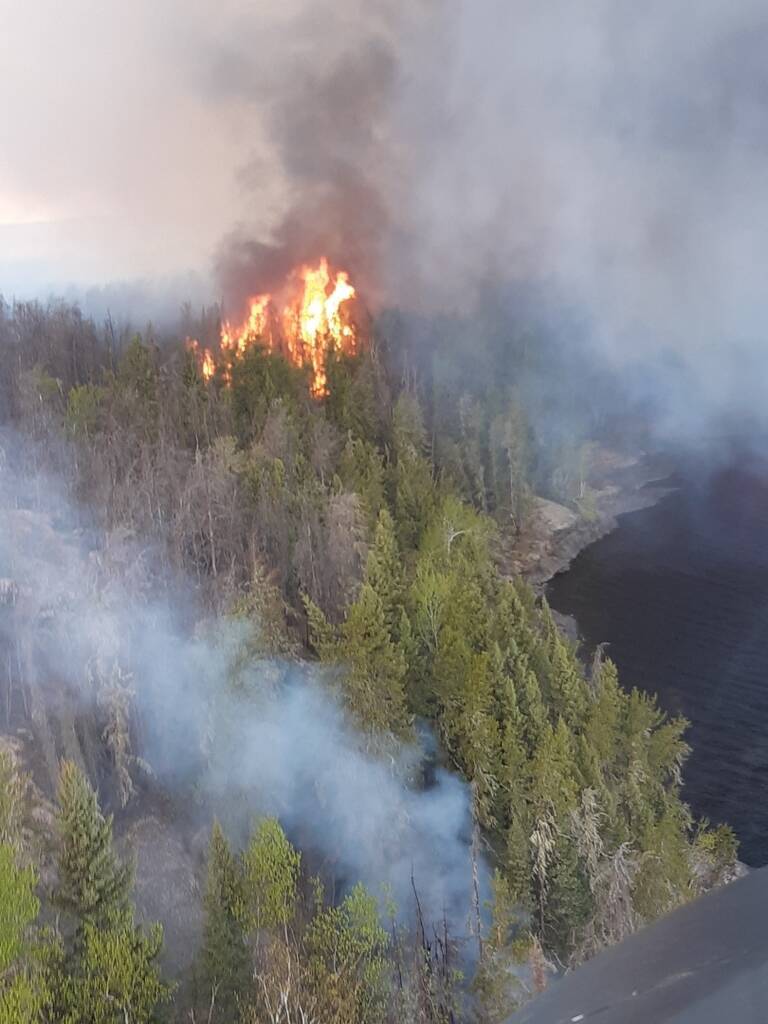
Droughts, wildfires, hurricanes, floods and heat waves dominated the news cycle as the human and infrastructure costs of a warming world played out in real time, month after month. Climate change is happening, and it’s happening quickly.
What also became painfully clear this year is just how unprepared we are to address the causes and aftermath of this existential crisis. Canada is one of the world’s largest greenhouse gas emitters and even though Prime Minister Justin Trudeau talks a big green game, the country’s climate action plan falls short in many areas.
Despite unveiling more aggressive targets and additional climate financing ahead of COP26, the United Nations’ annual climate conference, Mr. Trudeau’s policies have thus far fallen flat.
Climate Action Tracker, an independent scientific organization, ranks Canada’s targets, policies and actions as “highly insufficient” in achieving the goals set out in the Paris Agreement — most important of which is keeping global warming to below 1.5 C. Lengthy timelines for key reductions, like achieving net-zero emissions by 2050, and contradictory policies, like funding a clean energy transition while building new oil and gas pipelines, present major barriers to meeting our climate goals.
The federal government seems content with taking one step toward a livable future and two steps back to maintaining the status quo.
In April, the federal budget outlined $17.6 billion in new funding for green recovery programs. That same month, CBC News calculated the government had spent close to $18 billion on subsidies for the fossil fuel industry in 2020. Fiscal contradictions like these hamper our ability to effectively address climate change.
In Manitoba, the situation is even more preformative. The province introduced its Climate and Green Plan in 2017 and hasn’t done much to update its approach since then.
Touted by then-premier Brian Pallister as a made-in-Manitoba plan — mostly as a dig at the federal carbon tax program, about which the province lost a court challenge in October — the document has no real teeth. One glaring issue is the lack of any long-term emission reduction targets, timetables or legislation to get us there.

Instead of a solid plan, Manitobans have a Carbon Savings Account with flexible timelines, no penalties for missing five-year targets and little oversight. Even our new environmentally-minded Crown corporation, Efficiency Manitoba, missed its legislated electricity and natural gas consumption reductions during its first year of operations.
At the municipal level, things aren’t much better. The bulk of Winnipeg’s greenhouse gas emissions come from vehicles and waste disposal, yet the city still doesn’t have a residential compost program and its transit master plan, timed for completion in 2050, has been stuck in perpetual public engagement surveys for the last two years. Getting more electric vehicles on the streets would also help cut emissions, but alas, the province has yet to incentivize drivers with rebates of any kind.
Climate change is everyone’s problem, so it can’t be treated as one party’s responsibility. All three levels of government need to work together to fund and find integrated solutions for the coming challenges.
If there’s one bright spot, it’s that Mr. Pallister — who often failed to co-operate with municipal or federal leaders — is no longer in power. His successor, Premier Heather Stefanson, has said she would like to work more collaboratively with Ottawa and is open to negotiating a carbon pricing plan.
It’s not a life-changing resolution, but it’s a start. Still, residents deserve better. Residents deserve real investment in their future from every level of government in the new year and beyond.