

Manitobans facing super mosquitoes
Advertisement
Read this article for free:
or
Already have an account? Log in here »
To continue reading, please subscribe:
Monthly Digital Subscription
$1 per week for 24 weeks*
- Enjoy unlimited reading on winnipegfreepress.com
- Read the E-Edition, our digital replica newspaper
- Access News Break, our award-winning app
- Play interactive puzzles
*Billed as $4.00 plus GST every four weeks. After 24 weeks, price increases to the regular rate of $19.95 plus GST every four weeks. Offer available to new and qualified returning subscribers only. Cancel any time.
Monthly Digital Subscription
$4.99/week*
- Enjoy unlimited reading on winnipegfreepress.com
- Read the E-Edition, our digital replica newspaper
- Access News Break, our award-winning app
- Play interactive puzzles
*Billed as $19.95 plus GST every four weeks. Cancel any time.
To continue reading, please subscribe:
Add Free Press access to your Brandon Sun subscription for only an additional
$1 for the first 4 weeks*
*Your next subscription payment will increase by $1.00 and you will be charged $16.99 plus GST for four weeks. After four weeks, your payment will increase to $23.99 plus GST every four weeks.
Read unlimited articles for free today:
or
Already have an account? Log in here »
Hey there, time traveller!
This article was published 17/07/2017 (3185 days ago), so information in it may no longer be current.
The news most likely to disturb the peaceful slumber of Manitobans last week was the revelation that a “super mosquito” is particularly prevalent this summer. Its scientific name is C. perturbans, although its victims call it by many other names, none of them printable in a family newspaper.
The prevalence of C. perturbans has been increasing for the past 10 years until, this year, they have accounted for nearly half of the mosquitoes caught in Winnipeg traps. “This mosquito is very difficult to control,” warns Ken Nawolsky, the city’s superintendent of insect control.
The worrisome feature of the C. perturbans is that they’ve found a way to dodge the larviciding chemicals that coat the surface of ponds and puddles. Normal mosquito larvae must come up for air and their last breath, so to speak, is sucking in a deep gulp of deadly insecticide sprayed on the surface by a City of Winnipeg larvaciding crew.
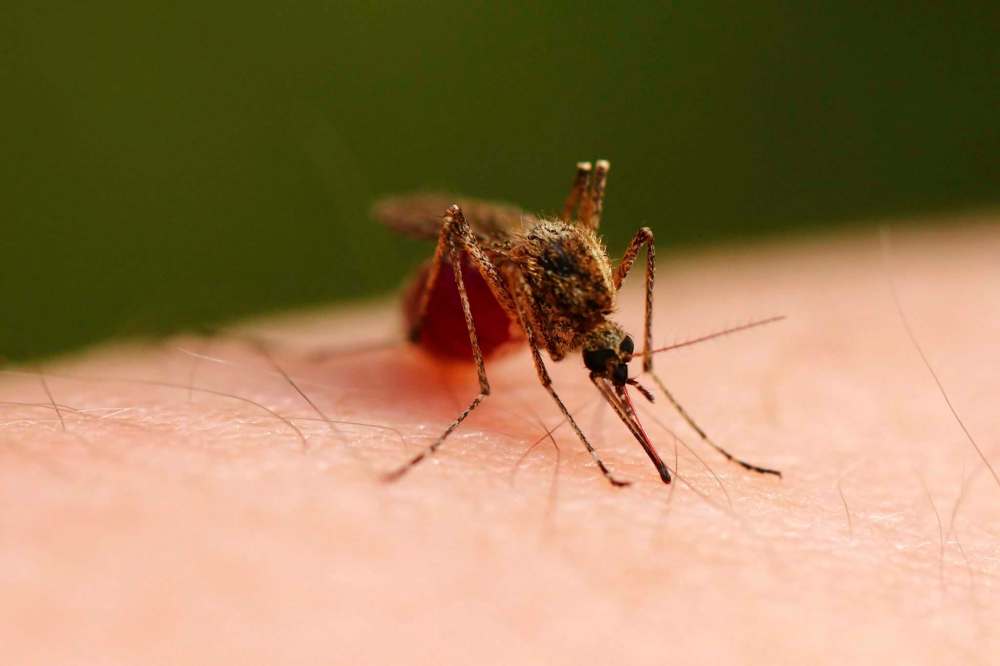
But the wily C. perturbans’ larvae and pupae can stay submerged and avoid a suicidal sojourn to the surface because they have a siphon-like apparatus that pierces the roots and stalks of reed grass and lets them stay underwater and breathe the air provided by plants. About 24 hours after the adult is released from the pupal case, the wings have expanded and it can fly in search of bare human skin.
For thoughtful people who consider the implications, this development can induce wide-eyed alarm — these mosquitoes have evolved in a way that allows them to avoid our most effective application of insecticide.
At a primal level, humans have feared this all along. Our aversion to mosquitoes is part of a wider realization, even in our subconscious, that insects are continually adapting in order to dodge our pitiful attempts to control them. This fear is evidenced by an icky oeuvre of bug-horror movies, including The Fly, Them!, Bug, Kingdom of the Spiders, Empire of the Ants, Creepshow, Ticks, and Bite.
Even more frightening than fiction is the reality: mosquitoes transmit diseases that kill millions of people annually, which makes them the planet’s most deadly creature.
Evolution teaches that successive generations of organisms adapt to challenges to their survival. For example, the U.S. Centers for Disease Control and Prevention reported July 13 that the gonorrhea bacteria may be developing resistance to the only antibiotics left that can cure this sexually transmitted disease. Evolution, it seems, can be frightening.

With that in mind, let’s imagine, quite wildly, what might happen as mosquitoes continue to evolve. As they metamorphose through future generations, will mosquitoes develop ways around our current defences?
Will mosquitoes of the future love the savoury taste of DEET and be attracted to the smoky sweetness of citronella candles?
Will they become smart enough to realize that if they sit patiently atop the frame of a screen door, the door will eventually open?
Will they become so tough that when we slap them, they slap back?
These are questions for Manitobans to ponder quietly while we lie awake at night, tormented by the high-pitched hum of a single mosquito — perhaps of the particularly perturbing “super” variety — buzzing around the bedroom, waiting for an opportune moment to land, drill and dine.