

NHL restart plan is strictly business decision
Advertisement
Read this article for free:
or
Already have an account? Log in here »
To continue reading, please subscribe:
Monthly Digital Subscription
$1 per week for 24 weeks*
- Enjoy unlimited reading on winnipegfreepress.com
- Read the E-Edition, our digital replica newspaper
- Access News Break, our award-winning app
- Play interactive puzzles
*Billed as $4.00 plus GST every four weeks. After 24 weeks, price increases to the regular rate of $19.95 plus GST every four weeks. Offer available to new and qualified returning subscribers only. Cancel any time.
Monthly Digital Subscription
$4.99/week*
- Enjoy unlimited reading on winnipegfreepress.com
- Read the E-Edition, our digital replica newspaper
- Access News Break, our award-winning app
- Play interactive puzzles
*Billed as $19.95 plus GST every four weeks. Cancel any time.
To continue reading, please subscribe:
Add Free Press access to your Brandon Sun subscription for only an additional
$1 for the first 4 weeks*
*Your next subscription payment will increase by $1.00 and you will be charged $16.99 plus GST for four weeks. After four weeks, your payment will increase to $23.99 plus GST every four weeks.
Read unlimited articles for free today:
or
Already have an account? Log in here »
Hey there, time traveller!
This article was published 01/06/2020 (2152 days ago), so information in it may no longer be current.
It feels like a lifetime ago that hockey was still rocking at Bell MTS Place, even though that was as recent as early March. For some fans, it didn’t take long to accept the absence of pro sports; for others, the longing has only grown stronger, amid the stress of the COVID-19 crisis.
That crisis has, among so many other things, exposed how deeply pro sports is woven into our culture. In retrospect, it is unsettling how, more than mass lockdowns in China or the exploding crisis in Italy, it was the abrupt stoppage of the National Baskeball Association and the National Hockey League that woke many North Americans up to the gravity of COVID-19, and how it was about to change our lives on every level.
Now, the NHL is looking to be the first major sports league to resume play.
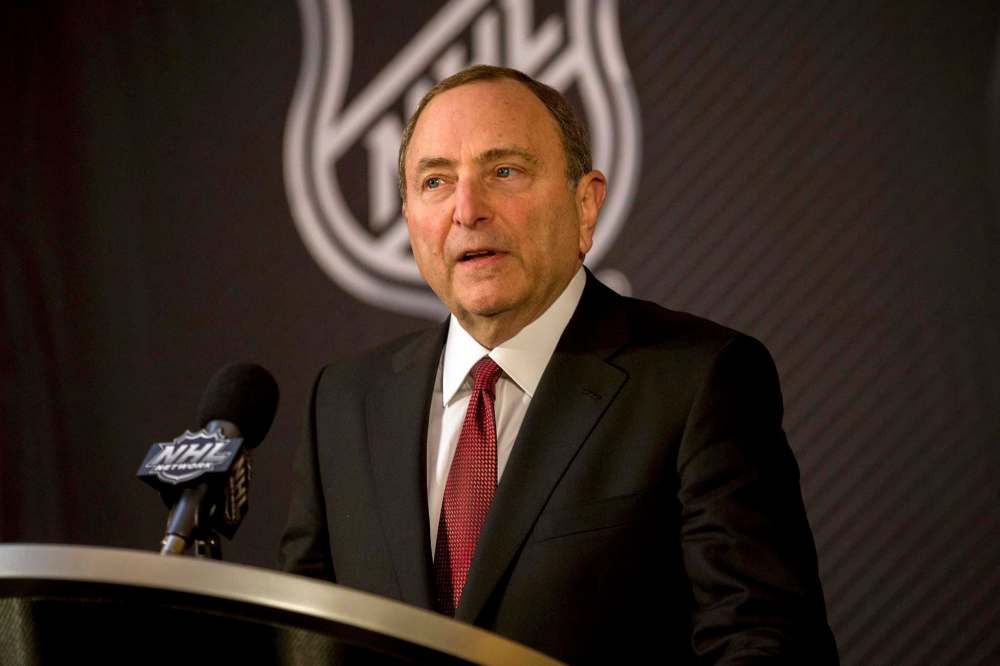
On Tuesday, NHL commissioner Gary Bettman announced the league’s suspended regular season is officially finished. Now, it plans to forge ahead with a tailor-made 24-team playoff format, after abbreviated training camps set for no sooner than early July.
Under this format, all games would be played in two as-yet-unidentified hub cities. Vancouver, Edmonton and Toronto are being considered, but the NHL has said it won’t come to Canada if the 14-day self-quarantine rule for incoming travellers remains in place. The United States has exempted pro athletes from travel restrictions.
The NHL Players’ Association and the league’s board of governors have both approved the plan. Still, the proposal is uncomfortable, and leaves many open questions.
This much seems clear: for the NHL, this is a business decision. It is looking to squeeze what cash it can out of the pandemic-tattered remains of its interrupted season. It should, however, be equally concerned about the message it is sending.

While some areas, such as Manitoba, have so far successfully flattened the curve and even escaped severe mortality outcomes from COVID-19, the virus still rages elsewhere and its future course is unknown and unknowable. For now, even in areas that are opening up amid low infection rates, public-health authorities continue to advise against unnecessary travel. And the 14-day self-quarantine rule remains in place for a reason.
In the middle of this advice, the NHL is proposing to put upwards of 600 players on planes, along with what will likely be an equivalent number of coaching and support staff, first to their teams’ home cities for training and then to the playoff hubs. They will come from across Europe and North America, including from regions badly stricken by COVID-19.
Many fans are thrilled at the prospect of hockey coming back. The pandemic stripped away many of the cultural touchstones from which we draw meaning: it’s more than understandable that some just want to have that excitement, and that sense of normalcy, return.
Still, the NHL needs to be held to a higher standard. The most responsible decision would have been to cancel this season, and start developing plans for the next one. In 1919, it did not award a Stanley Cup due to the influenza pandemic; it would have been appropriate for 2020 to be the same.
No doubt, it would be fun to see the Winnipeg Jets take on the Calgary Flames in the eight-team qualifying round, even if it feels strange to watch playoff hockey in mid-summer. But when it comes to making the smartest and, frankly, most obvious decision, the NHL plan seems slightly offside.