

Pandemic strategy requires accurate information
Advertisement
Read this article for free:
or
Already have an account? Log in here »
To continue reading, please subscribe:
Monthly Digital Subscription
$1 per week for 24 weeks*
- Enjoy unlimited reading on winnipegfreepress.com
- Read the E-Edition, our digital replica newspaper
- Access News Break, our award-winning app
- Play interactive puzzles
*Billed as $4.00 plus GST every four weeks. After 24 weeks, price increases to the regular rate of $19.95 plus GST every four weeks. Offer available to new and qualified returning subscribers only. Cancel any time.
Monthly Digital Subscription
$4.99/week*
- Enjoy unlimited reading on winnipegfreepress.com
- Read the E-Edition, our digital replica newspaper
- Access News Break, our award-winning app
- Play interactive puzzles
*Billed as $19.95 plus GST every four weeks. Cancel any time.
To continue reading, please subscribe:
Add Free Press access to your Brandon Sun subscription for only an additional
$1 for the first 4 weeks*
*Your next subscription payment will increase by $1.00 and you will be charged $16.99 plus GST for four weeks. After four weeks, your payment will increase to $23.99 plus GST every four weeks.
Read unlimited articles for free today:
or
Already have an account? Log in here »
Hey there, time traveller!
This article was published 06/04/2020 (2208 days ago), so information in it may no longer be current.
When it comes to providing an accurate picture of the coronavirus situation, China could learn from Iceland. And so, perhaps, could the rest of the world.
The small nation began testing its citizens for COVID-19 in February, and by last week had tested more than 17,900 people — nearly five per cent of its population. It has adopted strict quarantines for those who test positive, including those who are asymptomatic — which accounts for as many as 50 per cent of those who test positive.
To get a true sense of the danger posed by COVID-19, we need reliable information on the number of cases, the number of deaths and those who recovered. Accurate figures have been difficult to get.
While medical authorities and other organizations are analyzing the available data, such as a recent report by the U.K.’s Imperial College published in The Lancet, what emerges is an incomplete picture. Are governments even keeping an accurate tally of deaths related to or caused by COVID-19? There is growing doubt.
Recent reports suggest China, where the first outbreak was reported, has continually under-reported fatalities.
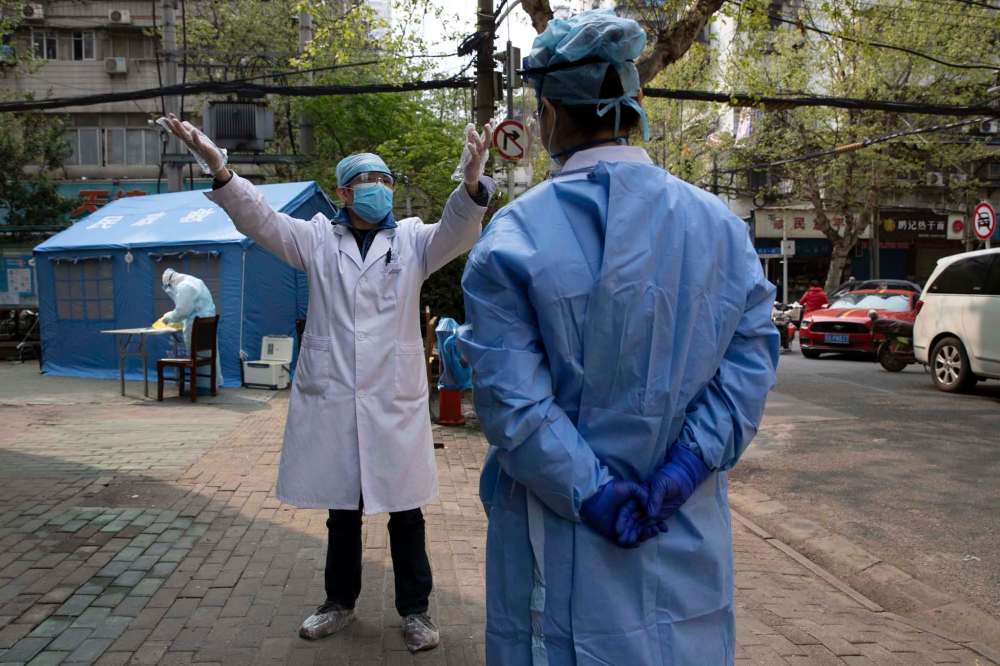
The official death toll from COVID-19 in Wuhan is 2,500. Figures from local crematoriums, however, suggest a much higher number of deaths during the period — possibly as high as 40,000. Not all of those deaths would be connected to COVID-19, but the sudden surge in cremations raises questions.
It can be politically damaging for any government to admit things are worse than the “official” numbers show, particularly for China, where coronavirus deaths appear to have peaked. But China appears not to be the only source of questionable COVID-19 accounting.
An analysis in The Economist showed Italy’s Bergamo region had 2,420 more deaths last month than in March 2019. Only 1,140 of those were attributed to COVID-19, but as the mayor of Bergamo’s capital put it to local media, “The data is the tip of the iceberg…. Too many victims are not included in the reports because they died at home.”
Similar discrepancies between official COVID-19 fatalities and total recorded deaths have been noted in parts of Spain and France.

In the U.S., catastrophic delays in testing and subsequent reporting have likely resulted in an incomplete picture of the total number of COVID-19 cases.
That lack of accurate information has allowed some leaders at the federal and state levels to continue to downplay the magnitude of the crisis at a time when swift, decisive action is crucial.
In Canada, our per-capita rates of testing may be better, but they don’t approach the percentage that Iceland has achieved. Iceland’s advantage was not its small population, but the fact it started case testing and contact tracing early. South Korea employed a similar strategy and also reaped the benefits of swift intervention.
Good public health policy must be based on reliable information. Governments must produce accurate case numbers and related figures (including fatalities), regardless of the political damage they may incur as a result of sharing them with the public.
COVID-19 defies borders and spreads with alarming speed. Without a clear picture of what has already happened, and what is happening now, we won’t stand a fighting chance at being ready for what comes next.