

Reclaiming names requires administrative will
Advertisement
Read this article for free:
or
Already have an account? Log in here »
To continue reading, please subscribe:
Monthly Digital Subscription
$1 per week for 24 weeks*
- Enjoy unlimited reading on winnipegfreepress.com
- Read the E-Edition, our digital replica newspaper
- Access News Break, our award-winning app
- Play interactive puzzles
*Billed as $4.00 plus GST every four weeks. After 24 weeks, price increases to the regular rate of $19.95 plus GST every four weeks. Offer available to new and qualified returning subscribers only. Cancel any time.
Monthly Digital Subscription
$4.99/week*
- Enjoy unlimited reading on winnipegfreepress.com
- Read the E-Edition, our digital replica newspaper
- Access News Break, our award-winning app
- Play interactive puzzles
*Billed as $19.95 plus GST every four weeks. Cancel any time.
To continue reading, please subscribe:
Add Free Press access to your Brandon Sun subscription for only an additional
$1 for the first 4 weeks*
*Your next subscription payment will increase by $1.00 and you will be charged $16.99 plus GST for four weeks. After four weeks, your payment will increase to $23.99 plus GST every four weeks.
Read unlimited articles for free today:
or
Already have an account? Log in here »
Hey there, time traveller!
This article was published 14/03/2022 (1500 days ago), so information in it may no longer be current.
If there’s anything worse than taking away someone’s name, perhaps it is not allowing them to regain it, even when you know it’s the right thing to do.
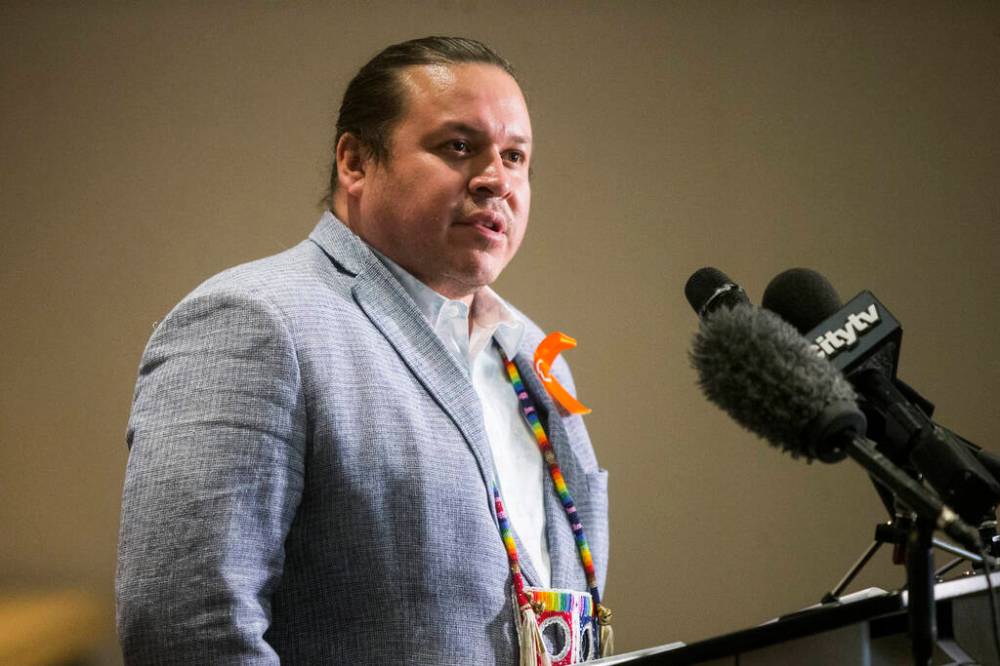
The Southern Chiefs’ Organization and Grand Chief Jerry Daniels recently called upon the Manitoba government to help Indigenous people reclaim their traditional Indigenous names, many of which had been forcefully taken from them in the past and continue to be denied to them by a government that only recognizes European-influenced names built upon the Latin alphabet. The SCO’s demand is not only timely, it is just.
The continued refusal of governments around the world to restore and recognize names that involve non-Latin alphabets, or which require diacritical glyphs, symbols or accents to accurately reflect a name and a culture, is a global shame that hearkens back to some of the darkest days of colonial society.
In Canada’s residential school system, children were often punished for speaking traditional languages, and many were stripped of their Indigenous names and given European ones. Official birth registries refused to acknowledge Indigenous names, even those that did not include special diacritical characters or accents. It was, in no uncertain terms, a white-washing of Indigenous peoples.
Today, there are few Canadians who would justify such actions. But the problem persists, despite some positive steps.
In response to a call to action in the Residential School Truth and Reconciliation Commission, the federal government recently announced it would allow Indigenous people to reclaim their traditional names “as written” in immigration documents, including passports. For a period of five years, this can be done without any charge to the individual reclaiming their name.
Ottawa’s gesture is a good first step, but it does not resolve the issue. Many provinces, including Manitoba, are still slow in adopting programs to allow Indigenous people to reclaim traditional names. And almost no one — in government, or in the fields of technology and equipment development, has developed a solution that would allow people who need diacritics and other glyphs, symbols and accents to express the full cultural significance of their names on documents such as passports.
The administrative inertia that sustains this problem comes from several different sources.
First, it’s become clear that the non-Indigenous people who dominate governments and industry simply do not believe it’s an urgent concern. Partly as a reflection of that indifference, the technology and machines that are used to scan identity documentations — particularly those used for travel, including passports — cannot recognize glyphs or symbols that may be common in Indigenous languages.

The problem extends to other institutions and media outlets, including this newspaper. Although diacritical glyphs and characters can be produced in digital content, the task cannot be accomplished in print editions because of limitations in the software and hardware used in publishing them.
It’s important to note that Canada’s Indigenous people are not alone in this concern. The Irish, for example, have suffered many of the same arbitrary perversions of traditional Gaelic names.
The Gaelic word Órla, which originates from the traditional spelling Órfhlaith, means “golden princess” in English. However, when you omit the accent over the “O” — which often happens in identity documentation — it translates as “vomit.” It’s a joke the famously jovial Irish do not find particularly funny.
The issue here is not one of “can’t.” This is decidedly a “won’t” situation. We could find solutions that would allow Indigenous peoples around the world to reclaim their names, but so far those in charge haven’t committed the necessary time, attention or resources.
It’s time to make it so.