

Vaccine focus must be global
Advertisement
Read this article for free:
or
Already have an account? Log in here »
To continue reading, please subscribe:
Monthly Digital Subscription
$1 per week for 24 weeks*
- Enjoy unlimited reading on winnipegfreepress.com
- Read the E-Edition, our digital replica newspaper
- Access News Break, our award-winning app
- Play interactive puzzles
*Billed as $4.00 plus GST every four weeks. After 24 weeks, price increases to the regular rate of $19.95 plus GST every four weeks. Offer available to new and qualified returning subscribers only. Cancel any time.
Monthly Digital Subscription
$4.99/week*
- Enjoy unlimited reading on winnipegfreepress.com
- Read the E-Edition, our digital replica newspaper
- Access News Break, our award-winning app
- Play interactive puzzles
*Billed as $19.95 plus GST every four weeks. Cancel any time.
To continue reading, please subscribe:
Add Free Press access to your Brandon Sun subscription for only an additional
$1 for the first 4 weeks*
*Your next subscription payment will increase by $1.00 and you will be charged $16.99 plus GST for four weeks. After four weeks, your payment will increase to $23.99 plus GST every four weeks.
Read unlimited articles for free today:
or
Already have an account? Log in here »
Hey there, time traveller!
This article was published 09/08/2021 (1699 days ago), so information in it may no longer be current.
When does a pandemic end?
It’s a big, complicated question. A global pandemic is just that, global. The virus, we know, doesn’t discriminate. It doesn’t know borders. It has claimed the lives of over four million people worldwide. The virus mutates; new variants emerge. Restrictions are rolled back and then, reinstated. When it will end will look different depending on where you live.
So maybe a better question is not when does a pandemic end, but how? And for whom?
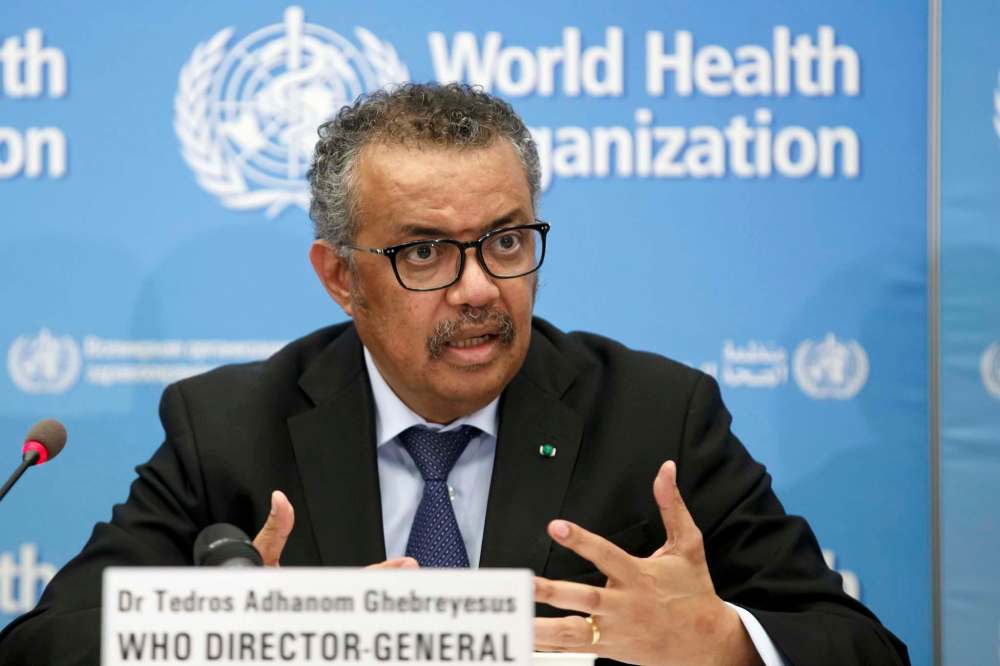
Vaccines, we know, offer our best shot at achieving herd immunity. But, as Tedros Adhanom Ghebreyesus, the director general of the World Health Organization, says, the only way out of this global crisis is through the equitable distribution of those vaccines, as well as personal protective equipment, tests and treatments.
“It is not rocket science, nor charity,” he said in early July. “It is smart public health and in everyone’s best interest.”
On Wednesday, Tedros called for a moratorium on administering booster shots of COVID-19 vaccines until at least the end of September, “to enable at least 10 per cent of the population of every country to be vaccinated.”
Indeed, talking about COVID-19 vaccine boosters — or going ahead with plans to administer them, as France, Germany and Israel are planning to do — when many people living in developing nations haven’t even gotten a first shot yet is to take a rather privileged and myopic view of a global crisis. As Tedros pointed out, of the four billion vaccine doses administered globally, more than 80 per cent have gone to high- and upper-middle income countries, even though they account for less than half of the world’s population.

The focus, right now, should remain on getting as many jabs into arms as possible, all over the world. We all have vested interest: so long as a virus continues to circulate, it will continue to mutate into other variants — including more contagious ones, such as the Delta variant. And so long as variants continue to spread, even countries with higher vaccination rates will be vulnerable to new waves of COVID-19.
“No one is safe until everyone is safe” is the raison d’être of Covax, a global vaccine sharing initiative led by Gavi, the Vaccine Alliance, the Coalition for Epidemic Preparedness Innovations, and the WHO. It’s aimed at closing the vaccine access gap between poor and rich countries. All kinds of red-tape problems have plagued the program, including dose acquisition; per the New York Times, Covax is half a billion vaccines short of its targets.
In July, Canada announced it would donate 17.7 million doses of AstraZeneca to low- and middle-income countries to be distributed by Covax, finally heeding the pleas from officials to donate actual vaccine, not just money.
“Covax hasn’t failed, but it is failing,” Dr. Ayoade Alakija, a co-chair of the African Union’s vaccine delivery program, told the New York Times. “We really have no other options. For the sake of humanity, Covax must work.”
It’s time for wealthy countries and vaccine producers to co-operate. Fighting a global pandemic requires a global effort, full stop. No one is safe until everyone’s safe. The pandemic isn’t over until it’s over for everyone.