

Warnings from Walkerton remain urgent
Advertisement
Read this article for free:
or
Already have an account? Log in here »
To continue reading, please subscribe:
Monthly Digital Subscription
$1 per week for 24 weeks*
- Enjoy unlimited reading on winnipegfreepress.com
- Read the E-Edition, our digital replica newspaper
- Access News Break, our award-winning app
- Play interactive puzzles
*Billed as $4.00 plus GST every four weeks. After 24 weeks, price increases to the regular rate of $19.95 plus GST every four weeks. Offer available to new and qualified returning subscribers only. Cancel any time.
Monthly Digital Subscription
$4.99/week*
- Enjoy unlimited reading on winnipegfreepress.com
- Read the E-Edition, our digital replica newspaper
- Access News Break, our award-winning app
- Play interactive puzzles
*Billed as $19.95 plus GST every four weeks. Cancel any time.
To continue reading, please subscribe:
Add Free Press access to your Brandon Sun subscription for only an additional
$1 for the first 4 weeks*
*Your next subscription payment will increase by $1.00 and you will be charged $16.99 plus GST for four weeks. After four weeks, your payment will increase to $23.99 plus GST every four weeks.
Read unlimited articles for free today:
or
Already have an account? Log in here »
Hey there, time traveller!
This article was published 05/10/2020 (2006 days ago), so information in it may no longer be current.
It has become apparent Manitoba’s provincial government is in need of a quick lesson in Canadian history. Specifically, it needs a refresher course on the ill-starred rural community of Walkerton, Ont., and the most serious case of water contamination ever seen in this country.
Twenty years ago, in May 2000, heavy rains washed cow manure from a nearby pasture into Walkerton’s water system through a cracked well.
The deadly E. coli bacteria slipped quietly through a maze of pipes and into the homes of about 5,000 residents, who drank the polluted water and bathed in bacteria-ridden tubs.
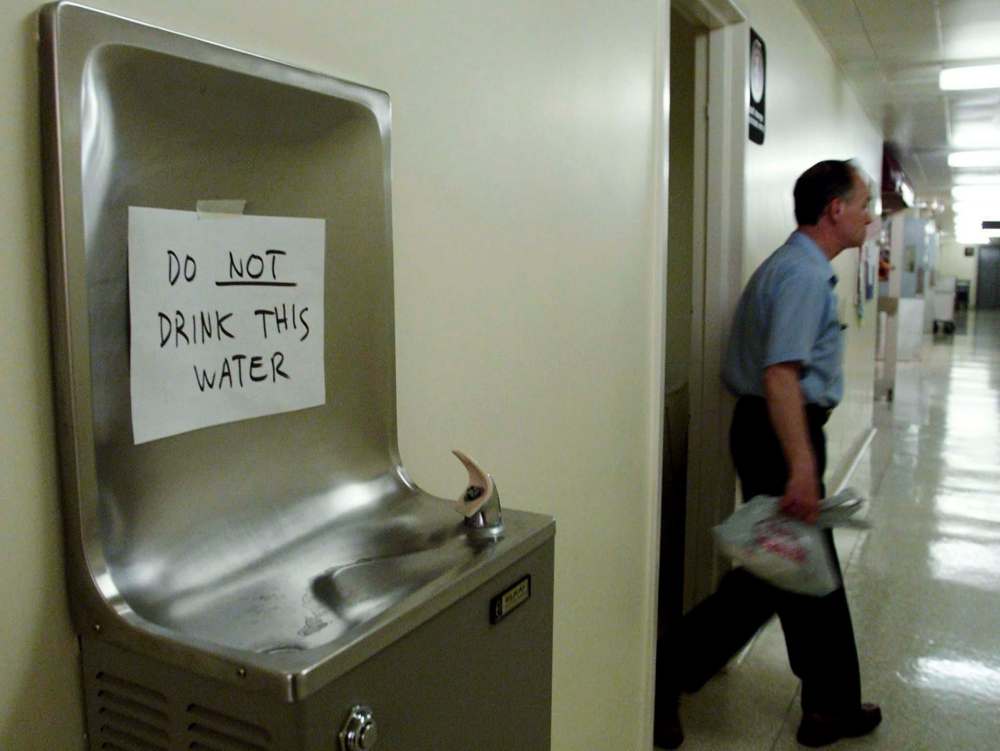
Not long after, residents began experiencing bloody diarrhea and throbbing cramps that left many writhing in agony, overwhelming the town’s lone hospital and leaving public-health authorities frantically searching for the culprit.
In the end, seven people were dead and more than 2,300 fell ill. Today, some residents continue to suffer from long-term effects such as kidney damage.
In a scathing inquiry report in 2002, Justice Dennis O’Connor exposed an alarmingly unstable waterworks system made fragile by provincial cutbacks, inept and dishonest public-utilities managers and poor government oversight.
Two waterworks employees were convicted of crimes — one getting a year in jail, the other nine months of house arrest — but what became clear about the systemic problems that were revealed was that the Walkerton disaster could have happened almost anywhere.
In response to the worst E. coli outbreak in Canadian history, Ontario instituted some of the strictest laws in Canada to ensure the safety of its water supply. One of Judge O’Connor’s key recommendations was this: “All water should be continuously monitored, with alarms and automatic shut-off systems if something goes wrong.”
Twenty years later, it seems unimaginable the hard-earned lessons of the Walkerton water tragedy could be forgotten, but an alarming report released last Monday by Manitoba’s auditor general makes that an open question.
The Provincial Oversight of Drinking Water Safety: Independent Audit Report warned 20 per cent of known Manitoba water systems don’t have an operating licence, and about half don’t have a certified operator. The report revealed the number of licensed water systems in the province nearly doubled over the last five years, but the number of staff to monitor these systems decreased.
In addition to gaps in licensing, the audit found the province had weak strategic planning and performance measurement processes for overseeing drinking water safety in Manitoba.

“Bottom line on the report is that the Department of Conservation and Climate needs to do more to ensure the safety of drinking water in Manitoba,” said Tyson Shtykalo, Manitoba’s auditor general.
It goes without saying that any discussion of safe drinking water must include pointed reference to the numerous Manitoba First Nations that remain under boil-water advisories — despite Prime Minister Justin Trudeau’s 2015 campaign pledge to eliminate them by 2021.
The province welcomed the oversight report and said many of its 18 recommendations have already been implemented. That is welcome news, but it remains unconscionable that the sort of deterioration outlined in the report by Manitoba’s auditor general was allowed to develop in the first place.
If anything was learned from the horrific — and avoidable — tragedy in Walkerton, it is that oversight can save lives.
Two decades later, the events that devastated a quaint Ontario town are likely a distant memory for most Canadians. The warnings they inspired, however, regarding the need to safeguard our most precious resource are no less urgent today than they were in 2000.