

Sniffers seek safe housing
Advertisement
Read this article for free:
or
Already have an account? Log in here »
To continue reading, please subscribe:

Digital Subscription
One year of digital access for only $205*
- Enjoy unlimited reading on winnipegfreepress.com
- Read the E-Edition, our digital replica newspaper
- Access News Break, our award-winning app
- Play interactive puzzles
*First annual payment billed as $205.00 + GST for one year. This annual subscription will automatically renew at $233.00 + GST every 52 weeks (10% off the regular annual price of $259.35). Offer available to new and qualified returning subscribers only. Cancel any time.
To continue reading, please subscribe:
Add Free Press access to your Brandon Sun subscription for only an additional
$1 for the first 4 weeks*
- Enjoy unlimited reading on winnipegfreepress.com
- Read the E-Edition, our digital replica newspaper
- Access News Break, our award-winning app
- Play interactive puzzles
*Your next Brandon Sun subscription payment will increase by $1.00 and you will be charged $17.95 plus GST for four weeks. After four weeks, your payment will increase to $24.95 plus GST every four weeks.
Read unlimited articles for free today:
or
Already have an account? Log in here »
Hey there, time traveller!
This article was published 10/12/2011 (5353 days ago), so information in it may no longer be current.
Sniffers want safe, clean housing, and they are willing to consider going to drug rehab to get it.
“People want the same as you and me — a clean place, a private place, a safe place,” said nurse Margaret Ormond.
“Their wants and desires are the same as yours and mine.”
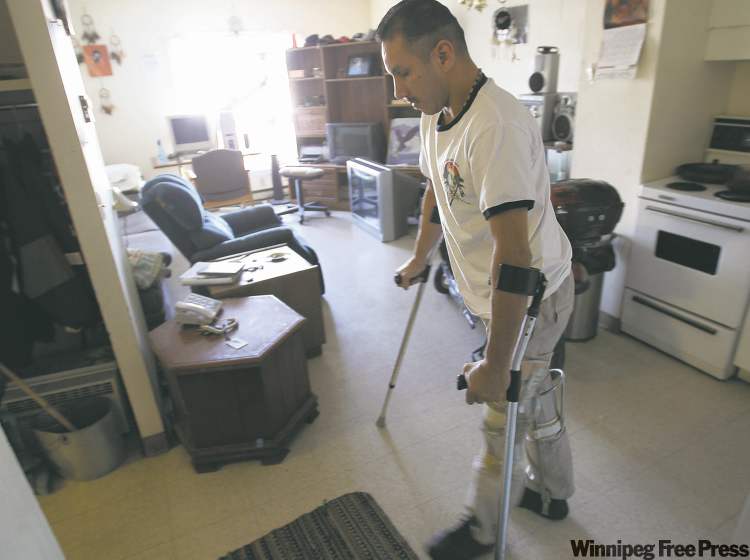
That’s the word from solvent users themselves, 55 of whom Ormond surveyed over the summer as part of the landmark study on homelessness now underway by the Mental Health Commission of Canada.
Winnipeg is one of five cities where researchers are looking at innovative solutions to homelessness, such as the “housing first” model.
That’s where street people are given proper housing right off the bat, without the traditional caveat that they stay sober or go to drug rehab first. An apartment or suite, like the ones in the newly renovated Bell Hotel, gives people stability and safety and allows social workers and other experts to start offering other help, such as mental health counselling, drug or alcohol programs and even aid with basic life skills such as cleaning and shopping.
More than 500 homeless people are participating in Winnipeg’s study, and 170 of them have new homes. Of the 500, about 25 are solvent users, and researchers have already learned those 25 have very particular needs.
So far, the housing-first model doesn’t appear to be working as smoothly for solvent users as it is for other street people, sometimes because of the smell and the stigma sniffers bring with them, or the mess of other mental and physical problems they often have. One idea on the table is opening an apartment building or series of suites earmarked only for solvent-users as a way to get them into safe accommodations and inching closer to getting clean.
But first, researchers created a special subcommittee to focus on sniffers, which was when Ormond pitched the idea of actually asking solvent users what kind of housing they want.
Through her research and work with Sunshine House on Logan Avenue, Ormond has come to know dozens of chronic solvent users, some of the smartest, most self-effacing and compassionate people she’s met.
“They will go to ridiculous extremes to help each other,” said Ormond. She asked sniffers to describe a great home they’ve had in the past, as well as a crappy place.
People also said they would probably agree to treatment if it meant snagging a good place to stay. Treatment wasn’t a first choice, but if it was a condition of proper housing, they would consider it, said Ormond.
maryagnes.welch@freepress.mb.ca
Sniff survey
Of the 55 solvent users interviewed:
Half were homeless
They ranged from
23 to 64 years of age

One third were women
85 per cent were
aboriginal
Related Articles
Dangerous solvent sales...

Advertisement Advertise With Us
Advertisement Advertise With Us