

‘It was like an abduction’
Burmese immigrants believed they were safe in Canada. Then CFS 'commandos' swept their children away
Advertisement
Read this article for free:
or
Already have an account? Log in here »
To continue reading, please subscribe:
Monthly Digital Subscription
$1 per week for 24 weeks*
- Enjoy unlimited reading on winnipegfreepress.com
- Read the E-Edition, our digital replica newspaper
- Access News Break, our award-winning app
- Play interactive puzzles
*Billed as $4.00 plus GST every four weeks. After 24 weeks, price increases to the regular rate of $19.95 plus GST every four weeks. Offer available to new and qualified returning subscribers only. Cancel any time.
Monthly Digital Subscription
$4.99/week*
- Enjoy unlimited reading on winnipegfreepress.com
- Read the E-Edition, our digital replica newspaper
- Access News Break, our award-winning app
- Play interactive puzzles
*Billed as $19.95 plus GST every four weeks. Cancel any time.
To continue reading, please subscribe:
Add Free Press access to your Brandon Sun subscription for only an additional
$1 for the first 4 weeks*
- Enjoy unlimited reading on winnipegfreepress.com
- Read the E-Edition, our digital replica newspaper
- Access News Break, our award-winning app
- Play interactive puzzles
*Your next Brandon Sun subscription payment will increase by $1.00 and you will be charged $17.95 plus GST for four weeks. After four weeks, your payment will increase to $24.95 plus GST every four weeks.
Read unlimited articles for free today:
or
Already have an account? Log in here »
Hey there, time traveller!
This article was published 18/02/2012 (5198 days ago), so information in it may no longer be current.
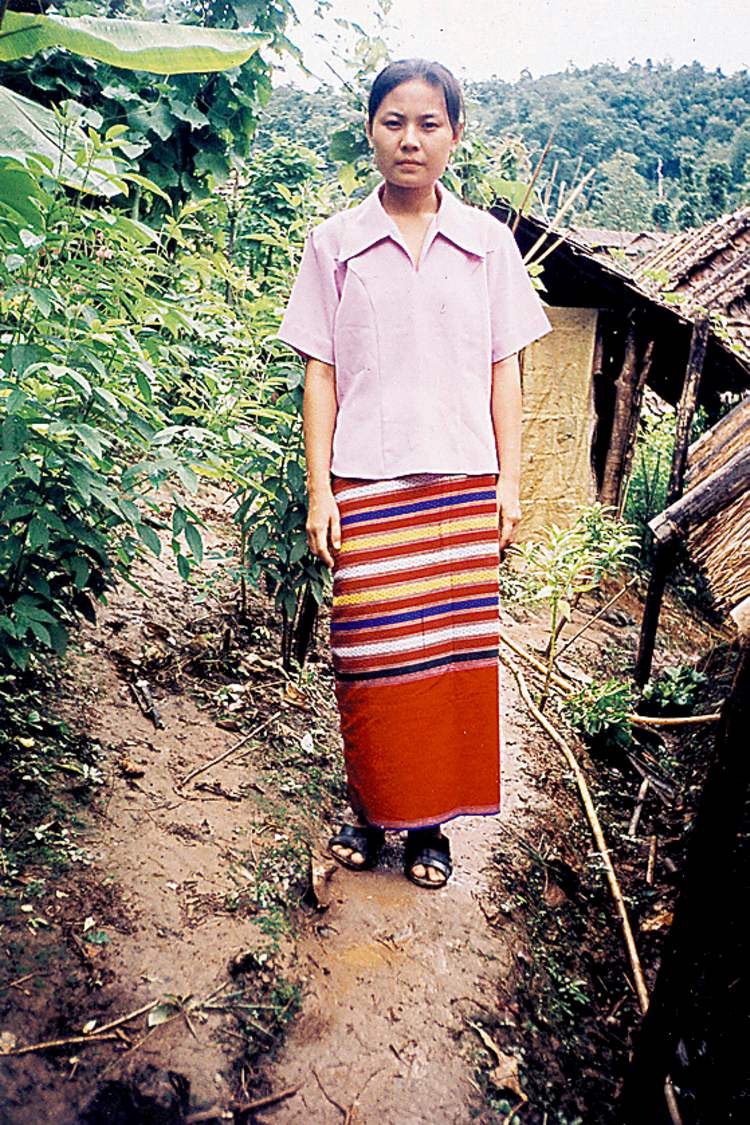
K’dah Ra Wah and Shwe Le Say learned to fear government early on. The Burmese refugees spent years in a camp on the border of their war-torn country. When they came to Canada with their two young children they believed they could trust again.
They were proven wrong when Child and Family Services arrived late one afternoon in 2010 to take their children away. Not just their five-year-old, whom they were inexplicably accused of abusing. They also took Buna, his eight-year-old sister, and Thaena, his nursing six-week-old brother.
There was no translator to explain what was happening. The family speaks Karen, one of the many languages of Burma, as their first language. The parents thought their children had been kidnapped.
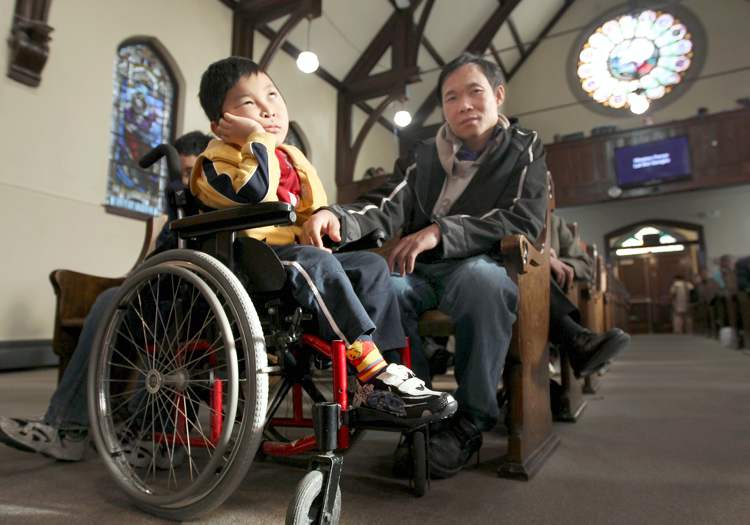
They were told not to try to contact their children. Say is emotional when he remembers seeing his daughter, a school patrol, on the street. They both quickly looked away, afraid and embarrassed.
Although the abuse accusation was quickly disproved, it would be a month before they saw their children again. No one has ever explained why.
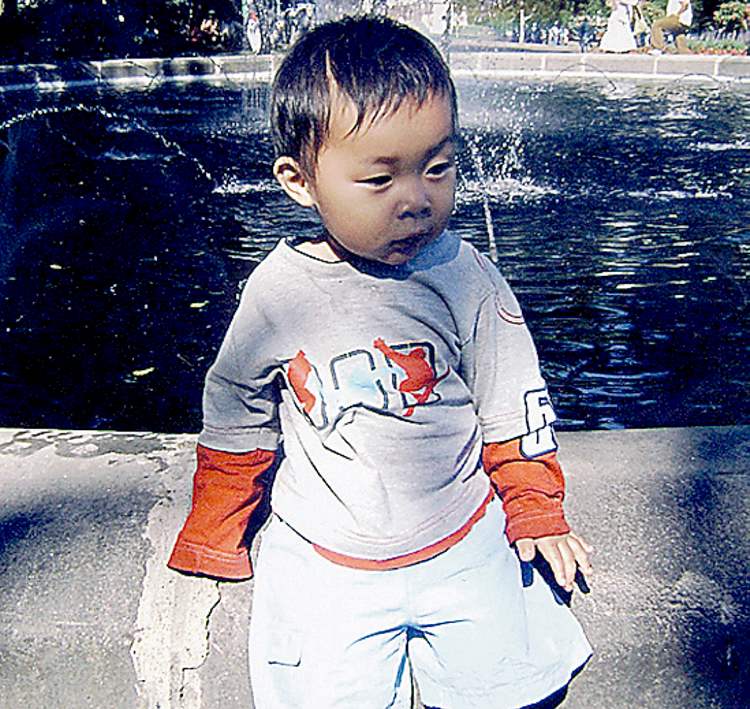
In the spring of 2009, Blessing was paralyzed from the chest down after he tumbled from the third-storey window of a West End apartment. He would spend nearly five months in hospital.
His mother remembers the flash of his T-shirt next to her as he pressed on the screen and fell through. She’d say later that she thought Canadian windows were safe, that everything in Canada was safe.
She was wrong, not only about the window but about so much more.
Wah, 28, and Say, 39, are grateful for their life in Canada. Say has a good job as a welder. They joined a church. They have Canadian friends.
Despite the accident, they thought their lives were good in this new country.
The troubles began in November 2009, when Wah and Say brought Blessing to Children’s Hospital with a swollen left leg. X-rays showed his femur was fractured. Because he can’t feel his legs, the child and his parents don’t know when the break happened.
His doctors would later confirm these sorts of injuries are common in young wheelchair users, especially those who “butt scoot” to get around when they’re not in their chairs. The leg was put in a cast and Blessing was sent home.
On June 12, 2010, Blessing was back at the hospital with his mother and family friend Sue Burak. X-rays showed he had another fracture of his left femur. He was admitted to Children’s and more X-rays ordered.
What his parents didn’t know — and what they wouldn’t learn for weeks — is that an X-ray showed what appeared to be a broken shoulder bone.
Abuse was suspected. The Child Protection Centre was notified.
It appears no one knew, at least on June 12, that the X-ray was false. There was no shoulder fracture. A mistake was made at the hospital. The repercussions were huge.
On June 14, 2010, CFS worker Bonnie Brand called the home and asked questions about the leg fracture. Again, the parents said they didn’t know how it happened. Blessing was discharged from hospital that day with his leg in a cast.
On June 15, Brand called the home again and said she was coming to take Blessing. There were allegations of other injuries.
Wah called two Canadian friends, Sue Burak and Rev. Lorne Meisner. They contacted Rev. Tim Neilson, the family’s pastor.
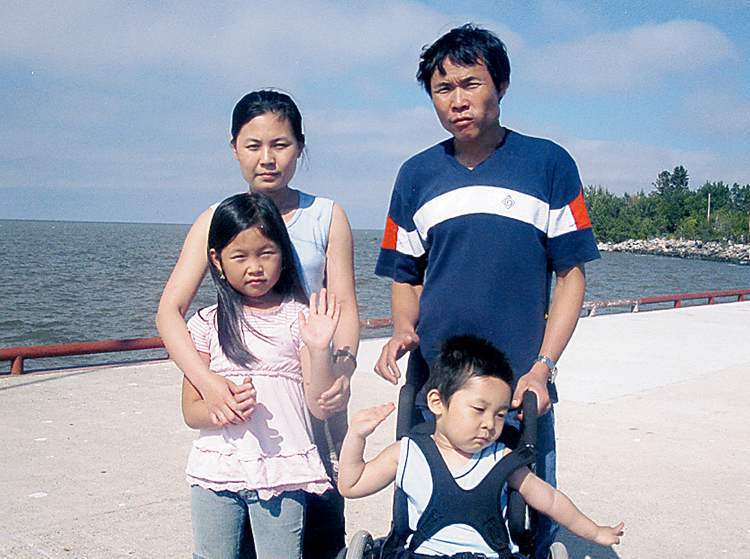
The Canadian friends and the CFS workers arrived nearly at the same time. CFS and ANCR (All Nations Co-ordinated Response) workers were taking all three children, including Thaena, a breastfeeding newborn.
“It was like witnessing an abduction,” says Burak.
“They didn’t leave a letter, explain why they were taking the children. Everyone was crying. They wouldn’t tell us what was going on.”
The workers left in such a hurry they didn’t take Blessing’s wheelchair or his medication.
Nielsen uses the words “commando-style” to describe the actions of the CFS workers.
“They walked in with three people. No translator. One of the things I said to them was, ‘Show me you have the authority to do this.’ They had no papers. I said, ‘If I brought a computer to Future Shop, they’d give me a receipt.’ All they could muster was a business card.”
Wah and Say were afraid they would never see their children again. They fled a regime that never had to explain its actions. They were traumatized by war. They weren’t equipped to fight this battle, too.
— — —
It was up to the Canadian friends to find out why the children had been taken and how to get them back. They, and the parents, called Blessing’s doctors at Health Sciences Centre. On June 18, HSC Head of Pediatrics (and Blessing’s pediatrician) Dr. Elske Hildes-Ripstein sent a letter to the parents and to CFS workers Brand and Kelly Rieu.
“I have requested that the nature of Blessing’s injuries are investigated with the understanding that he is a paraplegic who does not weight bear and could be ostoepenic,” she wrote. The child’s bone density is likely much lower than normal.
“I was surprised and unaware of any concerns from other staff that worked with Blessing and his family prior to the removal of the children from the home,” her letter continued. “At no time in my interaction with the family did I have any concerns regarding the safety or any unmet needs of Blessing.”
That same day, the parents were allowed their first visit with newborn Thaena. His mother was eventually allowed to breastfeed him, but only three times a week for 90 minutes.
The parents could not speak to or see their other children.
Buna, now 10, remembers being taken from her parents.
“We were somewhere. I don’t know where,” says the quiet-spoken girl.
“I was sad and confused.”
On June 22, Dr. Andrew Skalsky, Blessing’s doctor during his initial hospital stay, sent a letter to all concerned parties explaining how common these leg fractures are in young wheelchair users.
On June 23, the parents were served with court papers saying the apprehension of the children was based on the discovery of a fractured scapula. They went to court June 28. The hearing was adjourned to July 19 because there was no Karen translator.
Then came the bombshell: Dr. Charles Ferguson, head of the Child Protection Centre, wrote a letter on June 29 and sent it to Brand, Rieu, the Winnipeg Police Service child abuse unit and Hildes-Ripstein.
“The final report on the X-rays,” he wrote, “contrary to previous concerns by a different examiner, could not identify a scapula fracture.”
That letter was faxed July 2.
On July 7, the parents went to the Public Safety Building to meet with police investigators.
On July 13, they were told there would be an abuse investigation. The CFS abuse team was Brand and Rieu, the two women who seized the children. Then, they told the parents the police cleared them.
And still the family waited. The children did not come home until July 14, 12 days after Ferguson exonerated the parents.
CFS workers were supposed to arrive with the children at 11 a.m. They were three hours late. Their anxious parents thought they weren’t coming back.
On July 24, Blessing’s parents realized he had been returned to them with a bladder infection. The child requires catheterization.
They were afraid to take him to hospital. They did, accompanied by Sue Burak.
— — —
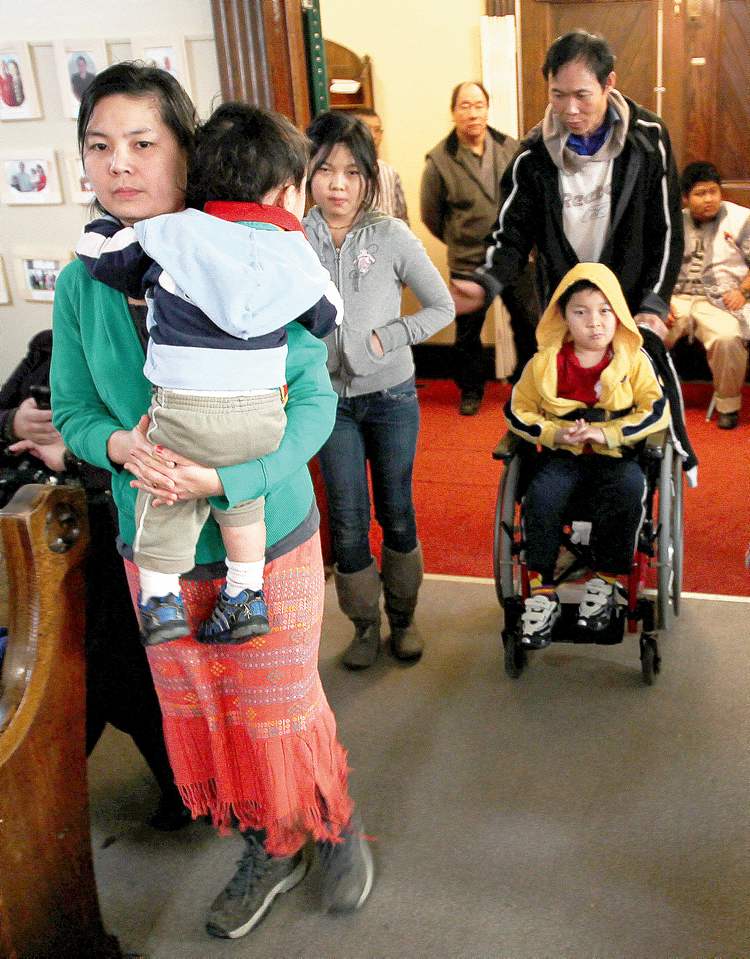
Burak and Meisner wouldn’t let the return of the children end their dealings with HSC and CFS. They wanted to know how this mistake could happen. They wanted an apology to the family.
They got one from HSC, although it was never put in writing.
On April 8, 2011, after months of letter writing, Meisner, Burak, Wah and Say were called to the hospital. They met with HSC Chief Operating Officer Adam Topp, patient representative Kim Stratton and Dr. Cheryl Rockman-Greenberg, medical director of the Child Health program. A Karen translator was on hand.
Meisner says the family was given an apology for the X-ray mix-up. They were assured they were not implicated in child abuse.
They left satisfied.
No one from the hospital would comment on the case. Due to strict Winnipeg Regional Health Authority confidentiality regulations, no one from the hospital is allowed to discuss individual cases. The WRHA communications office refused to grant an interview with Ferguson or Topp.
Dealing with CFS was another matter. Meisner has a file of letters he sent to then-Family Services Minister Gord Mackintosh and opposition critics Myrna Driedger and Bonnie Mitchelson. He and Burak phoned CFS and ANCR repeatedly. They wanted to know how the decision to seize the children was reached, why it took so long for them to be reunited and whether anyone would apologize to the family.
They got no satisfaction.
“I want to say that we live in Canada here,” Shwe La Say said recently in his halting English.
“It’s a good country, a good government. I feel like with my family they make a mistake. We want to fix. Everybody is not perfect. If they take away my kids and my kids come back, they should say what happened.”
It would help their healing, he says. Despite assurances from their Canadian friends, they’re not sure if 10-year-old Buna thinks her parents did something wrong.
Jay Rodgers, CEO of the CFS General Authority, says a formal review of the family’s experiences is well underway. He met with Meisner and several CFS staffers on Nov. 23, 2010.
The family was not asked to attend. Meisner says he has heard nothing from CFS since that meeting. Rodgers says he should have recommendations on his desk soon. Part of the problem, he says, is the challenges of dealing with new Canadians. CFS is addressing those issues now, he says.
“A lot of the new Canadians are refugees where governments are the enemies.”
But will CFS accept fault for what happened to this family?
“I believe the Health Sciences Centre took some responsibility for this,” Rodgers said. “Clearly, they could have done better. I think there are some things we could have done differently.”
He concedes it would be appropriate to return children more quickly when there is evidence no abuse occurred.
Will there be an apology? Rodgers didn’t rule one out.
“If they explain like the hospital,” K’dah Ra Wah says of her hopes from CFS. “At the hospital, I understand what happened. Someone also makes mistakes.”
She starts to cry.
“If they say they did things to us is not the right things, it would make us feel better.”
Indeed, it might help them finally trust a government.
The family’s CFS file was officially closed Feb. 2, 2011. It’s been 18 months since their children were taken.
They’re still waiting for that apology.
lindor.reynolds@freepress.mb.ca
Document excerpts
From: Charles A. Ferguson, director, Child Protection Centre
To: Bonnie Brand, Winnipeg Child and Family Services
In reviewing this film with Radiology, it was agreed this was most probably from falling on his flexed knee. He was casted and sent home, our Centre was not involved. Clearly, there was no suspicion that the injury was inflicted, by anyone.
From: Julie Huish, occupational therapist
To: Whom it may concern
In my contact with Blessing and his family, I have observed his parents to be attentive to him, aware of his needs, encouraging, loving and protective. There has been no time when I felt that they placed him in an unsafe situation, were neglectful of him, or were anything less than gentle in their physical handling of him.
From: G. Elske Hildes-Ripstein,
Pediatric Ambulatory Care,
Children’s Hospital
To: Whom it may concern

I believe I speak for the majority of the staff on the unit where he spent his rehabilitation time when I say Blessing’s mother, K’Dah Ra Wah, was a gentle, patient woman who never showed frustration or anger with her demanding and medically needy three-year-old child.
From: Andrew Skalsky, Pediatric Physical Medicine and Rehabilitation
To: Whom it may concern
I have seen several episodes of lower extremity femur fractures throughout my career that are similar to both incidents and I do not feel that the lower extremity fractures in any way represent neglect or abuse and are actually a quite common phenomena.
History
Updated on Saturday, February 18, 2012 11:31 AM CST: corrects cutlines, adds fact box