

Tough life for an outsider
Advertisement
Read this article for free:
or
Already have an account? Log in here »
To continue reading, please subscribe:

Digital Subscription
One year of digital access for only $205*
- Enjoy unlimited reading on winnipegfreepress.com
- Read the E-Edition, our digital replica newspaper
- Access News Break, our award-winning app
- Play interactive puzzles
*First annual payment billed as $205.00 + GST for one year. This annual subscription will automatically renew at $233.00 + GST every 52 weeks (10% off the regular annual price of $259.35). Offer available to new and qualified returning subscribers only. Cancel any time.
To continue reading, please subscribe:
Add Free Press access to your Brandon Sun subscription for only an additional
$1 for the first 4 weeks*
- Enjoy unlimited reading on winnipegfreepress.com
- Read the E-Edition, our digital replica newspaper
- Access News Break, our award-winning app
- Play interactive puzzles
*Your next Brandon Sun subscription payment will increase by $1.00 and you will be charged $17.95 plus GST for four weeks. After four weeks, your payment will increase to $24.95 plus GST every four weeks.
Read unlimited articles for free today:
or
Already have an account? Log in here »
Hey there, time traveller!
This article was published 25/08/2012 (5072 days ago), so information in it may no longer be current.
Early immigrants to Canada from Italy (1895 to 1930) constituted a cheap workforce, which contributed greatly to the Canadian economy. But the Italians, particularly southern Italians, were exposed to scorn, ridicule, ostracism and racial slurs by Canadian nativists, who considered immigration from eastern and southern Europe a social evil. Political leaders in Winnipeg wrote that “Italians were worthless as settlers,” and anticipated trouble with this class of immigrant.
A minister in the Laurier government expressed his opinion on Italian immigration: “I don’t want anything done to facilitate Italian immigration.”
Differences in religious beliefs were probably as important as ethnicity in determining how immigrants were viewed.
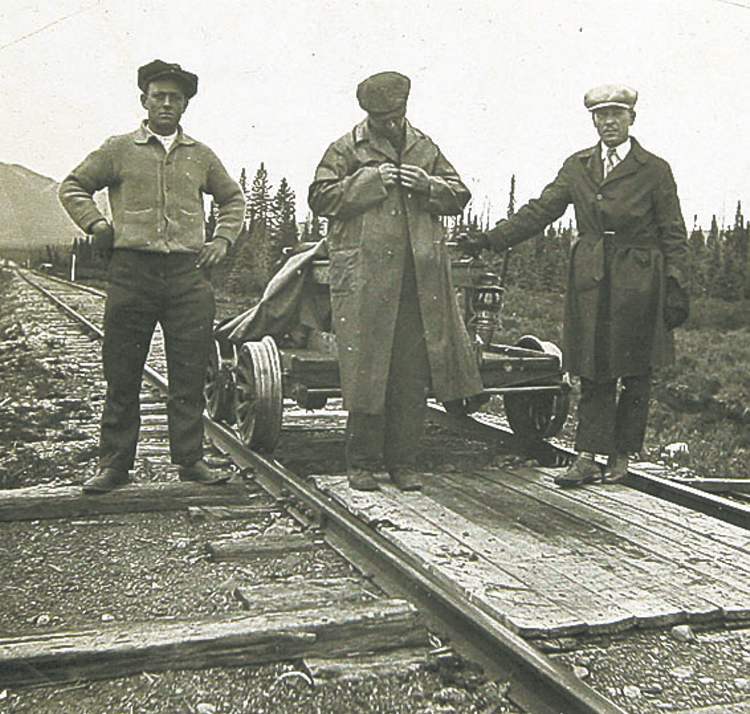
Immigrants of Anglo-Saxon and northern European origin were warmly received and accepted by the dominant British element already established in Canada. Immigrants from countries in eastern and southern Europe who did not share the same traditions were not warmly accepted and did not as easily adjust to their new environment. They were pejoratively referred to as wops, dagos, greasers, spaghetti-eaters.
They were described as swarthy, regardless of their skin colouring. An added insult was to be identified with the Mafia, a label reinforced by the media and Hollywood.
Immigrants from Italy who arrived from about 1895 to 1930 came as young single men intent upon earning enough money in a year or two and returning to Italy to buy property, get married, raise a family and spend their lives in their homeland. They made a tremendous sacrifice to leave loved ones and travel to an unknown, unfamiliar land with no knowledge of its language and customs and no social network to welcome them.
As if leaving family and homeland was not enough of a traumatic experience, they were viewed as dirty and unkempt and were subjected to ostracism isolation, and other indignities by the dominant English-speaking majority. One can only imagine the loneliness and hostility these young men experienced. They held the dirtiest and most difficult menial jobs imaginable. Then they learned their jobs were seasonal and faced layoffs during the fall and winter.
When CN Rail built large shops in Transcona and Winnipeg, the young immigrants saw an opportunity to make a life in Canada.
However, bullying, discrimination and ethnic hostility continued. Hundreds of stories recalled by Italians in Winnipeg are recorded. Only a few are cited here.
A Canadian from an Italian family received his baptism of hostility within a few days of beginning school in Grade 1. A larger kid accosted the younger one and called him a dirty wop, a term he didn’t understand, but learned its intent when the slur was accompanied by a painful kick in the butt. It is ironical that the kid doing the name-calling spoke English with a thick eastern-European accent.

Before the Second World War, a group of Italian workers in the CN Rail shops had lunch together in a secluded area. Most spoke English, but in deference to a couple who were still learning the language, they conversed in Italian as well as in English. As soon as war was declared against Germany and Italy, a group of self-appointed spokesmen for CN approached the Italian workers, all of whom were Canadian citizens. One of the group declared in a hostile tone, “There’s a war on, you know. There’ll be no more Italian.” Another one said, “Yeah, you only spikka da English.”
The war seemed to be a convenient excuse for these men to vent their previously hidden hatred and prejudice. Ethnic hostility is not just aimed at the working class. It can be found in academia and the corporate level. Often, discrimination manifests itself by omission as well as commission.
Discrimination does not appear to be a major problem in today’s milieu. If it exists it is covert rather than overt. There is probably a greater understanding among people of diverse ethnic background through multiculturalism and ethnocultural festivals like Folklorama, better education, greater awareness of human rights and protective laws in the workplace.
Sam Loschiavo is an entomologist who helped establish Folklorama, the Italian-Canadian League of Manitoba and the Italian Canadian Foundation. He is a member of the Order of Canada,