

Sharp-dressed hommes
Toques, sashes and other fashion essentials for an 1815 voyageur
Advertisement
Read this article for free:
or
Already have an account? Log in here »
To continue reading, please subscribe:
Digital Subscription
One year of digital access for only $1.44 a week*
- Enjoy unlimited reading on winnipegfreepress.com
- Read the E-Edition, our digital replica newspaper
- Access News Break, our award-winning app
- Play interactive puzzles
*Billed as $5.77 plus GST every four weeks. After 52 weeks, price increases to the regular rate of $19.95 plus GST every four weeks. Offer available to new and qualified returning subscribers only. Cancel any time.
To continue reading, please subscribe:
Add Free Press access to your Brandon Sun subscription for only an additional
$1 for the first 4 weeks*
- Enjoy unlimited reading on winnipegfreepress.com
- Read the E-Edition, our digital replica newspaper
- Access News Break, our award-winning app
- Play interactive puzzles
*Your next Brandon Sun subscription payment will increase by $1.00 and you will be charged $17.95 plus GST for four weeks. After four weeks, your payment will increase to $24.95 plus GST every four weeks.
Read unlimited articles for free today:
or
Already have an account? Log in here »
Hey there, time traveller!
This article was published 09/02/2013 (4858 days ago), so information in it may no longer be current.
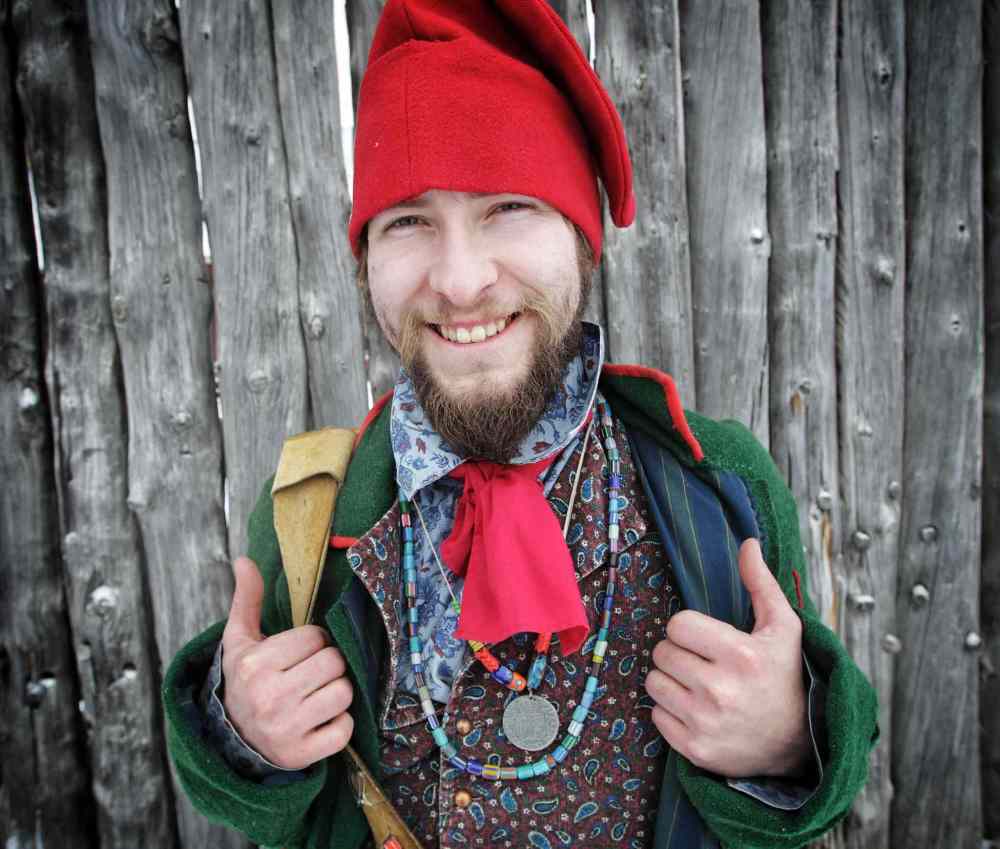
Two hundred years ago, at the height of the fur trade, it wasn’t easy being a voyageur.
In order to put maple syrup on the table, you had to paddle and portage an immense amount of goods through the vast woods and waters that separated Lower Canada from the Red River Valley.
And chances are, you did all this in clothes you made yourself.
In 1815, voyageurs who signed up to work for the North West Company would receive six ells of fabric. Many voyageurs would then proceed to sew their garments.
At Festival du Voyageur, which begins on Friday, the men and women in period garb at Fort Gibraltar take the heritage aspect of their costumes seriously.
And that includes the familiar voyageur outfit deconstructed here.
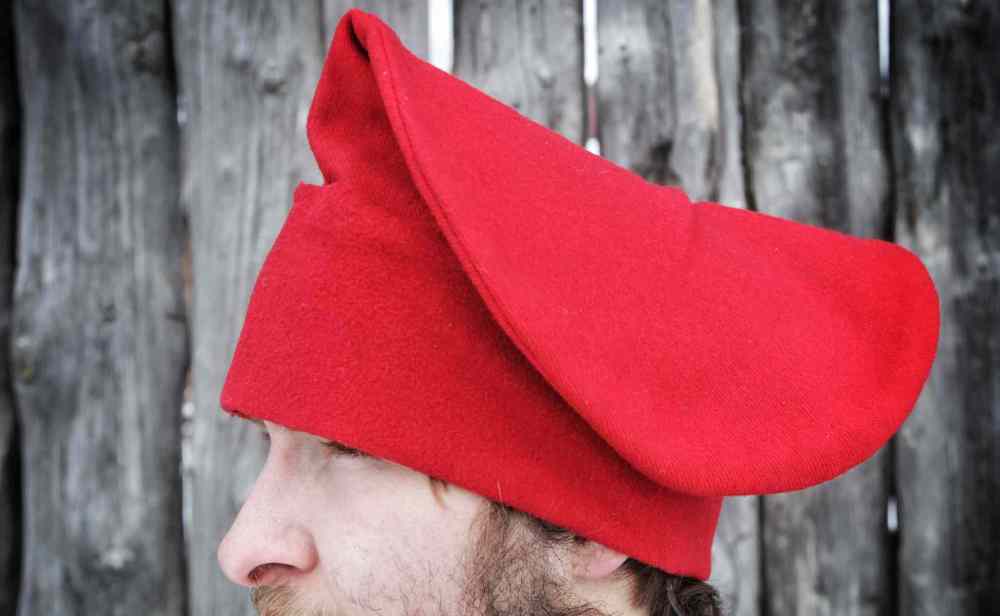
Toque
In 1815, voyageurs really did wear felt toques. But the red toque, Festival du Voyageur’s symbol, was an arbitrary colour selection in 1970, when the festival was founded as a Manitoba centennial project. During the fur trade, different brigades of voyageurs wore different colour toques. The Red River brigade likely wore blue hats, not red.
Beard
Sorry, hipsters – the image of the bearded voyageur is not historically accurate. Voyageurs were clean-shaven when they weren’t on the move. “When voyageurs arrived at a fort, they would pull their canoes over to the side of the river and make sure they looked presentable,” says Colin Mackie, Festival du Voyageur’s heritage-program manager.
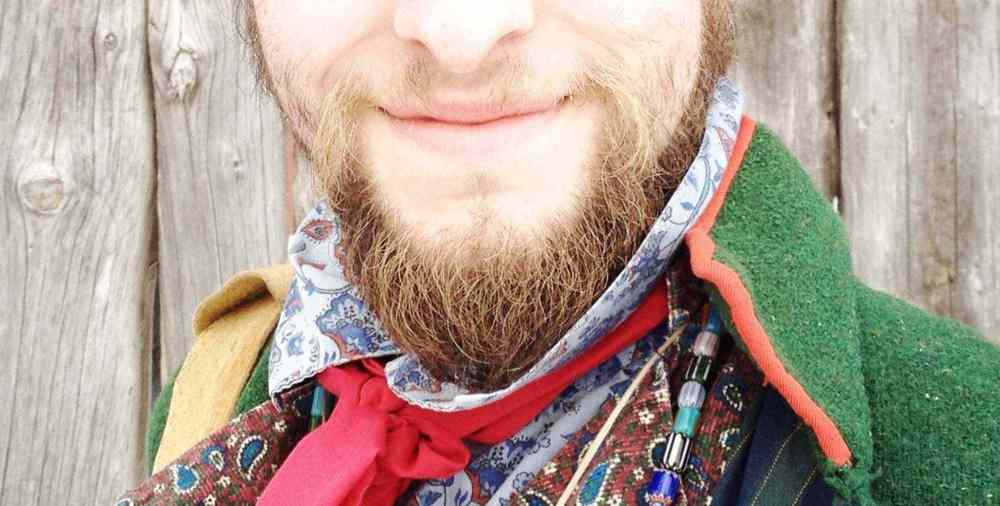
Fur-trade bling
The red cotton cravat was a fashionable scarf in 1815. Voyageurs also wore bead necklaces, as beads were traded widely across North America. A voyageur capable of carrying enormous loads or performing other arduous task may have sported a necklace bearing a Spanish silver coin, which would have been a gift from an appreciative bourgeois, or boss.
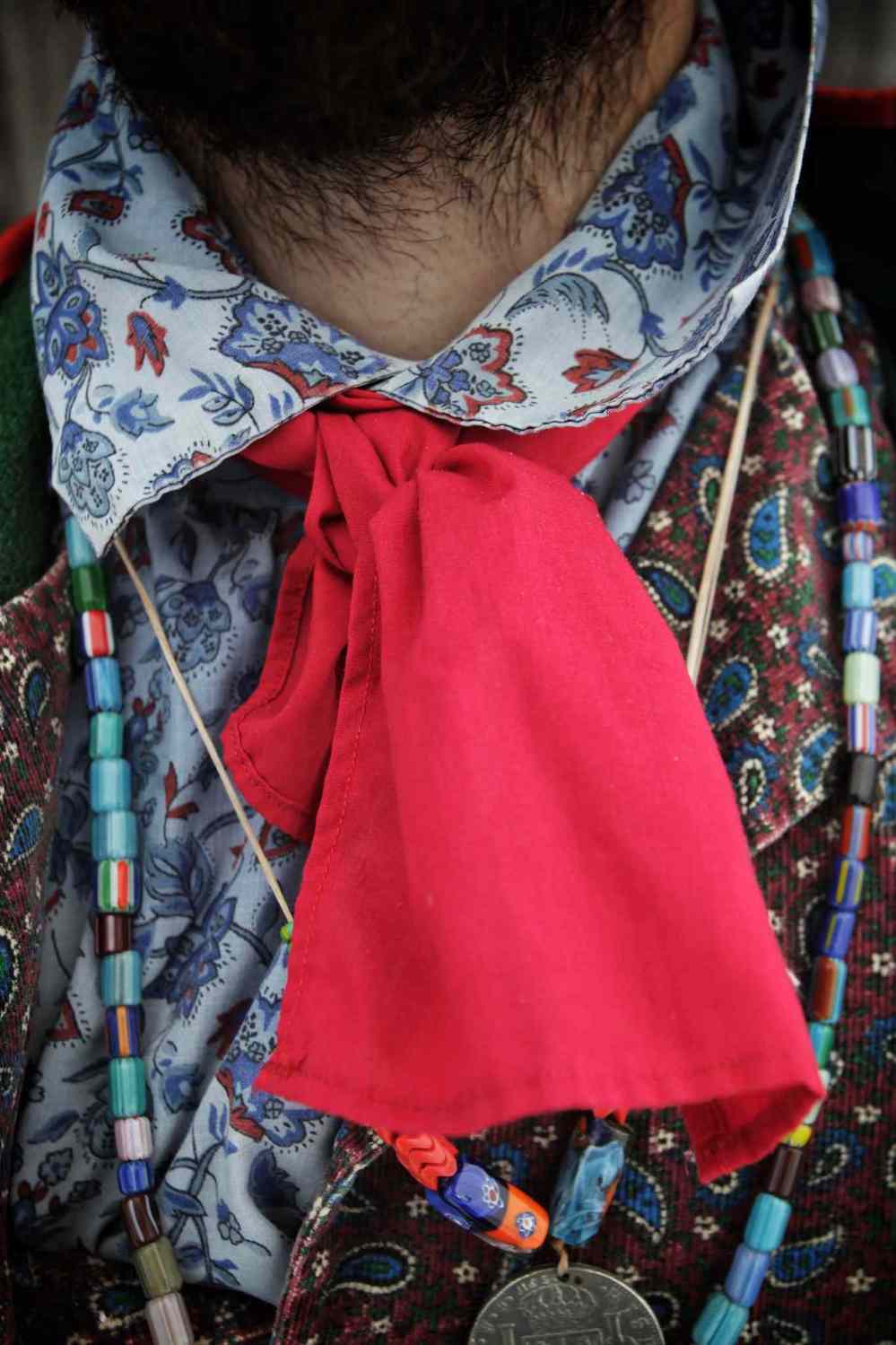
Clothing
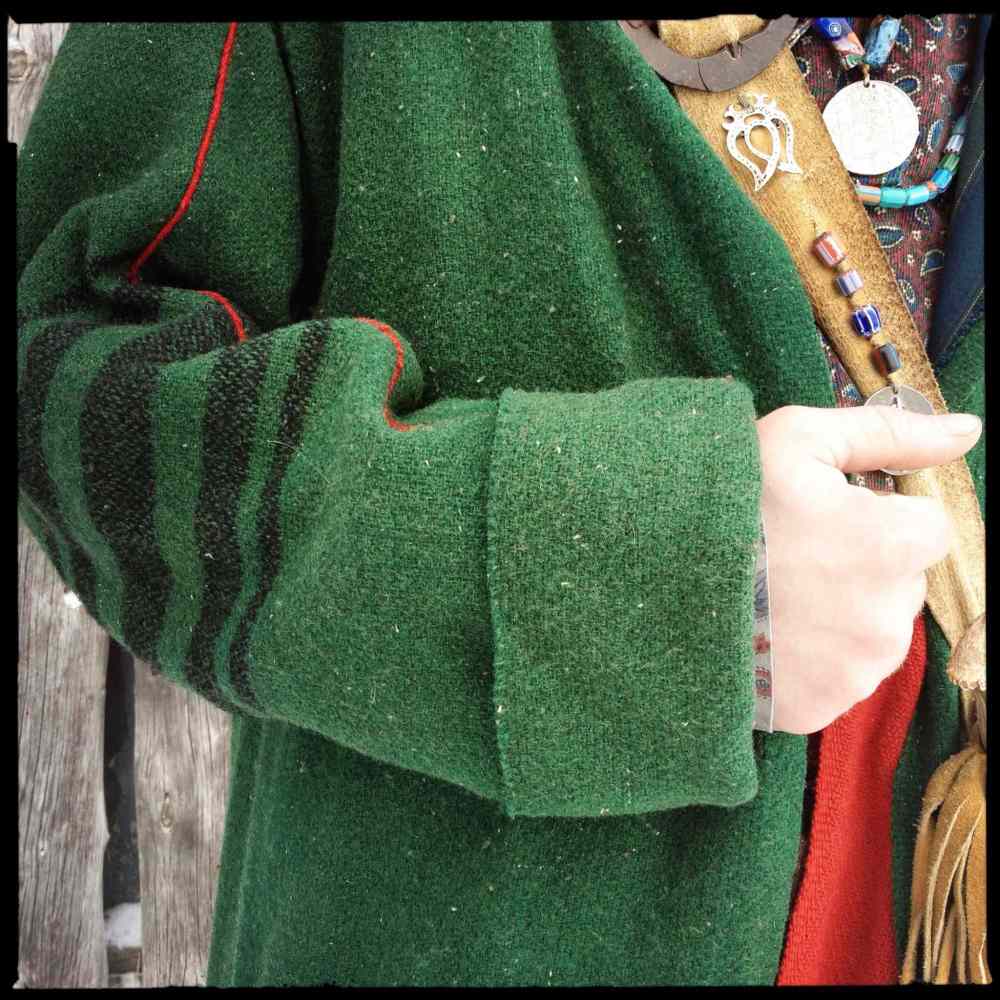
Voyageurs would have worn two cotton shirts in winter time: a cotton V-neck button shirt, which functioned as an undergarment, and a waistcoat over top. Plain white fabric would have been worn on the trail; the paisley patterns shown here would have been worn on special occasions. For pants, Voyageurs favoured melton narrow fall trousers, which did not have a fly. The green coat, known as a capote, was also melton.
Haversack
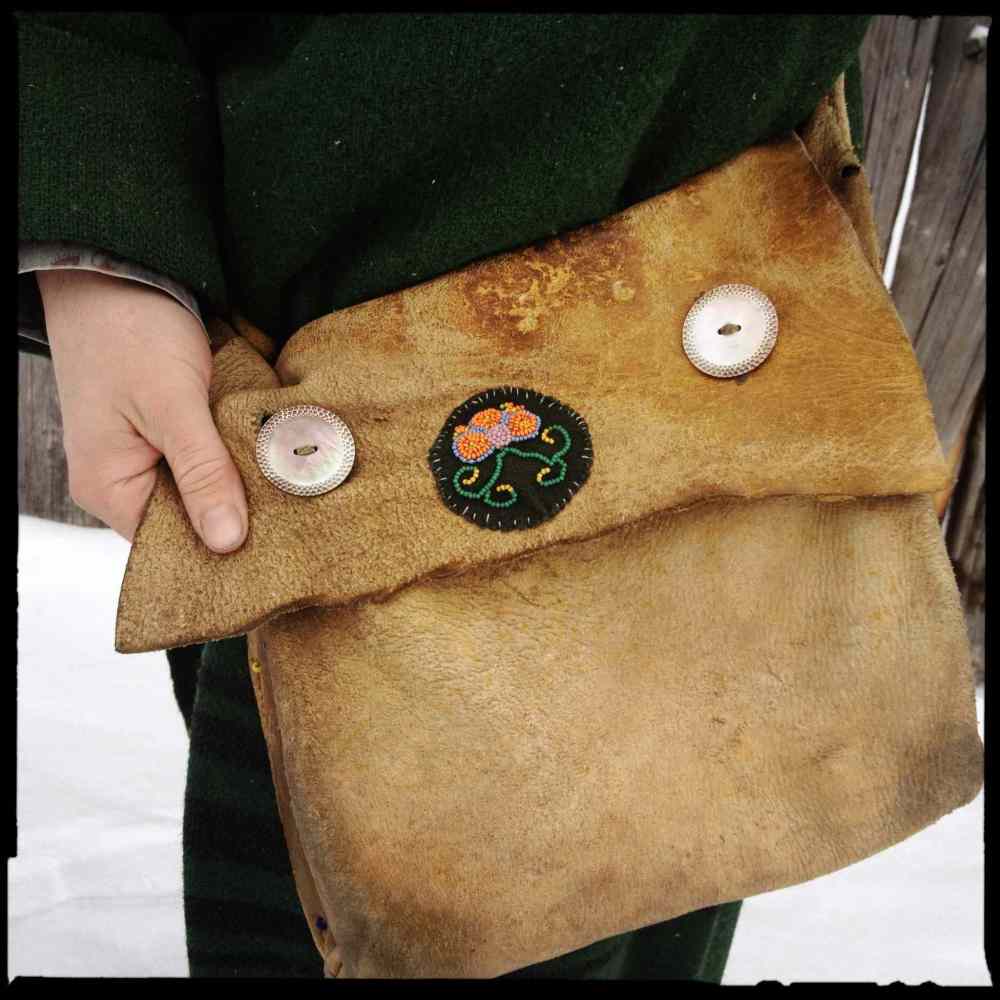
The leather handbag is essentially a 19th-Century European version of a man-purse. This one’s made of cow leather, but in 1815 it would have been moose, deer or elk. The abalone buttons would have been traded up from the Gulf of Mexico.
Luckenbrooch
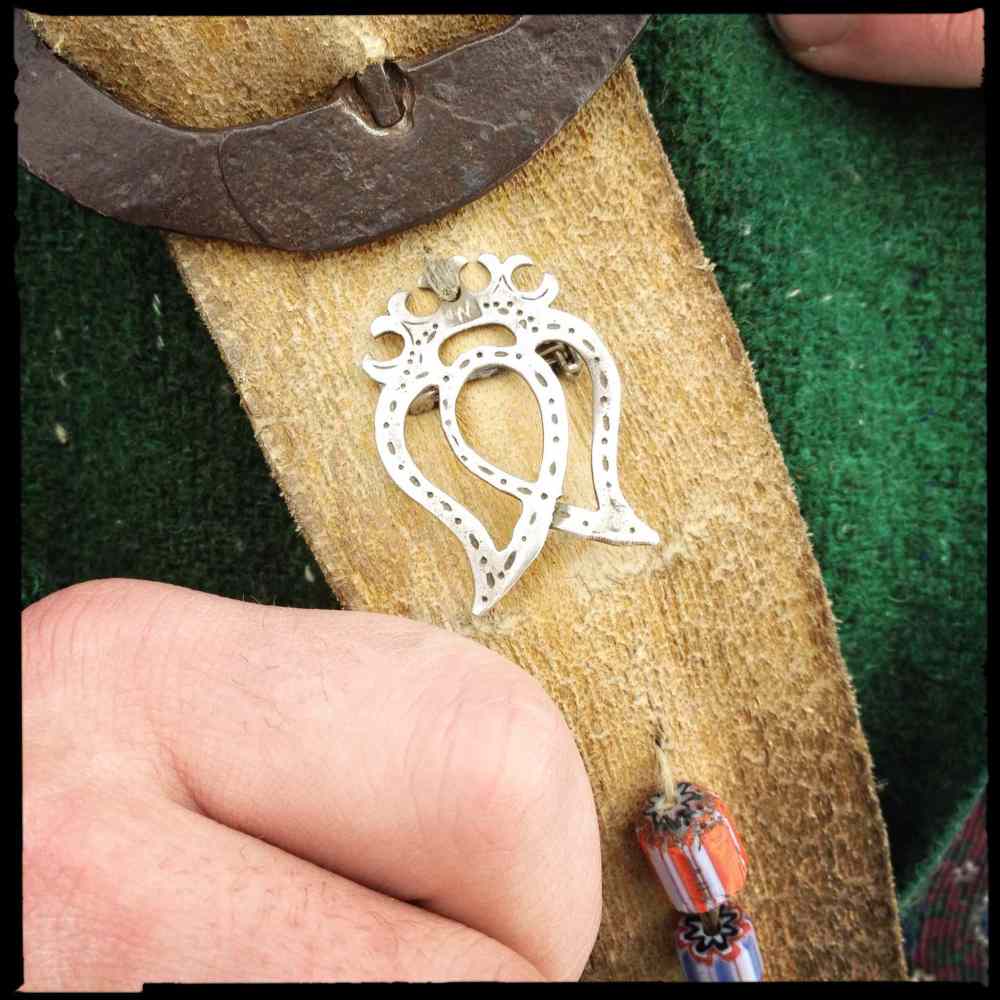
The decorative brooch on the strap of the haversack signified the voyageur had a sweetheart somewhere. This did not necessarily prevent him from doing his part to boost the Métis population in the Red River Valley.
Dagger
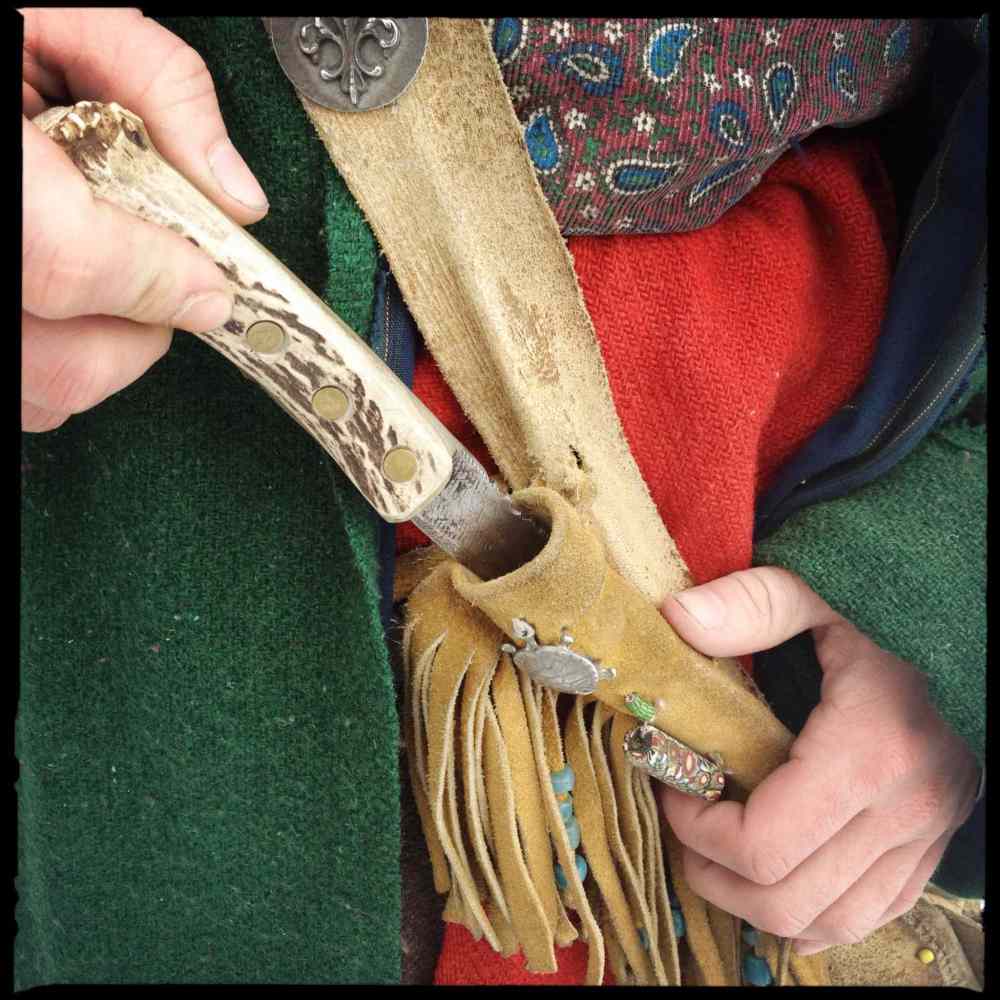
The dagger in the sheath has an antler handle and a metal blade fashioned from an old or worn-out file. It was more of a utility knife than a weapon. The fringes on the leather sheath are adorned with beads known as blue padres. The hands that grasped the tool would have been clad in leather gauntlets.
Sash
Contrary to popular belief, the red wool sash is not ornamental. It was wrapped tightly around a voyageur’s waist to prevent hernias while carrying heavy loads, functioning much like a modern weightlifter’s belt. The end of the sash, however, would have been tucked in. Otherwise, it would have gotten caught on a branch at the first portage.

Footwear
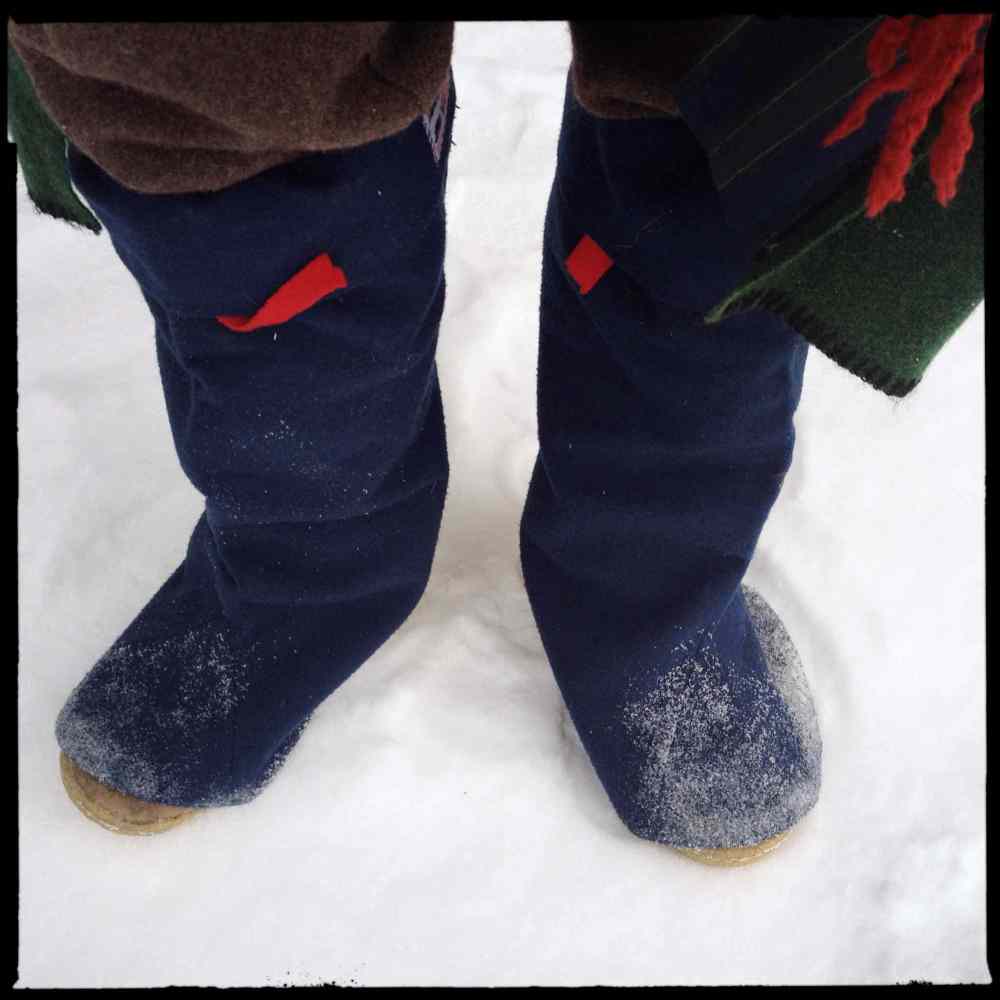
Voyageurs wore felt mitasses over their boots to shed snow and keep their feet warm. They functioned a lot like gaiters. The moccasins depicted here are not historically accurate; most voyageurs would have worn leather boots.
Model voyageur: Dan Pohl. Heritage interpretation: Colin Mackie and Monique Olivier.
bartley.kives@freepress.mb.ca
Related Articles
More music added to Western Canada's biggest winter party
Advertisement Advertise With Us
Advertisement Advertise With Us
History
Updated on Wednesday, February 10, 2016 12:43 PM CST: Updates images, formatting.