Nancy Richler novel meticulous study of Jews in postwar Montreal

Advertisement

Advertise with us

THE question of identity lies at the heart of Montreal author Nancy Richler's beautiful new literary novel, a meticulously rendered character study about Jews in Montreal post-Second World War.

Read this article for free:


By clicking the button above, an account will be created and you will begin to receive some of our recommended newsletters. You may opt out of any newsletter by visiting your Email and Communication Preferences page or by clicking "unsubscribe" at the bottom of any email.

or

Already have an account? Log in here »

To continue reading, please subscribe:

Digital Subscription

One year of digital access for only $1.44 a week*

  • Enjoy unlimited reading on winnipegfreepress.com
  • Read the E-Edition, our digital replica newspaper
  • Access News Break, our award-winning app
  • Play interactive puzzles

*Billed as $5.77 plus GST every four weeks. After 52 weeks, price increases to the regular rate of $19.95 plus GST every four weeks. Offer available to new and qualified returning subscribers only. Cancel any time.

To continue reading, please subscribe:

Add Free Press access to your Brandon Sun subscription for only an additional

$1 for the first 4 weeks*

  • Enjoy unlimited reading on winnipegfreepress.com
  • Read the E-Edition, our digital replica newspaper
  • Access News Break, our award-winning app
  • Play interactive puzzles
Start now

*Your next Brandon Sun subscription payment will increase by $1.00 and you will be charged $17.95 plus GST for four weeks. After four weeks, your payment will increase to $24.95 plus GST every four weeks.

Opinion

Hey there, time traveller!
This article was published 24/03/2012 (5323 days ago), so information in it may no longer be current.

THE question of identity lies at the heart of Montreal author Nancy Richler’s beautiful new literary novel, a meticulously rendered character study about Jews in Montreal post-Second World War.

The Imposter Bride, like Richler’s 2003 award-winning fiction, Your Mouth Is Lovely, probes this essential question by primarily examining the connectivity of women across generations, oceans and time.

The author, by the way, is distantly related to the late Mordecai Richler.

The women at the core of her narrative are grandmothers, mothers, wives and daughters, each one of them harbouring personal grievances and grief, pain and passion. They are all connected by the enigmatic Lily Azerov, who arrives in Montreal from Poland, via Palestine, in 1946.

Lily is a Holocaust survivor. She also is not who she claims to be.

Spurned by the man who promised to marry her upon her arrival in Canada, Lily weds his brother Nathan instead. Nathan is a kind and gentle soul, willing to accept his wife at face value and not to probe too deeply into her past.

Shortly after their marriage, Lily gives birth to Ruth and subsequently disappears from her daughter’s and husband’s lives.

Ruth is raised with love and tenderness by her father, two formidable grandmothers and a gracious and generous aunt, but spends much of her youth fixated on learning more about her mother.

She understands that her mother was “damaged” by what happened to her during the war, and with an intelligence and insight that belie her years, she understands too that that damage made it impossible for Lily to remain in her daughter’s life

“My mother was like that teacup, I had come to think,” Ruth muses. “She could not withstand the rigours of the life she was trying to live, a normal life of love, marriage and family. My birth had re-shattered her, and it was a sad story, to be sure, but it was also a story with certain prettiness to it. Pretty things shattered.”

This relationship, or lack of one, between a hopeful daughter and a shattered mother, is reminiscent of the relationship at the core of Israeli-Canadian author Edeet Ravel’s 2008 novel, Your Sad Eyes and Unforgettable Mouth, also set in Montreal.

By virtue of their subject matter, both novels dissect the way in which the trauma of the past haunts the present, making everyday tasks like earning a living, preparing a meal and mothering a child completely insurmountable.

In The Imposter Bride, this trauma is exacerbated for Lily by the name that she has stolen and the secret that she harbours. When finally revealed, this secret, to Richler’s credit, is not quite what readers will expect.

The novel’s ending too holds its own surprises. Although over time Ruth manages to find answers to many of the questions she has about her mother, the answers are not as curative as she had hoped. They do not completely assuage Ruth’s sense of abandonment nor fully explain Lily’s guilt or pain.

To the end Lily remains a damaged person and Ruth, in her own way, becomes a survivor, too. In Richler’s capable hands, however, the story of the life they barely shared is transformed into a hopeful testament to the power of family and memory, and the importance and meaning of one’s name.

Sharon Chisvin is a Winnipeg writer.

The Imposter Bride

By Nancy Richler

HarperCollins, 358 pages, $30

Report Error Submit a Tip

More Stories

Nancy Richler novel meticulous study of Jews in postwar Montreal

Reviewed by Sharon Chisvin 3 minute read Saturday, Mar. 24, 2012

THE question of identity lies at the heart of Montreal author Nancy Richler's beautiful new literary novel, a meticulously rendered character study about Jews in Montreal post-Second World War.

The Imposter Bride, like Richler's 2003 award-winning fiction, Your Mouth Is Lovely, probes this essential question by primarily examining the connectivity of women across generations, oceans and time.

The author, by the way, is distantly related to the late Mordecai Richler.

The women at the core of her narrative are grandmothers, mothers, wives and daughters, each one of them harbouring personal grievances and grief, pain and passion. They are all connected by the enigmatic Lily Azerov, who arrives in Montreal from Poland, via Palestine, in 1946.

Consumer apprehension grows as US retailers adopt AI-assisted pricing tools

Dee-ann Durbin And Anne D'innocenzio, The Associated Press 7 minute read Preview

Consumer apprehension grows as US retailers adopt AI-assisted pricing tools

Dee-ann Durbin And Anne D'innocenzio, The Associated Press 7 minute read Updated: 6:00 PM CDT

U.S. consumers aren't just frustrated with high prices. They're angry and confused about the increasingly high-tech ways that restaurant chains and major retailers are setting those prices.

Digital price tags are rapidly replacing paper ones in grocery aisles. Artificial intelligence tools help businesses decide what to charge by predicting how customers might respond. Terms like “dynamic pricing” and “surveillance pricing” are stirring anxiety on social media, where users wonder if different people are getting different prices for the same product.

Americans have grown accustomed to changing prices when booking flights, hotel rooms and rides, but the prospect of everyday spending shaped by algorithms they don’t understand and personal data they may not realize they’re sharing has touched a nerve.

“There are major tensions happening right now between who’s really going to have the power with some of these algorithms and usage of bots and AI: the companies or the shopper,” said Katie Thomas, who leads an internal consumer behavior think tank at the management consulting firm Kearney.

Read
Updated: 6:00 PM CDT

Disgraced ex-dean landed job at German university after fleeing Winnipeg

Maggie Macintosh 8 minute read Preview

Disgraced ex-dean landed job at German university after fleeing Winnipeg

Maggie Macintosh 8 minute read Friday, Oct. 16, 2026

Before he was arrested in a posh Paris suburb, the disgraced dean of Manitoba’s only law school — who fled the country following a 2020 expense scandal — kept a low profile at a German university.

Read
Friday, Oct. 16, 2026

Detox centre ready but staffing challenges persist

Scott Billeck 5 minute read Preview

Detox centre ready but staffing challenges persist

Scott Billeck 5 minute read 2:01 AM CDT

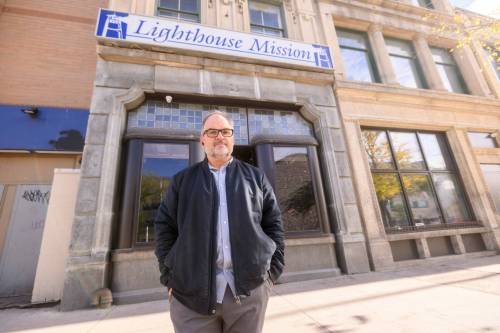
Peter McMullen’s decade-long struggle with addiction gives him insight into the challenges Lighthouse Mission hopes to address with a new Main Street detox facility focused on connecting people with longer-term treatment.

McMullen, executive director of Lighthouse Mission, knows how difficult it can be to navigate Winnipeg’s addiction treatment system, particularly when someone is ready to seek help but the services they need aren’t immediately available.

Now, after years of planning and a lengthy renovation of two century-old buildings, the downtown organization is preparing to open a 10-bed detox facility at 667 and 669 Main St., with five beds each for men and women.

The facility could begin accepting clients as early as November, provided Lighthouse Mission can overcome one final hurdle: recruiting enough staff to operate it.

Read
2:01 AM CDT

Movie theatre reopening generates excitement in Selkirk

Gabrielle Piché 2 minute read Preview

Movie theatre reopening generates excitement in Selkirk

Gabrielle Piché 2 minute read Saturday, Oct. 17, 2026

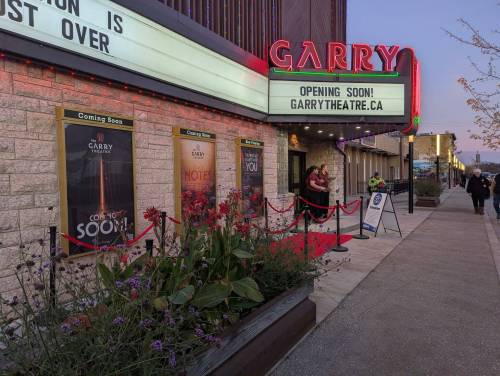
Selkirk got an extra dose of lights, cameras and action this weekend.

And ribbon cutting — for the grand reopening of the city’s sole theatre.

“It’s fantastic,” Mayor Larry Johannson said. “The sky’s the limit.”

The Garry Theatre now operates under a non-profit charity. It’s been closed since 2021, when Landmark Cinemas left the city.

Read
Saturday, Oct. 17, 2026

Salvation Army calls on Winnipeggers to donate merchandise as sales soar

Kelly-Anne Riess 3 minute read Preview

Salvation Army calls on Winnipeggers to donate merchandise as sales soar

Kelly-Anne Riess 3 minute read 2:01 AM CDT

The Salvation Army is taking donated merchandise from other regions to stock its Winnipeg thrift stores as increasing sales outpace local donations.

Retail activity at the charity’s eight Winnipeg locations grew more than 10 per cent year over year during several months, from January through April, and again in June.

Although local donations remain strong, they haven’t kept pace with demand, prompting the organization to supplement inventory with merchandise from elsewhere.

Ted Troughton, managing director of the Salvation Army’s thrift store operations, said rising living costs are bringing in new customers.

Read
2:01 AM CDT