Setting helps tell dark story

Advertisement

Advertise with us

RAPE, miscarriage, shame, disease, death against a backdrop of political violence and corruption.

Read this article for free:


or

Already have an account? Log in here »

To continue reading, please subscribe:

Subscribe and receive a limited-edition Free Press branded hat or tote.

Digital Subscription

One year of digital access for only $205*

  • Enjoy unlimited reading on winnipegfreepress.com
  • Read the E-Edition, our digital replica newspaper
  • Access News Break, our award-winning app
  • Play interactive puzzles

*First annual payment billed as $205.00 + GST for one year. This annual subscription will automatically renew at $233.00 + GST every 52 weeks (10% off the regular annual price of $259.35). Offer available to new and qualified returning subscribers only. Cancel any time.

To continue reading, please subscribe:

Add Free Press access to your Brandon Sun subscription for only an additional

$1 for the first 4 weeks*

  • Enjoy unlimited reading on winnipegfreepress.com
  • Read the E-Edition, our digital replica newspaper
  • Access News Break, our award-winning app
  • Play interactive puzzles
Start now

*Your next Brandon Sun subscription payment will increase by $1.00 and you will be charged $17.95 plus GST for four weeks. After four weeks, your payment will increase to $24.95 plus GST every four weeks.

Opinion

Hey there, time traveller!
This article was published 28/04/2012 (5225 days ago), so information in it may no longer be current.

RAPE, miscarriage, shame, disease, death against a backdrop of political violence and corruption.

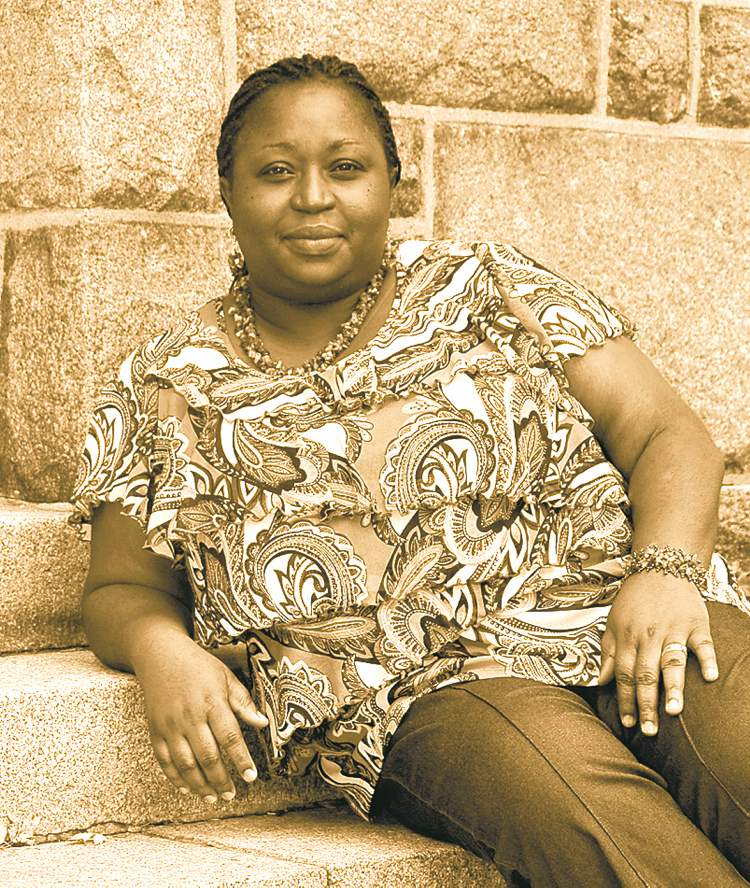
Ontario-based Yejide Kilanko tackles some tough subjects in her debut novel. Daughters Who Walk This Path has its weaknesses, but it presents its difficult aspects with an impressive lack of sensationalism.

Kilanko gives us the world through the eyes of her protagonist, Morayo. The story starts when she is five. Morayo grows up in modern-day Nigeria, with loving but strict traditional parents, a sister who worships her and aunts who provide a strong sense of female community.
CORINA FLIKWEERT
Yejide Kilanko tackles tough subjects such as, rape miscarriage, shame, disease and political corruption.
CORINA FLIKWEERT Yejide Kilanko tackles tough subjects such as, rape miscarriage, shame, disease and political corruption.

But when her cousin Bros-T moves in, that community is shattered. Bros-T repeatedly rapes his younger cousin over the course of a year and when Morayo finally speaks out the family is torn.

Morayo’s story, very simply told, reads like a memoir. It can feel a bit plodding: this happens, then this happens, then this happens — much like a child telling a winding story before getting to the point.

Kilanko’s writing lacks the insight of American Alice Sebold’s memoir of the aftermath of her rape, Lucky. Kilanko attempts to explore themes similar to those in African-American Alice Walker’s acclaimed novel The Color Purple, especially the idea of a woman developing her identity in a world that enforces her sense of shame and self-loathing. But she never really manages to transcend the very heavy material.

But what does work, on several levels, is the setting, Kilanko’s hometown in Nigeria. Morayo’s story is universal and women around the world will relate. But the choice to set it in Nigeria adds a strong metaphorical level to this story.

Nigerian proverbs set the tone for each chapter: “If one has been told that a bird can eat one’s eyes, when one sees the tiniest bird, one take’s to one’s heels” or “It is the same moon that wanes today that will be full tomorrow.”

The country Kilanko showcases is speeding down the modern highway, but is also very much tied to traditional roots. Much like Morayo’s family, those roots are both comforting and constricting.

Morayo’s story is set against a backdrop of family gatherings, with all the food, dancing and laughter that connect families and communities. Kilanko captures the way Nigeria is embracing the old and the new in passages such as this one describing a joyous bride:

“Adanna was stunning in her gold-laced puffed blouse and navy-blue George wrappers. The blue and gold damask head tie fanned out from the top of her head like a satellite dish.”

But there is the darker side to Nigeria. Bombed-out cars sit on the side of the road. Soldiers kidnap women from markets at gunpoint.

And Kilanko offers a truly mind-boggling depiction of political corruption, which she uses to cleverly make a point about the dangers of staying silent and the power of standing up for yourself.


Joanne Kelly teaches journalism at Red River College. Follow her on Twitter @joannemkelly.

Report Error Submit a Tip

More Stories

Shelters overwhelmed as rising vet costs forcing some owners to surrender pets

Tiago Resko 4 minute read Preview

Shelters overwhelmed as rising vet costs forcing some owners to surrender pets

Tiago Resko 4 minute read Yesterday at 6:00 AM CDT

In the fall of 2022, Tara Miller was faced with a difficult decision: keep her car or sell it to pay for a second knee surgery for her dog.

Ultimately, she needed her car to commute during the winter and decided to manage her dog Corby’s arthritis with medication and home therapy.

“Mentally it probably broke me,” said the 54-year-old.

While insurance covered two-thirds of the dog’s initial $6,000 surgery, Miller had to pay the remaining $2,000. That was on top of the $500 checkup before the surgery and the monthly $175 pet insurance premium.

Read
Yesterday at 6:00 AM CDT

New exhibition offers up 125 different ways to look at Canada

Jen Zoratti 6 minute read Preview

New exhibition offers up 125 different ways to look at Canada

Jen Zoratti 6 minute read Yesterday at 4:37 PM CDT

As a curator and head of collections and exhibitions at WAG-Qaumajuq, Riva Symko has been contemplating landscapes in art for a long time. But living in an ever-changing and ever-threatened one has altered her perspective on them.

Before coming to Winnipeg, Symko and her husband lived in Anchorage, Alaska. One day, seven or so years ago, they were out hiking when a sudden thunderstorm rolled through — “which is very unusual in Alaska,” she says — sparking a forest fire that ended up raging out of control. That summer, the whole city, save for the ocean side, was surrounded by fire and blanketed with heavy smoke. Climate change was viscerally visible.

“And since then, I really haven’t been able to look at a beautiful landscape the same,” she says.

With Terra Cognita/Incognita, a new exhibition opening at WAG-Qaumajuq Wednesday night, Symko wants to inspire and challenge viewers to look at landscapes differently, too.

Read
Yesterday at 4:37 PM CDT

Puzzles Palace

1 minute read Monday, Jul. 27, 2026

To solve our puzzles, please subscribe with this special offer: |

City crews cleaning up drug paraphernalia, weapons having some impact on inner-city life

Malak Abas 7 minute read Preview

City crews cleaning up drug paraphernalia, weapons having some impact on inner-city life

Malak Abas 7 minute read Yesterday at 5:49 PM CDT

A three-person crew, employed by the city as part of its recently expanded proactive cleanup program, allowed the Free Press to follow along last week while they worked to make the Freight House Recreation Centre's property safe to play in.

Read
Yesterday at 5:49 PM CDT

Volunteer helps keep Nellie McClung’s legacy alive

Tiago Resko 4 minute read Preview

Volunteer helps keep Nellie McClung’s legacy alive

Tiago Resko 4 minute read Yesterday at 6:00 AM CDT

Growing up with ties to the community of Manitou, Gillian Potvin has found great inspiration in the traces of Nellie McClung’s legacy.

The 39-year-old has spent nearly a decade channelling that inspiration back into the community by being a key part of the Nellie McClung Museum of Canada’s marketing and events planning since it opened at 55 Main St., in the southern Manitoba town in 2017.

Utilizing her skills in marketing and digital design for the museum is her way of thanking the woman who fought for the rights she has today and continuing her legacy.

“She helped women to be identified as persons and that’s huge,” she said of the woman born in 1873 and considered one of Canada’s most prominent suffragists. “It’s easy to take for granted some of these rights we now have as women, but there would have been a big fight back in the day to change the things that have always been.”

Read
Yesterday at 6:00 AM CDT

Best to fess up about grandkid-sitting fatigue

Maureen Scurfield 5 minute read Yesterday at 2:00 AM CDT

Dear Miss Lonelyhearts: We love our grandchildren, but now we’re sick of them. The two sets of parents — our adult children — have been parking their kids out here on the farm with us while they take back-to-back road trips to see their friends. We’ve had enough.

Grandma and I want them to come back and get the “brats” (just joking, they’re nice kids) so we can relax.

You have to be so careful with city kids around the farm who don’t know when they’re going to make a mistake and get hoofed by an animal or run over by a farm implement.

How do we tell our kids the party is over early, and they really need to come back before grandma and I give out?