

Concussions: It's a know-brainer
Opinion
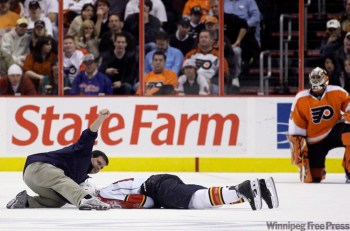
Finally, NHL GMs will take steps to outlaw headshots
8 minute read Wednesday, Mar. 10, 2010Today's NHL is unquestionably bigger, faster and stronger.
Small, slow and weak, however, describes the league's actions -- especially compared to every other major brand of hockey -- when it comes to headshots and concussions.
A step into the modern hockey era is scheduled today, when general managers will finalize a proposal for a rule change to make illegal blind-side shoulders to heads.
Advertisement
Concussions: It's a know-brainer
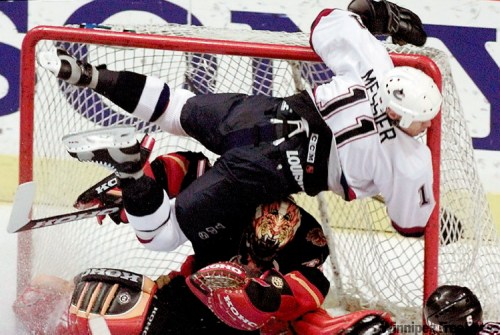
‘Terrible day of reckoning’
6 minute read Preview Wednesday, Mar. 10, 2010Concussions: It's a know-brainer
Headshot issue has GMs thinking
3 minute read Tuesday, Mar. 9, 2010BOCA RATON, Fla. -- As more ugly headshots make news, the NHL's 30 general managers are still wrestling with how to handle the issue.
The GMs were presented with an avalanche of information about concussions and various types of checks on the opening day of their annual meeting Monday, but they seemed no closer to a recommendation that could lead to fewer hits to the head.
And the pressure is mounting.
After watching Boston Bruins forward Marc Savard carried from the ice on a stretcher and hearing players start to voice concern, many are looking to the GMs to make some kind of recommendation by the time their meetings wrap up Wednesday.
Concussions: It's a know-brainer
Hockey needs an attitude adjustment
4 minute read Tuesday, Mar. 9, 201011Steve Spott was an assistant coach with Canada's national junior team and his regular job is head coach of the Kitchener Rangers of the Ontario Hockey League, which has recently revised its rules to forbid all contact to the head.
"I think our league's done a real nice job being a pioneer here and we're proud of it," Spott said. "And the game's not ruined."
Spott's experience this season has been on both sides of the fence.
He has coached young players, both with Team Canada and his own team, who have done unsavoury things.
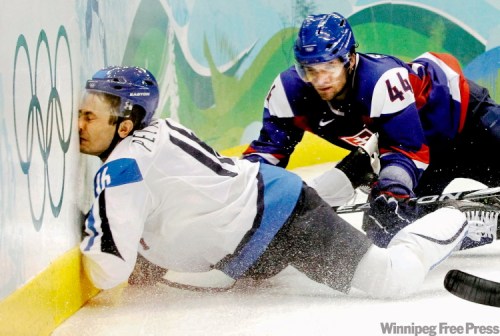
Concussions: It's a know-brainer
To play, or not to play — a hard question
5 minute read Tuesday, Mar. 9, 2010Concussion does not spare the young.
Jake Heisinger was only 14 in March 2007, when he was knocked from behind into the boards twice within minutes. The first time he cut his chin; the second it was his nose.
One or both blows caused the concussion, which kept him out a little more than a week.
His dad, Manitoba Moose GM Craig Heisinger, admits to momentarily considering letting Jake play the next game before a late-night solo walk in the snow clarified the proper decision to hold him out.
Concussions: It's a know-brainer
The prescription nobody wants
9 minute read Monday, Mar. 8, 2010They bring their rattled brains, and usually their parents, to him on a regular basis. These young athletes, many of them hockey players, are in varying states of recovery from concussion, but prominent neurosurgeon Dr. Charles Tator knows that far too often there is only one recommendation he can make: It's a line that should not be crossed again.
Concussions: It's a know-brainer
The doctor vs. Grapes
4 minute read Monday, Mar. 8, 2010HE was in front of a sympathetic audience eager to learn more about concussions in hockey, so noted neurosurgeon Dr. Charles Tator called out Don Cherry.
"Don Cherry is a negative influence," Tator told Hockey Canada's concussion seminar in Regina last December. "And it's about time we started calling a spade a spade."
The comment caused a small firestorm as many media outlets went for the headline instead of the substance.
Shortly after the conference, Cherry ran head-first into a determined radio reporter who was waiting for him outside a Toronto studio. Cherry had earlier told the reporter he wouldn't be getting an interview, but the reporter persisted, all the while his tape recorder running.
Concussions: It's a know-brainer
ThinkFirst pushes awareness, education
4 minute read Monday, Mar. 8, 2010Manitoba’s chapter of ThinkFirst not only takes the prevention message to the masses but it has the advantage of a strong connection with the national founder.
Its chapter director is Health Sciences Centre pediatric neurosurgeon and associate professor and residency program director Dr. Patrick McDonald, who studied under Dr. Tator.
"He's a unique individual because he does everything," says Dr. McDonald. "Not only is he an accomplished neurosurgeon, internationally renowned for his surgical skills and for how many lives he's saved that way, but I think he's saved even more with his injury-prevention message.
"In addition to that, as if being a busy neurosurgeon wasn't enough, founding, running and being the driving force behind ThinkFirst, he's led one of the world's leading spinal-cord basic science research labs. I always think of him first as a role model, but I don't know how he does it because he's got three or more full-time jobs that would be more than enough for any normal individual. He's the Superman of neurosurgery, I like to think."
Concussions: It's a know-brainer
Taking dead aim at headshots
4 minute read Monday, Mar. 8, 2010BOCA RATON, Fla. -- The issue of headshots in hockey will be put under the microscope when the NHL's 30 general managers gather together this week.
It will be one of the many topics discussed during the annual GM meetings from today to Wednesday and seems to be the one most likely to result in a potential rule change.
It's something the GMs have grappled with a few times already. Former NHL Players' Association executives Paul Kelly and Glenn Healy raised the heading issue during a presentation at these meetings a year ago, saying it was the most important concern for players.
However, it didn't gain much traction then or during a subsequent meeting at the Stanley Cup final in June. The nature of the conversation changed when the group convened in November, prompted in part by a couple vicious hits early in the season -- notably the one Mike Richards put on David Booth.
Concussions: It's a know-brainer
CONCUSSIONS: it’s a know-brainer
2 minute read Saturday, Mar. 6, 2010Today, in the first of a four-part series on the issue, Free Press hockey writer Tim Campbell talks to some of the casualties. One of them, former NHLer Jamie Heward, is still dealing with the aftermath of another concussion that finally ended his career 14 months ago.
Heward, unfortunately, is not alone. The victims of headshots are everywhere -- from the NHL to junior to minor hockey -- and the damage is considerable.
In Monday's Part 2, we introduce you to Dr. Charles Tator, a Toronto neurosurgeon who has become a crusader for concussion awareness while also daring to take on the formidable Don Cherry in the debate.
In Part 3, Campbell examines the role of equipment and prevention in the concussion discussion.
Concussions: It's a know-brainer
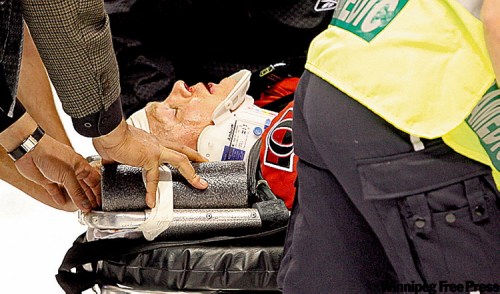
Heading for trouble: A concussion can mean it’s safest to hang up the skates
11 minute read Preview Saturday, Mar. 6, 2010LOAD MORE CONCUSSIONS: IT'S A KNOW-BRAINER ARTICLES