Century-old lessons echo for retired scientist

Advertisement
Read this article for free:
or
Already have an account? Log in here »
To continue reading, please subscribe:

Digital Subscription
One year of digital access for only $205*
- Enjoy unlimited reading on winnipegfreepress.com
- Read the E-Edition, our digital replica newspaper
- Access News Break, our award-winning app
- Play interactive puzzles
*First annual payment billed as $205.00 + GST for one year. This annual subscription will automatically renew at $233.00 + GST every 52 weeks (10% off the regular annual price of $259.35). Offer available to new and qualified returning subscribers only. Cancel any time.
To continue reading, please subscribe:
Add Free Press access to your Brandon Sun subscription for only an additional
$1 for the first 4 weeks*
- Enjoy unlimited reading on winnipegfreepress.com
- Read the E-Edition, our digital replica newspaper
- Access News Break, our award-winning app
- Play interactive puzzles
*Your next Brandon Sun subscription payment will increase by $1.00 and you will be charged $17.95 plus GST for four weeks. After four weeks, your payment will increase to $24.95 plus GST every four weeks.
Read unlimited articles for free today:
or
Already have an account? Log in here »
Hey there, time traveller!
This article was published 27/03/2020 (2367 days ago), so information in it may no longer be current.
ACROSS Manitoba, faith groups are getting serious about the need to temporarily shutter religious services to prevent the spread of the novel coronavirus.
Instead of gathering in churches, synagogues, mosques, temples, gurdwaras and other places of worship, people are gathering online.
This will go a long way towards flattening the COVID-19 case number curve — and also help prevent what happened to Mennonites in southern Manitoba during the 1918-19 Spanish flu pandemic.
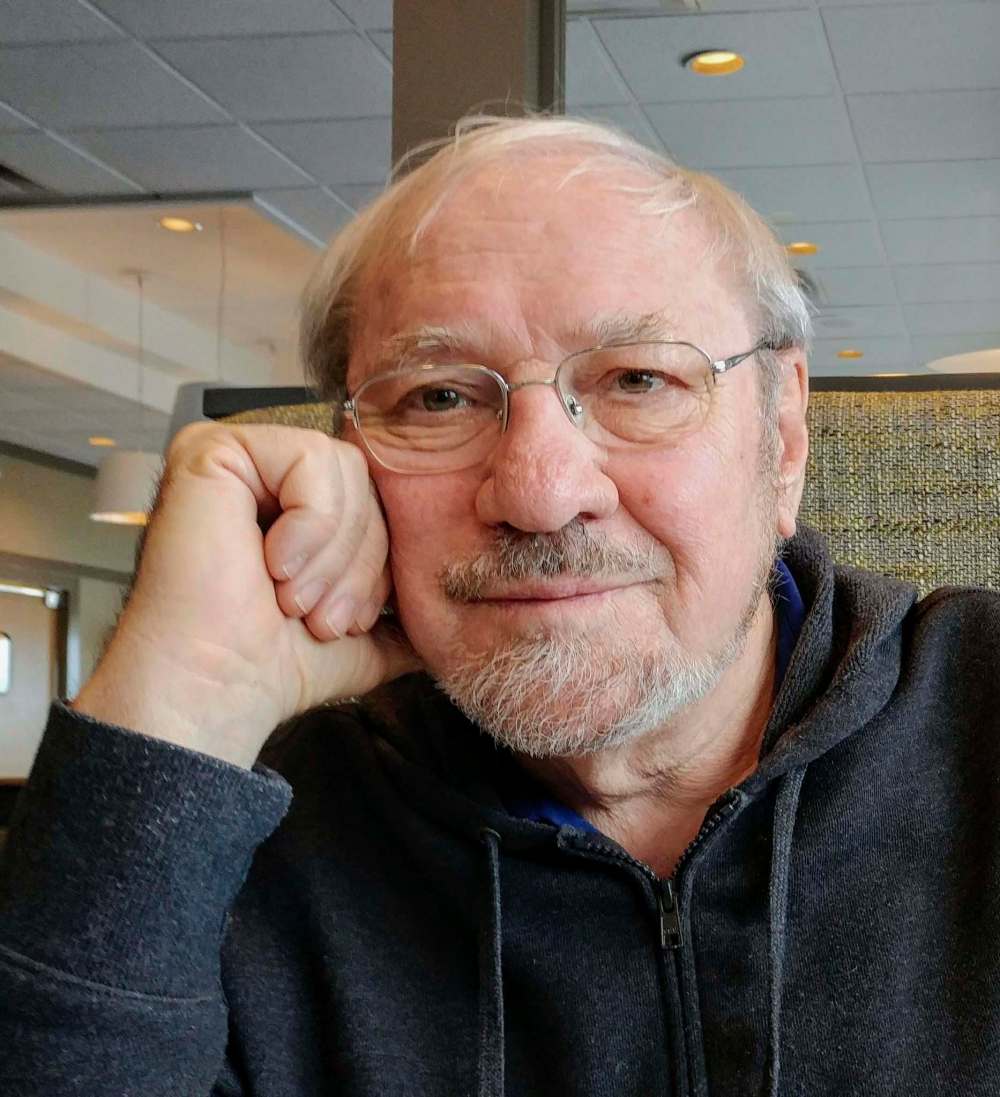
During that terrible time, when as many as 50 million people died worldwide and 55,000 in Canada, members of Mennonite churches in that part of the province died at double the rate of the rest of the population, retired Steinbach microbiologist Glen Klassen found in his 2008 research on the disease’s impact.
Klassen’s interest in the topic was sparked by his involvement in the 2007 Faith Community Pandemic Summit at Canadian Mennonite University in Winnipeg, which he helped organize.
The summit — which was sponsored by the International Centre for Infectious Diseases, Mennonite Disaster Service, Salvation Army, Christian Reformed Church and various other groups — was to help faith groups prepare for the next such global health emergency.
According to Klassen, who taught microbiology at the University of Manitoba, it is thought around 60 per cent of Mennonites in the Hanover area (which includes Steinbach) got sick in 1918-19. There were roughly 60 flu-related deaths in the rural municipality — a higher rate than in other nearby municipalities with smaller non-Mennonite populations.
A similar high death rate was found in other RMs with high numbers of Mennonites, such as Stanley (Winkler), Rhineland (Altona) and Morris, Klassen said.
“They died at twice the rate of non-Mennonites within the same municipality and between municipalities,” he said this week, noting the finding was confirmed by later research by Vanessa Quiring of the University of Winnipeg.
While there is no definite reason for the higher Mennonite numbers, one theory is based on how they maintained regular church-going habits.
“There was very little social distancing until it was too late,” Klassen said.
Compounding the problem, he noted, was some Mennonite church services moved around from village to village, meaning people went to church in different places and with different groups each time. “They met a different combination of people at each event,” said Klassen.
Added to this was the “constant visiting between relatives from many locales,” such as Sunday faspa, a late afternoon lunch and visit held after church in various homes. They were “promiscuous in their socializing,” Klassen said of how the desire to maintain community contributed to the spread of the flu virus.

Other contributing factors included strained relations between Mennonites and the Manitoba government over registration for military service during the First World War, and over control of schooling — factors that may have made them more suspicious of government warnings about the pandemic.
There was also a tendency among the community to see the sickness as an act of God that couldn’t be avoided, or as a sign of God’s displeasure and judgment. “Some said, ‘The Lord is speaking to us harshly,’” Klassen said.
For Klassen, who attends Grace Mennonite Church in Steinbach, the experience of Mennonites a century ago confirms the importance of social distancing and the need to close religious services during the time of COVID-19.
“Until we get a vaccine, we will have to do everything we can to prevent deaths,” he said.
faith@freepress.mb.ca
The Free Press is committed to covering faith in Manitoba through our Religion in the News project. This reporting continues because readers like you step forward to fund it.
Donate now to support our reporting on religion.
Your donation is eligible for a charitable tax receipt.
BECOME A FAITH JOURNALISM SUPPORTER
Our newsroom depends on a growing audience of readers to power our journalism. If you are not a paid reader, please consider becoming a subscriber.
Our newsroom depends on its audience of readers to power our journalism. Thank you for your support.
The Free Press is committed to covering faith in Manitoba through our Religion in the News project. This reporting continues because readers like you step forward to fund it.
Donate now to support our reporting on religion.
Your donation is eligible for a charitable tax receipt.
BECOME A FAITH JOURNALISM SUPPORTER
Our newsroom depends on a growing audience of readers to power our journalism. If you are not a paid reader, please consider becoming a subscriber.
Our newsroom depends on its audience of readers to power our journalism. Thank you for your support.
Advertisement Advertise With Us
Advertisement Advertise With Us
The Free Press acknowledges the financial support it receives from members of the city’s faith community, which makes our coverage of religion possible.