

Chiefs’ next target for vaccine: young people
Advertisement
Read this article for free:
or
Already have an account? Log in here »
To continue reading, please subscribe:

Digital Subscription
One year of digital access for only $205*
- Enjoy unlimited reading on winnipegfreepress.com
- Read the E-Edition, our digital replica newspaper
- Access News Break, our award-winning app
- Play interactive puzzles
*First annual payment billed as $205.00 + GST for one year. This annual subscription will automatically renew at $233.00 + GST every 52 weeks (10% off the regular annual price of $259.35). Offer available to new and qualified returning subscribers only. Cancel any time.
To continue reading, please subscribe:
Add Free Press access to your Brandon Sun subscription for only an additional
$1 for the first 4 weeks*
- Enjoy unlimited reading on winnipegfreepress.com
- Read the E-Edition, our digital replica newspaper
- Access News Break, our award-winning app
- Play interactive puzzles
*Your next Brandon Sun subscription payment will increase by $1.00 and you will be charged $17.95 plus GST for four weeks. After four weeks, your payment will increase to $24.95 plus GST every four weeks.
Read unlimited articles for free today:
or
Already have an account? Log in here »
Hey there, time traveller!
This article was published 19/01/2021 (2046 days ago), so information in it may no longer be current.
OTTAWA — Manitoba chiefs are eager to secure more vaccines to ramp up their immunization effort to include young Indigenous people, who suffer negative health effects at a higher rate than their non-Indigenous peers.
Meanwhile, the military is set to deploy members to yet another Manitoba reserve dealing with a large COVID-19 outbreak.
“We have first doses, only for our elders (aged) 70 and over. But our vulnerable people are younger than that as well,” said Misipawistik Chief Heidi Cook of Grand Rapids, at a news conference on Tuesday.
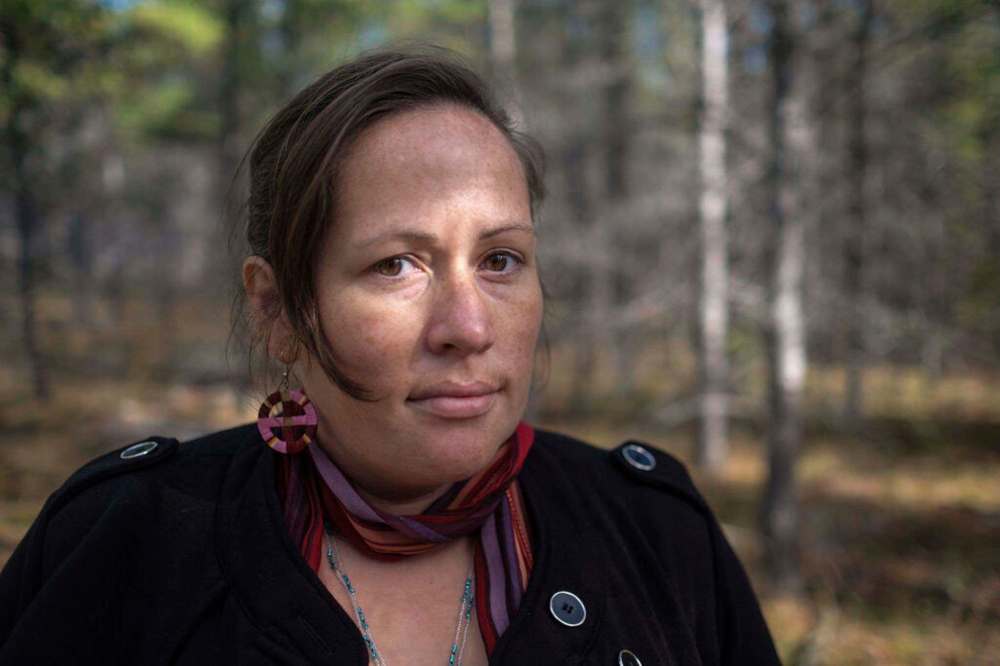
“We need to see how fast we can keep it going, to get more age groups vaccinated,” she said.
Manitoba’s First Nations were given 5,300 doses of the Moderna vaccine on Dec. 30. They opted to give it to elders across the province, who often help keep languages and cultural teachings alive.
The youngest Manitoban to die of COVID-19 was a First Nations boy under 10.
Before that news emerged in December, the province’s youngest victim was 38-year-old Jenn Garson Sinclair, a Cree woman who required an oxygen tank before her COVID-19 infection, due to getting a severe case of H1N1 swine flu a decade ago.
First Nations communities often don’t have as many medical resources than neighbouring towns even though they normally have higher rates of diabetes and tuberculosis.
That’s a concern for the four fly-in reserves in the Island Lake region in northern Manitoba. The area has one the worst outbreaks of COVID-19 in Manitoba.
“We are doing the best we can with the limited resources we have, to limit the transmission of the virus,” said Alex McDougall, who oversees the Four Arrows Regional Health Authority.
The region, which has about 11,000 residents, had 305 active cases as of Monday. There is no hospital or all-weather roads.
McDougall said officials believe an asymptomatic carrier brought the virus into the region after attending a funeral.
Since then, “the virus has been doing the circuit” around the four reserves, which have tried lockdowns and enhanced screening of arrivals.
Red Sucker Lake was hardest hit last December, with the military setting up isolation sites and handing out necessities for two weeks.
The Canadian Armed Forces confirmed Tuesday evening it would send help to Garden Hill, whose 3,977 residents count for 265 active cases.
The military confirmed Wednesday morning that personnel will arrive in the community today. They will help with everything from clerical operations and intergovernmental communications, to setting up an isolation centre and “limited assistance with patient-management tasks,” a spokeswoman wrote.
“We will be on the ground to help with COVID-19 response efforts,” tweeted Defence Minister Harjit Sajjan. “Our Canadian Forces will always be there to help those in need.”
The military was deployed to Shamattawa in mid-December to help with the outbreak there.
The Island Lake reserves are trying to get cases under control while administering the 900 vaccine doses that arrived last Friday.

The Manitoba First Nations COVID-19 pandemic response team has not said how many of its 5,300 Moderna doses have been administered. That makes it impossible to tell how Manitoba stacks up against other provinces.
Dr. Michael Routledge, the province’s former top doctor, works for the health branch of Manitoba Keewatinowi Okimakanak. He said Tuesday that First Nations have rolled out the doses faster than many had expected.
“Some very quick planning and some very big decisions and thinking had to happen, to decide how to allocate those doses,” Routledge said.
“That typically is something you will spend weeks and months planning. Basically, the First Nations leadership in this province had to do that in a couple of days.”
dylan.robertson@freepress.mb.ca
History
Updated on Wednesday, January 20, 2021 8:45 AM CST: Updates that military personnel will arrive in Red Sucker Lake today